
What It Is
A preservative is an ingredient added to a water-containing product to prevent the growth of bacteria, yeast, and mold during its shelf life and in-use period. Any cleaner made with water is a potential growth medium, so nearly all liquid cleaners are preserved. Preservatives are grouped into chemical classes that behave differently: parabens (esters of para-hydroxybenzoic acid), formaldehyde-releasers (compounds that slowly release small amounts of formaldehyde), isothiazolinones (including BIT, MIT, and CMIT), phenoxyethanol (a glycol ether preservative), and organic acids (such as citric and benzoic acid). Each class and each individual compound has its own dedicated page; this hub compares the classes.
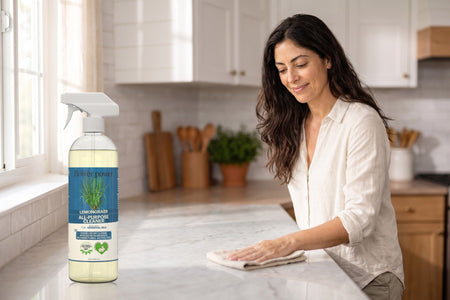
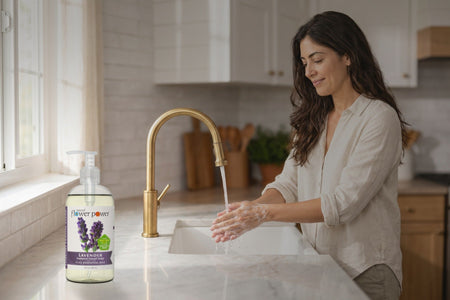
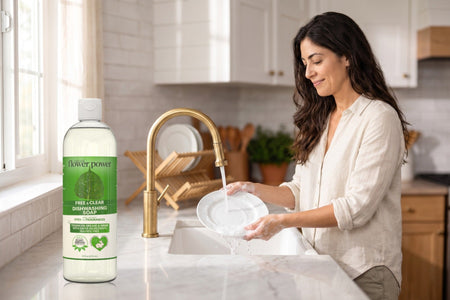
What we make for this
Common Uses
Preservatives appear anywhere microbial growth would spoil a water-based product: dish and hand soaps, all-purpose cleaners, laundry products, wipes, and personal care items. Class choice often reflects era and formulation goals. Parabens were long the default in personal care. Formaldehyde-releasers such as DMDM hydantoin and quaternium-15 have been used where broad, low-cost protection is wanted. Isothiazolinones such as methylisothiazolinone and benzisothiazolinone are effective at very low concentrations, which makes them common in cleaners and paints. Phenoxyethanol is widely used as a broad-spectrum preservative, and organic acids like citric acid are used both to preserve and to adjust pH.
How It Works
Preservatives stop microbes by interfering with the cell processes that keep microorganisms alive, but the mechanism differs by class. Parabens disrupt microbial membrane transport and enzyme function. Formaldehyde-releasers work by slowly releasing formaldehyde, which cross-links proteins and nucleic acids inside the cell. Isothiazolinones react with cellular thiol (sulfur-containing) groups to shut down enzymes, which is why they are effective at very low doses. Phenoxyethanol disrupts membranes. Organic acids such as citric and benzoic acid preserve mainly by lowering pH and, in their undissociated form, penetrating microbial cells to interfere with internal chemistry — which is why they work best in acidic formulas.
Safety and Regulation
Each class carries its own regulatory record. Parabens remain permitted in the U.S., where the FDA continues to review them; the European Union has banned several parabens (isopropyl-, isobutyl-, phenyl-, benzyl-, and pentylparaben) and set concentration limits on propyl- and butylparaben under the Cosmetics Regulation (EC) No 1223/2009, as amended. Formaldehyde-releasers are evaluated in light of formaldehyde itself, which IARC classifies as Group 1, "carcinogenic to humans" (IARC Monographs, vol. 88, 2006); labeling of released formaldehyde is required in the EU above set thresholds. Isothiazolinones are recognized skin sensitizers: the EU's Scientific Committee on Consumer Safety issued opinions leading to restrictions on methylisothiazolinone in leave-on cosmetics, and benzisothiazolinone must be labeled at defined concentrations. Phenoxyethanol is permitted in the EU up to a 1% concentration limit. Organic acids such as citric acid are broadly permitted. The individual compound pages carry the specific limits.
Why Natural Flower Power Conditionally Uses It
Natural Flower Power preserves its water-based products with benzisothiazolinone (BIT), and does not use parabens, formaldehyde-releasers, or the other preservative classes on this page.
This is where our status is "conditional" rather than "does not use": a water-based cleaner genuinely needs a preservative, so the honest position is not that we avoid preservatives but that we chose one and declined the others. We use BIT at a low concentration because it is effective against bacteria and mold in our formulas without relying on formaldehyde release or paraben chemistry. We do not use any paraben, any formaldehyde-releaser such as DMDM hydantoin or quaternium-15, or methylisothiazolinone and methylchloroisothiazolinone, the isothiazolinones most associated with skin sensitization in leave-on products. Choosing a single, well-characterized preservative lets us keep our products microbially stable while being specific on the label about exactly what protects them.
Related Ingredients
This guide anchors the individual preservative pages, grouped by class. The preservative Natural Flower Power uses is benzisothiazolinone (BIT).
Parabens: methylparaben, propylparaben, butylparaben, and ethylparaben — see the parabens family hub.
Formaldehyde-releasers: formaldehyde itself, DMDM hydantoin, and quaternium-15 — see the formaldehyde-releasers hub.
Isothiazolinones: methylisothiazolinone and methylchloroisothiazolinone — see the isothiazolinone preservatives hub.
Other preservatives: phenoxyethanol, the organic acid citric acid, and SD alcohol 40-B.
On the plant-derived side, cold-pressed citrus oils and the essential oils in cleaning guide describe ingredients that contribute to product character alongside preservation. Related reading: what goes into Natural Flower Power products and how Natural Flower Power formulates its products.
Sources
- U.S. Food and Drug Administration (FDA). "Parabens in Cosmetics."
- European Commission. Regulation (EC) No 1223/2009 on Cosmetic Products (paraben, phenoxyethanol, and isothiazolinone provisions, as amended).
- International Agency for Research on Cancer (IARC). "Formaldehyde." IARC Monographs on the Evaluation of Carcinogenic Risks to Humans, vol. 88, 2006.
- Scientific Committee on Consumer Safety (SCCS). Opinion on Methylisothiazolinone (sensitization and use restrictions).
