
What It Is
Isothiazolinones are a family of synthetic preservatives built on a common five-membered ring containing nitrogen and sulfur. They are used at very low concentrations to prevent bacteria and fungi from growing in water-containing products. The three members most often seen on labels are benzisothiazolinone (BIT, CAS 2634-33-5), methylisothiazolinone (MIT, CAS 2682-20-4), and methylchloroisothiazolinone (MCI, or CMIT, CAS 26172-55-4). MCI is almost always supplied as a fixed mixture with MIT. Although the three share a ring structure, they differ in potency, spectrum, and — importantly — how regulators treat them, which is why they are best understood as related but distinct ingredients rather than interchangeable ones.
What we make for this



Common Uses
Isothiazolinones preserve a wide range of water-based products: household cleaners, dish and hand soaps, shampoos, lotions, paints, adhesives, and industrial process fluids. They are valued because they are effective against a broad spectrum of microorganisms at very low use levels, which makes them efficient preservatives. BIT is frequently used in cleaning products, paints, and industrial applications. The MCI/MIT mixture, historically sold under trade names such as Kathon, and MIT on its own have been widely used in both rinse-off and, at one time, leave-on personal-care products. On labels they appear by their INCI names near the end of the ingredient list, reflecting their low concentration.
How It Works
Isothiazolinones work by reacting with thiol (sulfur-containing) groups in microbial enzymes and proteins, disrupting the metabolic processes cells need to grow and reproduce. This broad, non-specific mechanism is what gives them activity against bacteria, yeasts, and molds at low concentrations. The same reactivity toward thiol groups underlies their potential to act as skin sensitizers in susceptible individuals, because they can also react with proteins in skin. Potency and sensitizing potential vary across the family, and the concentration at which each is used — and whether a product is left on the skin or rinsed off — strongly influences the regulatory limits placed on them.
Safety and Regulation
Regulators treat the isothiazolinones differently. In the European Union, methylisothiazolinone (MIT) was banned from leave-on cosmetic products under Regulation (EU) 2016/1198 and is restricted in rinse-off cosmetics to 15 ppm. The MCI/MIT mixture is likewise limited to rinse-off products at a maximum of 15 ppm under the EU Cosmetics Regulation. The American Contact Dermatitis Society named methylisothiazolinone its Contact Allergen of the Year in 2013, following a documented rise in contact allergy associated with its expanded use in leave-on products. Benzisothiazolinone (BIT) is also recognized as a contact allergen and is regulated as a preservative; it is not permitted in leave-on cosmetics in the EU but is used in rinse-off and non-cosmetic products under defined limits. All three are assessed by authorities including the EU SCCS and are subject to concentration and product-type limits.
Why Natural Flower Power Conditionally Uses It
Natural Flower Power's status here is conditional: we use one member of this family and not the others.
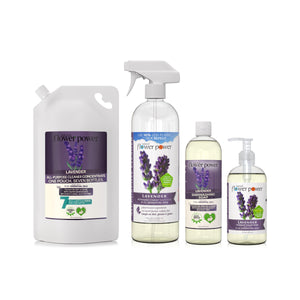
Our preservative is benzisothiazolinone (BIT). We use it at low levels to keep our water-based, plant-derived formulas stable and free of microbial growth over their shelf life, and we list it by name on every label. We do not use methylisothiazolinone (MIT) or the methylchloroisothiazolinone/methylisothiazolinone (MCI/MIT) mixture — the members of the family that regulators have restricted most tightly in leave-on products. Naming which isothiazolinone we use, and which we don't, is part of the full ingredient transparency we have practiced as an independently owned maker since 2012.
Related Ingredients
Each isothiazolinone in this family has its own page: benzisothiazolinone (BIT) is the preservative Natural Flower Power uses, while methylisothiazolinone (MIT) and methylchloroisothiazolinone (MCI) are members it does not use. For how preservatives fit into a formula more broadly, see the preservative systems guide, and for the plant-derived surfactants BIT protects, see the plant-derived surfactants guide. Labels can be reviewed across Natural Flower Power's dish soaps, hand soaps, and all-purpose cleaners.
Sources
- European Commission. Regulation (EU) 2016/1198 amending Annex V to Regulation (EC) No 1223/2009: prohibition of methylisothiazolinone in leave-on cosmetic products.
- European Commission. Regulation (EC) No 1223/2009 on Cosmetic Products, Annex V (preservatives): methylchloroisothiazolinone/methylisothiazolinone and methylisothiazolinone rinse-off limits.
- American Contact Dermatitis Society. "Contact Allergen of the Year: Methylisothiazolinone." 2013.
- PubChem. "1,2-Benzisothiazol-3(2H)-one (BIT), CID 17520." National Center for Biotechnology Information, National Library of Medicine.
