
What It Is
A surfactant — short for "surface-active agent" — is a molecule with two ends that behave differently: one end is attracted to water (hydrophilic) and the other is attracted to oils and grease (hydrophobic). This dual nature is what makes cleaning possible. Plant-derived surfactants are surfactants whose carbon backbone comes from renewable plant feedstocks rather than petroleum. The most common feedstocks are fatty alcohols from coconut or palm kernel oil and sugars from corn or other crops. This family includes several distinct chemistries: nonionic alkyl polyglucosides such as decyl glucoside and coco-glucoside; amphoteric surfactants such as cocamidopropyl betaine and lauramine oxide; anionic surfactants such as sodium alpha-olefin sulfonate; and amide co-surfactants such as cocamide DIPA. Alcohol ethoxylates are a nonionic class that can be built on either plant-derived or petroleum-derived alcohols.
What we make for this
Common Uses
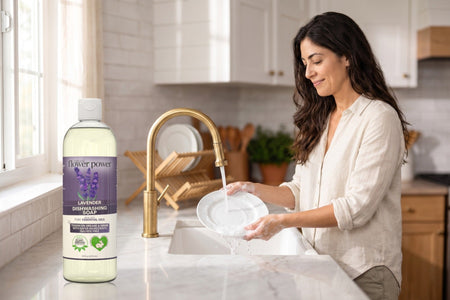
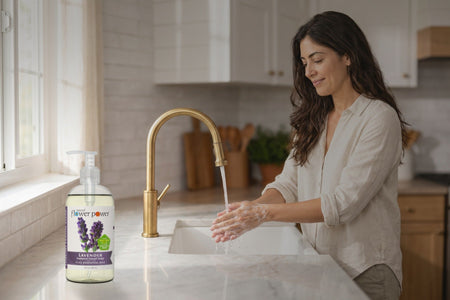
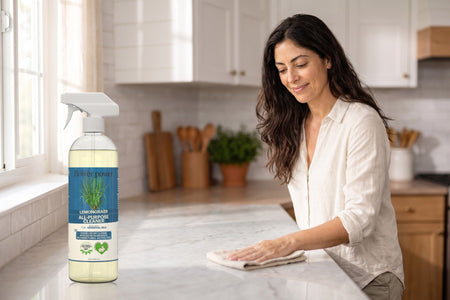
Surfactants are the functional core of nearly every liquid cleaning and personal-care product: dish soaps, hand soaps, body washes, shampoos, laundry detergents, and all-purpose cleaners. Different surfactant types are usually blended because each brings a different strength — foam, grease-cutting, mildness, or thickening. Alkyl polyglucosides are prized for gentleness and foam; betaines and amine oxides boost foam and reduce the harshness of stronger surfactants; alpha-olefin sulfonates deliver robust cleaning and lather; alcohol ethoxylates are efficient at cutting oily soils on hard surfaces. On an ingredient label these appear by their INCI names, typically grouped near the top of the list because they make up a meaningful share of the formula.
How It Works
When surfactant molecules are added to water, their water-repelling tails cluster together away from the water, forming microscopic spheres called micelles. When these micelles meet grease or oily soil, the tails surround and trap the oil droplet in the center while the water-loving heads face outward, allowing the whole package to be suspended in water and rinsed away. Surfactants also lower the surface tension of water, which lets it spread and penetrate soils instead of beading up. The differences between surfactant types come down to the charge on the water-loving head: nonionic (no charge), anionic (negative), cationic (positive), and amphoteric (both). That charge determines foam behavior, mildness, and how surfactants interact with one another and with hard-water minerals.
Safety and Regulation
Surfactants are among the most extensively reviewed ingredients in cleaning and cosmetic products. The Cosmetic Ingredient Review (CIR) expert panel has published safety assessments for alkyl glucosides and for cocamidopropyl betaine as used in cosmetics. The U.S. EPA's Safer Choice program maintains a Safer Chemical Ingredients List that includes many plant-derived surfactants meeting its criteria for human health and environmental profile, including biodegradability. Some surfactants are recognized contact allergens: the American Contact Dermatitis Society named cocamidopropyl betaine its Allergen of the Year in 2004, an effect generally attributed to manufacturing impurities rather than the pure surfactant. Readily biodegradable surfactants break down in wastewater treatment, which is a key environmental criterion applied under Safer Choice and comparable EU frameworks.
Why Natural Flower Power Uses It
Natural Flower Power uses plant-derived surfactants as the cleaning core of our products.
Our surfactants come from coconut and corn-sugar sources rather than petroleum. We blend several — decyl glucoside, coco-glucoside, cocamidopropyl betaine, sodium alpha-olefin sulfonate, cocamide DIPA, and lauramine oxide among them — because each contributes something different, from gentle foam to grease-cutting power, and the combination cleans better than any single surfactant alone. We have made our products in-house since 2012, and as an independently owned company we list every surfactant by name on every label so you can see exactly what is doing the cleaning.
Related Ingredients
The surfactants covered in this family each have their own page: decyl glucoside, coco-glucoside, cocamidopropyl betaine, sodium alpha-olefin sulfonate, cocamide DIPA, lauramine oxide, and alcohol ethoxylates. For how preservatives keep water-based formulas stable, see the preservative systems guide. Two editorial explainers go deeper on the topic: what surfactants are and how they clean and where plant-derived surfactants come from and how they work. Natural Flower Power uses these surfactants across its dish soaps, hand soaps, and all-purpose cleaners.
Sources
- Cosmetic Ingredient Review (CIR) Expert Panel. "Safety Assessment of Decyl Glucoside and Other Alkyl Glucosides as Used in Cosmetics." International Journal of Toxicology, 2013.
- Cosmetic Ingredient Review (CIR) Expert Panel. "Final Report on the Safety Assessment of Cocamidopropyl Betaine (CAPB)." International Journal of Toxicology, 2012.
- U.S. Environmental Protection Agency. "Safer Choice: Safer Chemical Ingredients List." Accessed 2026.
- American Contact Dermatitis Society. "Contact Allergen of the Year: Cocamidopropyl Betaine." 2004.
