


TL;DR: Surfactants are the molecules that actually do the cleaning in any soap or cleaner. One end binds to water, the other to oil — so they surround grease and lift it off surfaces. This explains how surfactants work, why some are gentler on skin than others, and how plant-derived versions compare to conventional sulfates on performance and biodegradability.
You probably don't think about surfactants when you're scrubbing a greasy pan, but you're watching them work in real time. That moment when soapy water suddenly lets you wipe away a layer of oil that plain water couldn't touch—that's a surfactant doing its job. The question most people never ask is why it works, which means they miss the chance to understand why some surfactants are rough on skin and others are gentle, why some clean better in cold water than hot, and why the choice of surfactant is one of the most important decisions we make when formulating.
This is practical chemistry, not theory. Once you understand what a surfactant actually is, you start to see why the label matters and why we chose the surfactants we did for every Natural Flower Power product.
The Basic Structure: Water-Loving and Oil-Loving in One Molecule
A surfactant is a single molecule with a split personality. It has two ends that behave completely differently, and that contradiction is exactly what makes cleaning possible.
One end of a surfactant molecule is hydrophilic, which means it loves water. This end is polar—it has an electrical charge that makes it attracted to water molecules. Water is also polar, so these ends get along naturally. The other end is hydrophobic, which means it hates water and loves oil. This end doesn't have a charge; it's nonpolar, and oil is nonpolar too, so they're compatible.
If you've ever seen oil and water separate into layers, that's what naturally happens when you have those two substances in the same space. Oil molecules cluster together, water molecules cluster together, and they stay apart. A surfactant interrupts that separation. Because it has both water-loving and oil-loving ends on the same molecule, it can bridge the gap that usually keeps oil and water apart. That ability to act as a bridge is the entire point of a surfactant—the word itself is short for "surface-active agent," something that changes the behavior at the surface where water and oil meet.

What we make for this
How Surfactants Actually Remove Dirt
Understanding how surfactants work in theory doesn't help you much if you don't see how it plays out when you're washing a dish. Here's what actually happens when soapy water touches a greasy pan:
When you add a surfactant to water, the molecules begin to organize themselves. The hydrophobic tails—the oil-loving ends—want to get away from the water and hide. The hydrophilic heads—the water-loving ends—want to stay in contact with the water. So the surfactant molecules arrange themselves into spheres called micelles, with the water-loving heads pointing outward toward the water and the oil-loving tails pointing inward, creating a protective ball of tails in the middle.
Now grease sits on the surface of your pan. When soapy water meets that grease, the oil-loving tails of the surfactants are attracted to the greasy dirt. They burrow into the grease, surrounding it, while the water-loving heads stay pointed toward the water. The result is that the grease gets encapsulated inside a micelle, completely surrounded by surfactant molecules. The micelle is water-soluble, which means it can now mix with water and be rinsed away. Dirt that was stuck to your pan is suddenly suspended in the rinse water instead of sitting on the surface. That's cleaning.
The same mechanism works for other kinds of dirt. Dust particles, dried food, bacteria films—surfactants surround them the same way. What surfactants don't do is actually break down the dirt chemically. They don't destroy grease or kill bacteria on contact. They're mechanical cleaners, not chemical ones. They separate dirt from the surface it's stuck to and let water carry it away. That simplicity is why surfactants work for so many different kinds of cleaning, and why they're the foundation of nearly every cleaning product on the market.
Types of Surfactants: Not All the Same
All surfactants have the same basic structure—a water-loving head and an oil-loving tail—but the specific chemical makeup varies. That variation matters for performance and for how the surfactant interacts with skin, because different types have different charges and different behaviors.
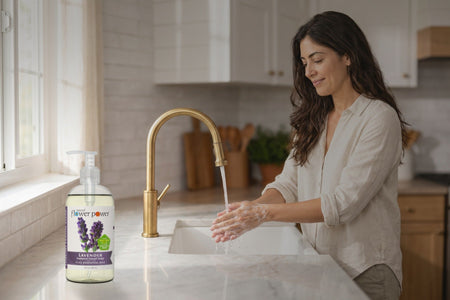
Anionic surfactants have a negative electrical charge on their water-loving head. They're the most powerful cleaners and the most common type in washing powders, liquid dish soaps, and laundry detergents. Anionic surfactants are aggressive—they lift dirt very effectively, which is why they're used in heavy-duty cleaning. The downside is that same aggressiveness means they can strip the natural oils from skin and hair. If a cleaning product leaves your skin feeling tight or makes your hands dry, an anionic surfactant is usually the reason. When we formulate hand soaps, we use anionics carefully because we know they work, but we also know they need to be balanced with other ingredients that don't strip the skin.
Nonionic surfactants have no electrical charge on their water-loving head. They're gentler than anionics because they don't have that aggressive electrical pull. They work more slowly and less forcefully, making them better for delicate surfaces and sensitive skin. They're also more stable in different water temperatures and pH levels, so they work well in both hot and cold water and alongside other ingredients that would destabilize anionic surfactants. If we're formulating a product specifically for hand-washing or for households with sensitive skin, we lean toward nonionic surfactants or blend them with anionics to take the edge off.
Amphoteric surfactants can shift their charge depending on the pH of the water they're in. At one pH they're anionic, at another they're cationic, at another they're neutral. They're milder than pure anionics but still effective, and they're often used in baby shampoos and gentle personal care products because they cause less eye irritation. In cleaning products, we use them as one component in a blend to add mildness without losing performance.
Most cleaning products aren't made with a single type of surfactant. A typical dish soap might use a combination of anionic surfactants for cleaning power, nonionic surfactants for gentleness, and amphoteric surfactants to adjust the texture and feel. The ratio of these components determines how the product actually performs and how it feels on skin. A formula that's 80% anionic will clean better but feel harsher. A formula that's 60% anionic and 40% nonionic will be gentler but might require more product to get the same cleaning result.
Plant-Derived versus Petroleum-Derived: Where Surfactants Come From
A surfactant molecule is the same whether it comes from a plant or from petroleum. The structure—the water-loving head and oil-loving tail—is identical. The chemical properties are identical. An anionic surfactant made from coconut oil has exactly the same cleaning power as an anionic surfactant synthesized from crude oil. From a pure cleaning standpoint, the source doesn't matter.
But source does matter for where your product sits in the manufacturing and environmental lifecycle. A petroleum-derived surfactant requires drilling, refining, and chemical synthesis from fossil carbon. A plant-derived surfactant—often made from coconut, palm, corn, or sugar—requires growing and harvesting crops, then extracting and processing the oils. Each path has real tradeoffs. Plant-derived approaches can create land-use pressures and deforestation concerns. Petroleum-derived approaches rely on finite resources and create their own extraction and refining impacts.
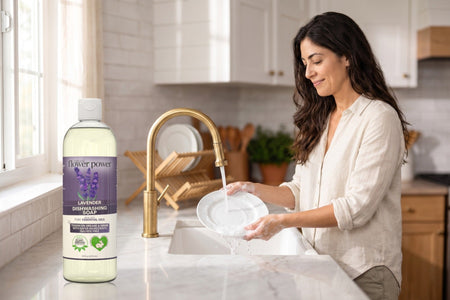
At Natural Flower Power, we've chosen to work with plant-derived surfactants because we make those decisions deliberately and we want to own them. We source coconut and plant-derived surfactants because we can trace them, understand the supply chain, and have relationships with suppliers who align with our standards. It costs more than buying the cheapest petroleum-derived option, and the performance is slightly different—plant-derived surfactants can behave differently in formulation, they may not be quite as stable, and they generally have a different skin feel. For us, the deliberate choice matters more than saving a few cents per unit.
If you're looking at a product labeled "plant-derived surfactants," you're buying a choice, not a guarantee of performance or gentleness. The source of the surfactant doesn't make it automatically safer or better-cleaning. What it does mean is that the company made a deliberate sourcing decision and is willing to explain it. That transparency is often correlated with thoughtfulness about other ingredients, but it's not a substitute for actually checking what the product contains.
Why One Surfactant Feels Gentler Than Another
Two products might use the same type of surfactant—say, both anionic—but one will leave your hands feeling dry and the other won't. The difference isn't the surfactant itself; it's the concentration and what else is in the formula.
First, concentration. More surfactant means more cleaning power, but it also means more likelihood of stripping skin oils. A hand soap might use 12% surfactant by weight, while a heavy-duty degreaser uses 25% or more. The higher the concentration, the more aggressive the product, regardless of which type of surfactant is doing the work.
Second, what we add to balance the surfactant. Most surfactants strip things—that's part of how they work. To keep a product from being too harsh, formulators add glycerin, oils, or other emollients that replace the moisture and oils the surfactant removed. A soap made with only surfactant and water will clean powerfully but leave skin tight. The same soap with added glycerin and coconut oil will feel softer and more moisturizing. The surfactant is doing the same work, but the surrounding formula makes the user experience completely different.
Third, the blend of surfactant types. If 100% of a product's surfactant content is anionic, it will be harsh. If it's 50% anionic and 50% nonionic, it will feel milder. Most commercial products use blends specifically to fine-tune how harsh or gentle they feel while maintaining cleaning performance. This is where formulation becomes art as much as science—the specific ratio matters.
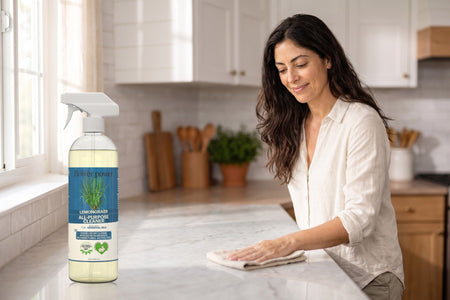
When we formulate Natural Flower Power hand soaps and all-purpose cleaners, we test in our facility and we get feedback from users. We're not trying to maximize cleaning power at all costs. We're trying to hit a point where the product cleans very well but doesn't irritate hands or skin when used regularly. That means we tend toward lower surfactant concentrations, we blend anionic and nonionic types, and we add ingredients that moisturize and protect. A heavy-duty industrial cleaner would make different choices.
What Makes Surfactants Different From Other Cleaning Ingredients
A cleaning product isn't just surfactant. It also contains water, preservatives, pH adjusters, and sometimes builders—ingredients that enhance cleaning power in specific ways. Understanding what surfactants actually do helps you see why they're the most important ingredient but not the only important one.
Surfactants remove oily and greasy dirt by the mechanism we've described. Builders, like sodium carbonate or zeolites, soften water by binding to minerals that would interfere with surfactant function—hard water is terrible for surfactant performance. Enzymes break down protein-based stains like blood or egg. Oxygen-based bleaches oxidize certain stains. Each ingredient in a formula does something specific.
But none of those other ingredients will clean without surfactants. You can have the best water softener and the most powerful enzymes, but if you don't have a surfactant to loosen the dirt and suspend it in water, nothing gets removed. That's why surfactant choice is the foundation of every formulation we make.
Why Surfactant Chemistry Matters for Your Household
If you've ever had a reaction to a dish soap—rashes on your hands, or skin that felt stripped—there's a good chance the surfactant was the culprit. Different types affect different skin differently. Some people react to anionics but do fine with products heavy in nonionics. Others are sensitive to specific surfactants regardless of type. Once you know your sensitivity, you can start looking for products that either avoid those surfactants or use them at lower concentrations balanced with more emollients.
Surfactant knowledge also helps you understand why "more cleaning power" often means "harsher on skin and the environment." A product with extremely high surfactant concentration will clean better but will also be more likely to strip your skin, harm aquatic life if it goes down the drain, and create more suds (which some people find problematic in dishwashers or washing machines). The most aggressive cleaning product isn't always the best choice for regular household use.
Understanding what surfactants are also gives you perspective on marketing claims. "Plant-derived," "natural," "gentle," and "eco-friendly" are all words companies use to describe surfactant products, but the word "surfactant" tells you what's actually in the bottle. The other words tell you something about the company's choices and positioning, but they don't change what the molecule does. The cleaning mechanism is the same. What changes is concentration, what else is in the formula, and where the surfactant came from.
When you understand this, you can look at a label, see "plant-derived anionic surfactants, plant-derived nonionic surfactants, glycerin, essential oils," and immediately know what's going on. You know the product is probably a moderate-strength cleaner with some gentleness built in, made from plant sources, scented with real oils. You don't have to guess or rely on marketing buzzwords. You can make a real choice based on what the formula actually contains and what your household actually needs. That's what ingredient knowledge is for.
Surfactants are not exotic. They're not difficult to understand. They're just molecules that have learned to live in two worlds at once—water and oil—and that's what makes cleaning possible. The next time you use a soap—whether it's one of our plant-derived dish soaps or a hand soap—you're putting millions of these bridge-building molecules to work. Knowing what they are and how they behave is the first step toward making actual choices about what you bring into your home. For more on how we select our surfactants and every other ingredient, see Our Story & Standards. Every NFP product is backed by our 90-Day Love-It Guarantee — if it doesn't work for your household, we make it right.
