
This ingredient is used in our products.
What It Is
Lauramine oxide (also called lauryl dimethylamine oxide or LDAO) is an amphoteric surfactant derived from coconut oil (CAS 1643-20-5). It is classified as an amine oxide — a nitrogen-containing compound with a 12-carbon fatty chain. Its primary functions are foam boosting, viscosity building, and cleaning enhancement in water-based formulations.
What we make for this
Common Uses
Lauramine oxide is widely used in liquid dish soaps, all-purpose cleaners, bathroom cleaners, and laundry detergents. It also appears in some personal care products like shampoos and body washes. In most formulations, it works as a secondary surfactant — paired with a primary cleanser to improve foam density, formula thickness, and grease-cutting ability. It is one of the more common amine oxide surfactants in both conventional and plant-derived cleaning products.
How It Works
Lauramine oxide is amphoteric, meaning its behavior changes depending on the pH of the solution. In neutral or alkaline conditions (pH 7 and above, which covers most cleaning products), it acts as a nonionic surfactant. In acidic conditions (below pH 7), it becomes cationic (positively charged). This flexibility makes it compatible with a wide range of other surfactants — anionic, nonionic, and cationic.
Its 12-carbon chain gives it strong affinity for greasy soils. In a surfactant blend, lauramine oxide increases the density and stability of foam (making it feel richer), helps the formula cling to surfaces longer, and improves the overall viscosity of the product without requiring separate thickening agents. It also acts as a mild conditioning agent, which is why it appears in some personal care products.
Safety and Regulation
The Cosmetic Ingredient Review (CIR) Expert Panel reviewed lauramine oxide and concluded it is safe as used in cosmetic products when formulated to be nonirritating (CIR, 2014). The EPA lists lauramine oxide on its Safer Chemical Ingredients List under the surfactant category, indicating it meets EPA Safer Choice criteria for lower hazard.
At typical use concentrations in household cleaning products (generally 1–5%), lauramine oxide has low acute toxicity by oral, dermal, and inhalation routes. Concentrated lauramine oxide solutions can cause skin and eye irritation, which is standard for most surfactants at high concentrations. In finished consumer products at normal dilution, irritation is minimal.
Lauramine oxide is readily biodegradable under aerobic conditions. It does not bioaccumulate and breaks down quickly in wastewater treatment systems.
Why Natural Flower Power Uses It
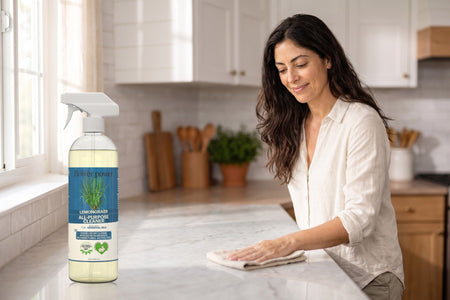
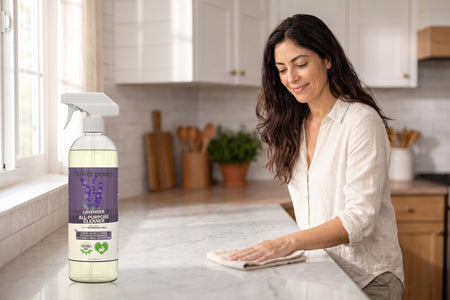
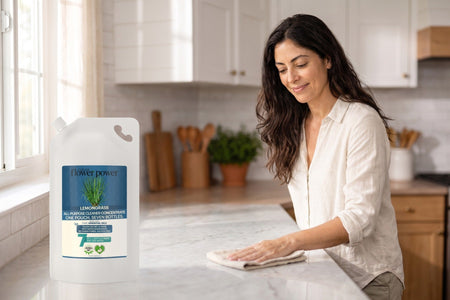
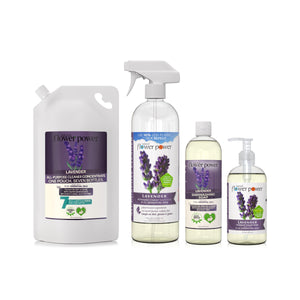
Natural Flower Power uses lauramine oxide in its all-purpose cleaners and dish soaps.
In both product lines, lauramine oxide is the foam and viscosity workhorse. The all-purpose cleaners need enough body to cling to vertical surfaces when sprayed, and the dish soaps need rich, stable foam that holds up against greasy dishes. Lauramine oxide delivers both without adding a separate thickening system to the formula.
We pair it with decyl glucoside in the all-purpose cleaners and with sodium alpha olefin sulfonate in the dish soaps. Each pairing is tuned to the product's job — the APC blend emphasizes surface cling and rinse-off, while the dish soap blend prioritizes grease cutting and sustained foam under a running faucet. Lauramine oxide bridges both requirements because of its pH-flexible behavior and strong compatibility with the other surfactants in our formulas.
Related Ingredients
Cocamidopropyl betaine is another amphoteric surfactant commonly used alongside or instead of lauramine oxide, with a similar foam-boosting role but different thickening characteristics. Decyl glucoside is a nonionic surfactant that Natural Flower Power pairs with lauramine oxide in its all-purpose cleaners. Cocamide DIPA is a coconut-derived foam stabilizer that serves a complementary thickening function in NFP's hand soaps and dish soaps.
Sources
- Cosmetic Ingredient Review (CIR). ""Safety Assessment of Alkyl Dimethylamine Oxides as Used in Cosmetics."" International Journal of Toxicology, 2014.
- U.S. EPA Safer Chemical Ingredients List. Surfactants category. epa.gov/saferchoice.
