
What It Is
Cold-pressed citrus oils are the aromatic oils obtained by mechanically pressing or scoring the peels of citrus fruit — most commonly orange and lemon — without added heat. The peel's oil glands rupture and release oil, which is then separated from the juice and water. Because no heat or solvent extraction is involved, cold-pressing captures the peel's full natural profile: hundreds of compounds including terpenes, aldehydes, and trace pigments. This is a key distinction from isolated d-limonene, which is a single purified compound. Cold-pressed orange and lemon oils are typically dominated by d-limonene — often around 90 percent or more of orange oil — but the remaining minor components contribute to the aroma and behavior of the whole oil.
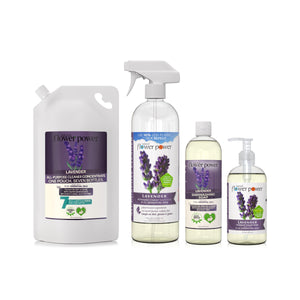
What we make for this



Common Uses
Cold-pressed citrus oils serve two roles in cleaning products: fragrance and function. Their bright, familiar scent is widely used in dish soaps, all-purpose cleaners, and degreasers. Functionally, the d-limonene they contain is an effective natural solvent for oily and sticky soils, which is why citrus oils appear in grease-cutting and adhesive-removing products. The same oils are used as food flavorings and in personal-care products. On a label they may appear as orange oil, lemon oil, citrus peel oil, or by INCI names such as Citrus aurantium dulcis (orange) peel oil and Citrus limon (lemon) peel oil.
How It Works
The cleaning behavior of citrus oils comes largely from d-limonene, a terpene that dissolves oils, waxes, and many adhesives — the property that lets citrus solvents lift grease and remove sticker residue. A whole cold-pressed oil and an isolated synthetic limonene share this core solvent action, but they are not identical: the whole oil carries minor components that shape its scent and can affect its overall performance, whereas isolated limonene is a single compound. Synthetic or nature-identical limonene can be manufactured or purified to a defined specification, which is useful when a formulator wants one consistent molecule; a cold-pressed oil instead delivers the composition nature produced in the peel. Like most terpene-rich oils, limonene can oxidize on prolonged exposure to air.
Safety and Regulation
d-Limonene, the dominant component of cold-pressed citrus oils, is recognized by the U.S. FDA as generally recognized as safe (GRAS) for use as a synthetic flavoring substance and food additive under 21 CFR 182.60, and citrus oils are long-established food flavorings. Regulatory attention centers on oxidation: the European Union's Scientific Committee on Consumer Safety has assessed limonene and notes that oxidized limonene can form skin-sensitizing hydroperoxides, which is why limonene is one of the fragrance allergens the EU Cosmetics Regulation requires to be declared on labels above set thresholds. This labeling requirement applies whether the limonene is present as part of a natural citrus oil or added as an isolated ingredient.
Why Natural Flower Power Uses It
Natural Flower Power uses real cold-pressed citrus oils, not isolated synthetic limonene.
We choose whole cold-pressed orange and lemon oils because they deliver both the natural degreasing action of citrus and the full peel-derived scent in one plant-derived ingredient. The d-limonene that does much of the grease-cutting arrives as part of the oil the fruit actually produced, alongside its minor aroma components, rather than as a single molecule isolated from the rest. We have formulated in-house since 2012, and as an independently owned company we name the citrus oils we use so it is clear the scent and solvency come from pressed peel.
Related Ingredients
This guide draws together two cold-pressed citrus oils and contrasts them with an isolated compound: orange oil and lemon oil are the real cold-pressed peel oils, while synthetic limonene is the isolated, manufactured version of their main component. For the broader picture of how essential oils are used in cleaning, see the essential oils in cleaning guide. Natural Flower Power uses cold-pressed citrus oils across its dish soaps and all-purpose cleaners; browse the essential oils collection.
Sources
- U.S. Food and Drug Administration. "d-Limonene." Synthetic Flavoring Substances and Adjuvants, 21 CFR 182.60.
- Scientific Committee on Consumer Safety (SCCS). "Opinion on Limonene." European Commission, Directorate-General for Health and Consumers.
- European Commission. Regulation (EC) No 1223/2009 on Cosmetic Products, fragrance allergen labeling requirements.
- PubChem. "Limonene, CID 22311." National Center for Biotechnology Information, National Library of Medicine.
