
This ingredient is used in our products.
What It Is
Orange oil is an essential oil obtained by cold-pressing the peels of Citrus sinensis (sweet orange) (CAS 8008-57-9). The oil is an orange to dark orange liquid with a sweet, fresh citrus aroma. Its dominant chemical component is d-limonene, which typically comprises 90%-97% of the oil. Smaller amounts of myrcene, linalool, and various aldehydes contribute to its full scent profile. Orange oil functions as a fragrance ingredient in cleaning and personal care products and has mild solvent properties due to its high limonene content.
What we make for this



Common Uses
Orange oil is one of the most commonly used citrus essential oils in consumer products. It appears in all-purpose cleaners, dish soaps, hand soaps, air fresheners, laundry products, furniture polishes, and personal care items. Its high limonene content gives it mild degreasing properties, which is why it frequently appears in cleaning products alongside surfactants. Orange oil is also a major ingredient in food flavoring (orange juice processing generates large quantities of peel oil as a byproduct) and in industrial degreasing applications at higher concentrations.
How It Works
Orange oil's scent comes primarily from d-limonene, a cyclic monoterpene that evaporates readily and produces the characteristic "fresh orange" smell. The aldehydes present in small amounts -- particularly decanal and octanal -- contribute brightness and the slightly zesty top note that distinguishes orange oil from pure limonene.
D-limonene is also a mild solvent. It can dissolve certain oils and greases, which is why orange oil has a functional cleaning role beyond fragrance in some products. In household cleaners, this solvent action supplements the surfactant-based cleaning system. The effect is modest at the concentrations used for fragrance (typically below 1% of the finished product), but it is a real contribution to cleaning performance, particularly on oily kitchen surfaces.
Safety and Regulation
The FDA classifies d-limonene as GRAS for food use (21 CFR 182.60). Orange oil is permitted in all product categories under IFRA standards, with concentration limits specific to application type. Limonene and citral (present in small amounts in orange oil) are listed as fragrance allergens under EU cosmetic regulations (EC No 1223/2009).
The primary safety consideration for orange oil is oxidation. When exposed to air, d-limonene oxidizes to form limonene hydroperoxides, which are significantly more allergenic than fresh limonene (Karlberg et al., 1992). Properly stored, fresh orange oil has a low sensitization rate. Oxidized orange oil is a more common cause of contact allergy. Product formulations that include antioxidants (such as tocopherol) help slow this oxidation process.
Orange oil is a known phototoxic agent at high concentrations due to furanocoumarins present in some cold-pressed citrus oils, though the phototoxic potential of sweet orange oil is substantially lower than that of bergamot or expressed lime oil.
Why Natural Flower Power Uses It
Natural Flower Power uses orange oil in its all-purpose cleaners, hand soaps, dish soaps, and air fresheners.
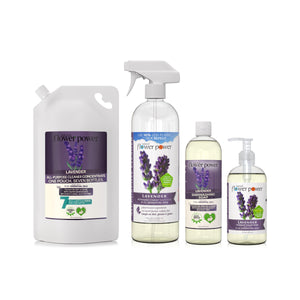
Orange oil appears in our Lavender and Citrus & Spice scent blends as a supporting note rather than the dominant scent. It rounds out citrus blends and adds warmth that straight lemon oil does not provide on its own. We also sell orange oil as a standalone essential oil. The mild degreasing contribution from limonene is a bonus in our all-purpose cleaners and dish soaps -- it adds a small but real boost to surfactant-based cleaning on kitchen grease. We include vitamin E (tocopherol) in all our formulations partly because it slows the oxidation of citrus essential oils like orange oil, which helps maintain scent quality and minimizes formation of allergenic oxidation products during the product's shelf life.
Related Ingredients
Lemon oil is the most closely related citrus essential oil in NFP's formulations, with a sharper, more tart scent profile compared to orange oil's sweetness. Lemongrass oil provides herbal-citrus notes that pair well with orange oil in blended scents. Synthetic limonene is a manufactured version of the same d-limonene found naturally in orange oil -- it is cheaper but lacks the aldehyde complexity of cold-pressed orange oil and is not used by Natural Flower Power.
Sources
- Karlberg, A.T., et al. "Air Oxidation of d-Limonene (The Citrus Solvent) Creates Potent Allergens." Contact Dermatitis, vol. 26, no. 5, 1992, pp. 332-340.
- U.S. Food and Drug Administration. 21 CFR 182.60 -- Synthetic Flavoring Substances and Adjuvants (d-Limonene GRAS).
- European Commission. Regulation (EC) No 1223/2009 on Cosmetic Products. Annex III (Fragrance Allergens).
