
This ingredient is used in our products.
What It Is
Lemongrass oil is an essential oil steam-distilled from the leaves and stalks of Cymbopogon flexuosus (East Indian lemongrass) or Cymbopogon citratus (West Indian lemongrass) (CAS 8007-02-1). The oil is a yellow to amber liquid with a strong, fresh, lemony-herbal scent. Its primary chemical component is citral — a mixture of two isomers, geranial (citral a) and neral (citral b) — which typically comprises 65%–85% of the oil. Lemongrass oil functions as a fragrance ingredient in cleaning and personal care products.
What we make for this



Common Uses
Lemongrass oil is used in all-purpose cleaners, dish soaps, hand soaps, air fresheners, insect repellents, candles, and personal care products. Its strong, clean citrus scent makes it one of the more popular essential oils in household cleaning products. In Southeast Asian and South American cuisine, lemongrass stalks (from C. citratus) are used as a culinary herb, though the essential oil is far more concentrated than the plant material. Lemongrass oil is also used in traditional medicine and aromatherapy practices.
How It Works
Lemongrass oil's scent comes primarily from citral, which is a monoterpene aldehyde. Citral has a strong lemon-like aroma that volatilizes readily at room temperature, producing a bright, immediately noticeable fragrance. The oil also contains geraniol, myrcene, and limonene, which contribute secondary floral and citrus notes to the overall scent profile.
Lemongrass oil has documented antimicrobial and antifungal activity in laboratory settings. Citral disrupts microbial cell membranes in a manner similar to other terpenoid compounds (Naik et al., 2010). As with other essential oils used in cleaning products, the antimicrobial contribution at typical fragrance concentrations is supplementary rather than sufficient for disinfection claims.
Safety and Regulation
The IFRA standard permits lemongrass oil in cleaning products with concentration limits that vary by product type. Citral is listed as a fragrance allergen under EU cosmetic regulations (EC No 1223/2009) and must be declared on labels above specified thresholds. Lemongrass oil has a higher sensitization potential than some other common essential oils due to its high citral content — citral is one of the more frequently identified fragrance allergens in patch-testing studies (Frosch et al., 2005).
The risk of sensitization depends on concentration and product type. In rinse-off products like hand soaps and dish soaps, skin contact time is brief and the oil is diluted, which reduces sensitization risk compared to leave-on applications. In air freshener sprays, direct skin contact is minimal.
Lemongrass oil should not be applied undiluted to skin and is toxic if ingested in concentrated form. Both concerns apply to the pure essential oil, not to finished products containing it at formulated concentrations.
Why Natural Flower Power Uses It
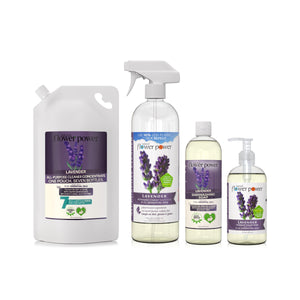
Natural Flower Power uses lemongrass oil in its all-purpose cleaners, hand soaps, dish soaps, and air fresheners.
Lemongrass is the dominant scent in our Lemongrass product line. We use Cymbopogon flexuosus (East Indian lemongrass) rather than C. citratus (West Indian) because the East Indian variety has a higher citral content, which gives a cleaner, more consistent lemon-forward scent. The West Indian type has more myrcene, which adds an earthy undertone that we found muddied the scent profile when blended with our other essential oils. We pair lemongrass with lemon oil and rosemary oil in certain formulations to build a more complex citrus-herbal scent that does not read as a single note.
We also sell pure lemongrass essential oil as a standalone essential oil.
Related Ingredients
Lemon oil provides a true citrus fruit scent that complements lemongrass oil's herbal-citrus character. Orange oil is another citrus essential oil in NFP's formulations, though it has a sweeter, rounder scent profile. Synthetic limonene is a manufactured version of the naturally occurring terpene found in citrus oils — it is cheaper and more standardized than natural essential oils but is not used by Natural Flower Power. Citronella oil is a closely related essential oil from a different Cymbopogon species, primarily used in insect repellents.
Sources
- Naik, M.I., et al. "Antibacterial Activity of Lemongrass Oil Against Some Selected Pathogenic Bacteria." Asian Pacific Journal of Tropical Medicine, vol. 3, no. 7, 2010, pp. 1–4.
- Frosch, P.J., et al. "Patch Testing with Fragrances: Results of a Multi-Centre Study." Contact Dermatitis, vol. 52, no. 2, 2005, pp. 68–72.
- European Commission. Regulation (EC) No 1223/2009 on Cosmetic Products. Annex III (Fragrance Allergens).
