
What It Is
Methylisothiazolinone (MIT, also abbreviated MI) is a synthetic preservative in the isothiazolinone family (CAS 2682-20-4). It is a light yellow liquid that is highly water-soluble. MIT is chemically related to benzisothiazolinone (BIT), sharing the isothiazolinone ring structure but with different substitution patterns that affect both antimicrobial potency and allergenicity. MIT functions as a broad-spectrum antimicrobial preservative in water-based products.
What we make for this



Common Uses
MIT is used in household cleaners, laundry detergents, dish soaps, paints, adhesives, and industrial water treatment products. It was also widely used in cosmetics and personal care products until regulatory restrictions sharply curtailed that use after 2013. MIT is often used in combination with methylchloroisothiazolinone (MCI) in a 3:1 MCI/MIT ratio, marketed under the trade name Kathon CG. MIT is one of the most effective broad-spectrum preservatives available, active against bacteria, fungi, and algae at very low concentrations.
How It Works
MIT works by reacting with thiol (sulfhydryl) groups in essential microbial enzymes, irreversibly inactivating them. This mechanism gives MIT rapid bactericidal action -- it kills microorganisms rather than merely inhibiting their growth. The isothiazolinone ring opens and forms covalent bonds with cysteine residues in proteins, disrupting enzymatic function across multiple metabolic pathways simultaneously. This multi-target mechanism makes it difficult for microorganisms to develop resistance.
MIT is effective at very low concentrations -- typically 50-200 ppm in finished products. Its broad-spectrum activity and low use levels made it extremely popular as a preservative before the allergenicity concerns emerged.
Safety and Regulation
MIT is a potent contact allergen. A dramatic increase in contact allergy to MIT was documented across Europe, North America, and Australia beginning around 2010-2012, coinciding with increased use of MIT as a standalone preservative in cosmetics after the EU restricted the MCI/MIT combination in 2005 (Aerts et al., 2014). By 2013, MIT had become one of the most frequently positive allergens in patch-testing clinics across Europe.
The EU banned MIT in leave-on cosmetic products in 2016 (Commission Regulation (EU) 2016/1198) and set a maximum concentration of 15 ppm (0.0015%) in rinse-off cosmetic products. MIT remains permitted in industrial products, paints, and household cleaning products at higher concentrations, though some manufacturers have voluntarily removed it.
In the United States, the FDA has not restricted MIT in cosmetics, and it remains in use in both personal care and household products. The EPA registers MIT as an antimicrobial active ingredient for industrial and household product use.
Why Natural Flower Power Does Not Use It
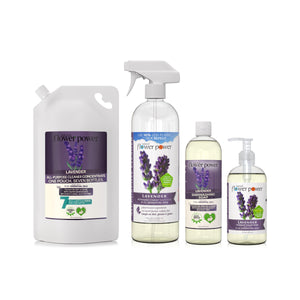
Natural Flower Power does not use methylisothiazolinone in any product.
MIT is in the same isothiazolinone family as the BIT we do use, but with a critically different allergenicity profile. MIT is one of the strongest contact allergens in the preservative world -- the epidemic of MIT allergy that swept through dermatology clinics in the 2010s is well documented and ongoing. BIT, by contrast, has a substantially lower sensitization rate. When we chose our preservation system, the choice between MIT and BIT was straightforward: BIT gives us effective broad-spectrum preservation at 0.005% without the allergenicity burden that has turned MIT into a regulatory and consumer trust problem for brands that still use it.
Related Ingredients
Methylchloroisothiazolinone (MCI) is a related isothiazolinone often combined with MIT, with even stronger allergenicity. Benzisothiazolinone (BIT) is the isothiazolinone preservative Natural Flower Power uses, with a substantially lower sensitization rate. Phenoxyethanol is a non-isothiazolinone preservative alternative used by some brands. Methylparaben is a paraben-family preservative that serves a similar function with a different risk profile.
Sources
- Aerts, O., et al. "Methylisothiazolinone: An Emerging Allergen." Contact Dermatitis, vol. 71, no. 6, 2014, pp. 331-341.
- European Commission. Commission Regulation (EU) 2016/1198 amending Annex V to Regulation (EC) No 1223/2009.
- Schwensen, J.F., et al. "Contact Allergy to Methylisothiazolinone." British Journal of Dermatology, vol. 172, no. 6, 2015, pp. 1536-1545.
