What It Is
Parabens are a group of preservatives based on esters of para-hydroxybenzoic acid. The name of each member reflects the alcohol used to make it: methylparaben, ethylparaben, propylparaben, and butylparaben are the four most common, and they are often combined in a single formula for broader coverage. They were introduced in the 1920s and 1930s and became one of the most widely used preservative systems in personal care because they are effective at low concentrations and inexpensive to produce.
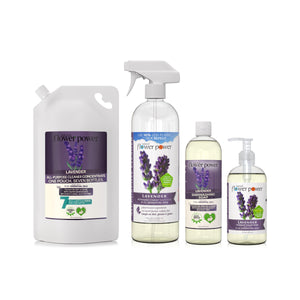
What we make for this
Common Uses
Parabens are found in lotions, creams, shampoos, makeup, deodorants, and many other water- containing cosmetic and personal-care products, where their job is to keep the product free of microbial growth over its shelf life. Shorter-chain parabens such as methyl and ethyl are the most soluble in water and the most commonly used, while longer-chain propyl and butyl versions are often added to broaden the range of organisms controlled. Some parabens also occur naturally in certain fruits and plants.
How It Works
Preservatives protect a product from contamination once it is opened and used. Parabens work by disrupting the membranes and enzyme systems of bacteria, yeasts, and molds, which limits their ability to grow inside a formula. Because different parabens are effective against different organisms and at different solubilities, formulators historically blended two or more to cover a wider spectrum. This broad, low-cost effectiveness is the main reason the family became so widespread.
Safety and Regulation
Parabens remain permitted in cosmetics in the United States, and the U.S. Food and Drug Administration has stated that it does not have information showing that parabens as used in cosmetics have an effect on human health. Regulation is more restrictive in the European Union: under the EU Cosmetics Regulation, several parabens (including isopropyl-, isobutyl-, phenyl-, benzyl-, and pentylparaben) are banned, and propylparaben and butylparaben are limited in concentration. Because the regulatory picture differs by member and by region, the individual pages cover the specifics for each paraben.
Why Natural Flower Power Does Not Use It
We do not use parabens of any kind in our products. For preservation we rely on benzisothiazolinone (BIT), used at very low levels, which lets us keep water-containing formulas stable without this family of ingredients. That has been our approach since we started making our products in-house in 2012, and it is why our labels can state that we are paraben-free. As an independently owned company, we would rather name the preservative we do use than lean on what we leave out.
Related Ingredients
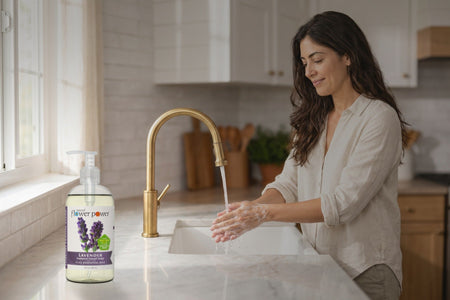
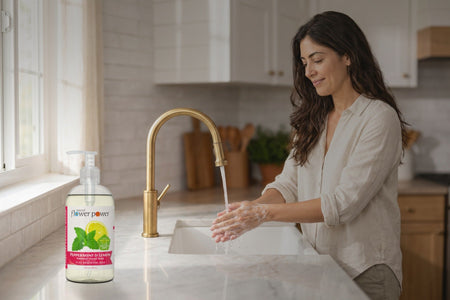
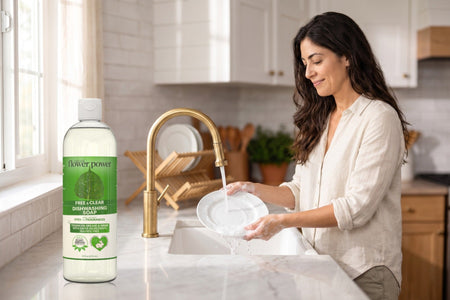
Individual members of the paraben family covered in this reference: methylparaben, ethylparaben, propylparaben, and butylparaben. Because parabens are often blended, see also the methyl- and propylparaben combination. For broader context on preservatives, see our preservative systems guide and the isothiazolinone preservatives hub. Related editorial reading: what we put in our products and how we formulate our products. You can also browse our hand soaps, dish soaps, and all-purpose cleaners.
Sources
- U.S. Food and Drug Administration. "Parabens in Cosmetics."
- European Commission. Regulation (EC) No 1223/2009 on cosmetic products, Annexes V and II (paraben restrictions and prohibitions).
