What It Is
Methylparaben (CAS 99-76-3) and propylparaben (CAS 94-13-3) are esters of para-hydroxybenzoic acid used as preservatives. They are frequently formulated together because a blend of a shorter- and a longer-chain paraben broadens the range of microorganisms controlled. In ingredient lists they often appear side by side, and regulators sometimes assess them as part of the wider paraben class.
What we make for this
Common Uses
The combination has been widely used in cosmetics, personal care products, pharmaceuticals, and some food applications to limit microbial growth. Methylparaben tends to act more on bacteria while propylparaben is more effective against molds and yeasts, so the pair is often chosen to cover a broader spectrum. It appears in creams, lotions, shampoos, and other water-containing formulas.
How It Works
Parabens disrupt microbial cell membranes and interfere with enzyme and transport processes, limiting the growth of bacteria, yeasts, and molds. Shorter-chain esters such as methylparaben are more water-soluble, while longer-chain esters such as propylparaben are more active in the oil phase. Combining them lets a formulator protect both phases of an emulsion with a lower total amount of any single ester. Their activity generally increases with chain length, as does the tendency to partition into oils. This complementary behavior is the main reason the two are studied and used as a pair.
Safety and Regulation
The EU Scientific Committee on Consumer Safety (SCCS) has evaluated parabens and set maximum concentration limits for methyl- and propylparaben in cosmetics, including combined-use limits when they appear together. The European Commission banned several longer-chain parabens (such as isopropyl- and isobutylparaben) for which safety data were insufficient. In the United States, the FDA states that it does not have information showing that parabens as used in cosmetics have adverse health effects, while noting ongoing scientific review. The U.S. Cosmetic Ingredient Review (CIR) has also assessed parabens and published conditions of use. Because limits are periodically updated, readers should consult current agency documents.
Why Natural Flower Power Does Not Use It
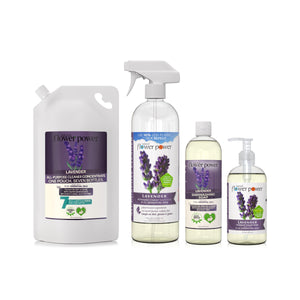
We do not use methylparaben or propylparaben in any of our formulas. Since 2012 we have made our products in-house using benzisothiazolinone (BIT) as our preservative, which suits our water-based concentrates and our supply choices. This is a formulation decision about our own system rather than a comment on how other brands preserve their products.
Related Ingredients
These esters belong to the wider paraben group; see methylparaben and propylparaben individually, or the parabens family hub for the class overview. NFP's own preservative is covered under benzisothiazolinone.
Sources
- EU Scientific Committee on Consumer Safety (SCCS). "Opinion on Parabens." European Commission. Accessed 2026.
- U.S. FDA. "Parabens in Cosmetics." Accessed 2026.
- Cosmetic Ingredient Review (CIR). "Parabens." Accessed 2026.
- PubChem, National Library of Medicine (NIH). "Methylparaben" and "Propylparaben" records. Accessed 2026.
