What It Is
Ethylparaben is a synthetic preservative in the paraben family (CAS 120-47-8). It is a white crystalline powder produced by esterification of para-hydroxybenzoic acid with ethanol. Its two-carbon ester chain places it between methylparaben (one carbon) and propylparaben (three carbons) in lipophilicity, antimicrobial potency, and estrogenic activity. Ethylparaben functions as a preservative in cosmetics and personal care products.
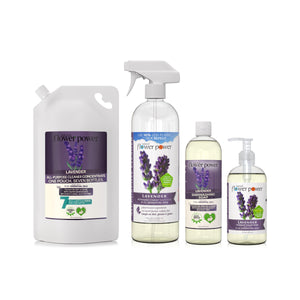
What we make for this
Common Uses
Ethylparaben is used in cosmetic creams, lotions, makeup, and personal care products. It is less commonly used as a standalone preservative than methylparaben and more often appears in combination with methylparaben to provide complementary antimicrobial coverage. Ethylparaben is also approved as a food preservative (E214 in Europe). Its use in consumer products has declined alongside the broader trend away from parabens.
How It Works
Ethylparaben shares the same mechanism of action as other parabens -- it disrupts microbial cell membrane transport processes by partitioning into the lipid bilayer. Its two-carbon chain gives it intermediate lipophilicity: more effective at penetrating microbial membranes than methylparaben, but less effective than propylparaben or butylparaben. When combined with methylparaben, the two provide complementary coverage because methylparaben is more effective in the aqueous phase of a formulation while ethylparaben partitions more readily into oily phases.
Safety and Regulation
The CIR Expert Panel included ethylparaben in its paraben safety assessment and concluded it is safe under the same concentration limits as methylparaben -- 0.4% individually, 0.8% total paraben mixture (CIR, 2008). The EU Cosmetics Regulation permits ethylparaben at up to 0.4% (as acid), the same limit as methylparaben and higher than the 0.14% limit applied to propylparaben and butylparaben.
Ethylparaben has estrogenic activity intermediate between methylparaben and propylparaben in receptor binding assays (Routledge et al., 1998). Its binding affinity is weak in absolute terms -- thousands of times weaker than estradiol -- but measurably stronger than methylparaben. The EU has not applied the additional restrictions (lower concentration limits, children's product prohibitions) to ethylparaben that it has applied to propylparaben and butylparaben, reflecting the judgment that ethylparaben's estrogenic potency does not warrant the same level of precaution.
Why Natural Flower Power Does Not Use It
Natural Flower Power does not use ethylparaben or any other paraben in any product.
Ethylparaben is excluded under the same formulation standard as the rest of the paraben family. Our BIT-based preservation system provides effective broad-spectrum protection across all our product lines without any parabens. Since we exclude the entire paraben class, the relative differences in estrogenic activity between individual parabens do not factor into our formulation decisions.
Related Ingredients
Methylparaben is the most closely related paraben, with a shorter chain and lower estrogenic activity. Propylparaben has a longer chain and stronger estrogenic activity. Butylparaben has the longest chain and strongest estrogenic activity of the common parabens. Benzisothiazolinone (BIT) is the preservative Natural Flower Power uses instead.
Sources
- Cosmetic Ingredient Review (CIR). "Amended Safety Assessment of Parabens as Used in Cosmetics." International Journal of Toxicology, vol. 27, Suppl. 4, 2008. Amended 2012.
- Routledge, E.J., et al. "Some Alkyl Hydroxy Benzoate Preservatives (Parabens) Are Estrogenic." Toxicology and Applied Pharmacology, vol. 153, no. 1, 1998, pp. 12-19.
