
What It Is
"Sulfate" is a shorthand for a family of anionic surfactants that share a sulfate group in their molecular structure. The most widely used members in cleaning and personal-care products are sodium lauryl sulfate (SLS), sodium laureth sulfate (SLES), and ammonium lauryl sulfate (ALS). They are typically derived from petroleum or from plant oils such as coconut or palm, then chemically processed. As a category, sulfates are valued for producing abundant foam and for their low cost, which is a large part of why they became so common.
What we make for this
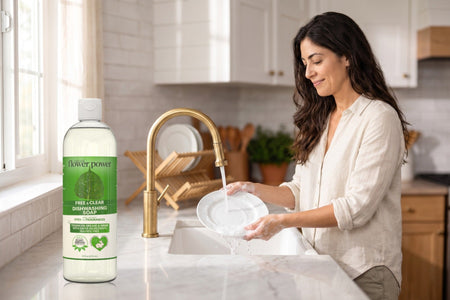
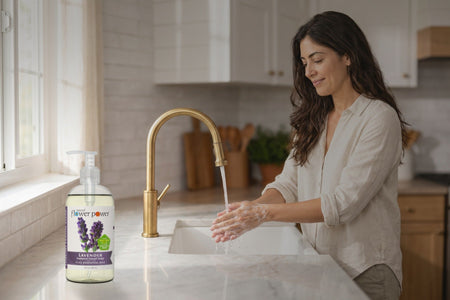
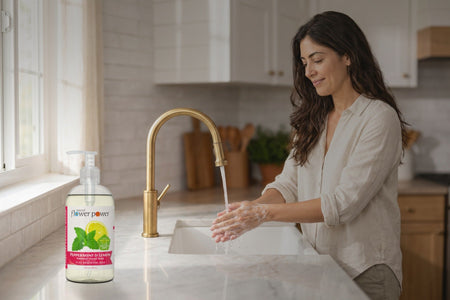
Common Uses
Sulfate surfactants appear in shampoos, body washes, toothpastes, dish soaps, laundry detergents, and a wide range of household cleaners. In these formulas they act as the primary cleansing agents and foam boosters. SLS is also used in laboratories and, in small amounts, as a food additive and in some medications. Because "sulfate-free" has become a recognizable product category, many formulators now offer both sulfate and sulfate-free versions of the same product type.
How It Works
Surfactants clean because each molecule has a water-attracting (hydrophilic) head and an oil-attracting (hydrophobic) tail. This dual structure lets sulfates lower the surface tension of water, surround oily soils, and lift them into suspension so they rinse away. The same properties that generate rich foam also make sulfates effective degreasers. SLES is produced by adding ethylene oxide units (ethoxylation) to a lauryl alcohol base, which makes it milder and more water-soluble than SLS.
Safety and Regulation
Sulfates are permitted in cosmetics and cleaning products in the United States and the European Union, and the industry Cosmetic Ingredient Review panel has assessed SLS and SLES as safe for use in rinse-off products at typical concentrations. A separate regulatory topic is 1,4-dioxane, a trace by-product that can form during the ethoxylation used to make SLES and other ethoxylated ingredients. The U.S. Food and Drug Administration has monitored 1,4-dioxane in cosmetics, and New York State law caps 1,4-dioxane in cosmetic products at 10 parts per million and in household cleaning products at 1 part per million. Sulfates are also recognized as skin and eye irritants at higher concentrations, which is why rinse-off formulas are the most common use.
Why Natural Flower Power Does Not Use It
We do not use sulfates in any of our products. Instead we formulate with plant-derived surfactants such as decyl glucoside, coco glucoside, and sodium alpha-olefin sulfonate, which give us the cleaning performance we want. This is a formulation choice we have made since we began making our products in-house in 2012, and it is why our labels carry a plain "sulfate-free" statement. As an independently owned company, we prefer to be specific about the surfactants we choose rather than about a category we leave out.
Related Ingredients
Individual members of the sulfate family covered in this reference: sodium lauryl sulfate (SLS), sodium laureth sulfate (SLES), and ammonium lauryl sulfate (ALS). The plant-derived surfactants we use in their place have their own pages: decyl glucoside, coco glucoside, and sodium alpha-olefin sulfonate. For broader context, see our plant-derived surfactants guide. Related editorial reading: how sulfates work and why we skip them and sulfate-free cleaning products. You can also browse our dish soaps, hand soaps, and all-purpose cleaners.
Sources
- Cosmetic Ingredient Review. Safety assessments of sodium lauryl sulfate and sodium laureth sulfate.
- U.S. Food and Drug Administration. "1,4-Dioxane in Cosmetics: A Manufacturing Byproduct."
- New York State. Environmental Conservation Law, 1,4-dioxane limits in cosmetic and household cleansing products. 2019.
