

Sulfate-free has become one of the most common label claims in cleaning products. It's also one of the least understood. This article explains what sulfates actually do, why some formulations skip them, what tradeoffs that involves, and how we approached the decision in our own products at Natural Flower Power.
What Sulfates Actually Do (and Why They're Everywhere)
Sulfates — most commonly Sodium Lauryl Sulfate (SLS) and Sodium Laureth Sulfate (SLES) — are surfactants. Their job is to reduce surface tension so water can grab onto oils, grease, and dirt and lift them off a surface. They also produce a lot of foam, which is the main reason they've dominated cleaning and personal care formulations for decades.
From a formulation standpoint, sulfates are effective, cheap, and well-understood. That combination is hard to beat if your primary goal is cost-efficient cleaning power. Most conventional dish soaps, hand soaps, and household cleaners use them because they work reliably and they're easy to formulate with.
So why would anyone skip them?
What we make for this
The Case for Formulating Without Sulfates
There are a few practical reasons, and they're worth separating from the marketing noise.
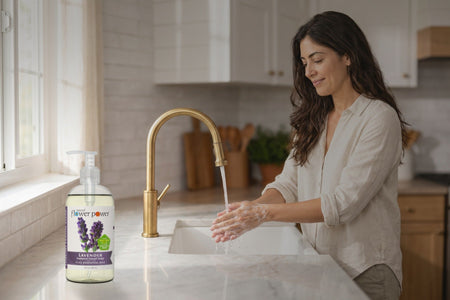
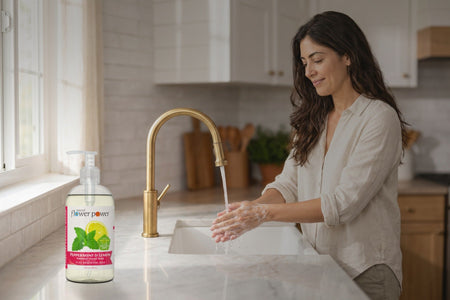
Skin irritation at repeated exposure. If you wash your hands fifteen times a day or stand at a sink doing dishes for twenty minutes, the surfactant system matters. SLS in particular is a known skin irritant at higher concentrations and with prolonged contact. For a product you use occasionally, that might not matter much. For hand soap and dish soap — products your skin sits in daily — it adds up. We hear this from customers constantly. One of the most common things people tell us after switching to our hand soaps or dish soaps is that their hands stopped cracking and drying out. That's usually the sulfate system they were using before.
Foam isn't cleaning. This is one of the biggest misconceptions in household cleaning. People associate suds with effectiveness — more bubbles, more clean. But foam is a side effect of certain surfactant chemistry, not a measure of cleaning power. A product can produce mountains of foam and leave residue behind. A different product can foam modestly and clean thoroughly. We formulate for cleaning performance, not foam volume. Our products do suds up — especially when you add water to the concentrated formula — but the suds are a result of how the surfactants work, not the goal.
The 1,4-dioxane question. SLES (the "gentler" sulfate cousin) can contain trace amounts of 1,4-dioxane as a manufacturing byproduct. This isn't automatic — it depends on the manufacturing process and supplier controls — but it's a known risk in the supply chain. Some brands manage it through testing and supplier audits. We chose to avoid SLES entirely so the question doesn't come up in the first place. One less thing to monitor, one less thing to explain.
What Replaces Sulfates (and Whether It Actually Works)
When you remove sulfates from a formula, you need something else to do the cleaning. In our case, we use a blend of plant-derived surfactants that work together rather than relying on one dominant ingredient.
This is where the formulation gets interesting, and where a lot of sulfate-free products fall short. A single alternative surfactant on its own often won't match the raw cleaning power of SLS. That's just chemistry. But a well-designed blend of complementary surfactants can match or exceed that performance because different surfactants attack different types of soil. One might be better at cutting grease. Another might be better at lifting protein-based residues. A third might improve how the formula rinses.
We spent a long time getting our surfactant blends right. Early versions of our dish soap cleaned well enough but didn't feel right — the viscosity was off, or the rinse wasn't clean, or the suds collapsed too fast for people used to conventional dish soap. The final formulations use multiple plant-derived surfactants that are designed to work together. The result is a concentrated formula where a small amount goes further than you'd expect.
The "Sulfate-Free" Label Doesn't Tell You Much on Its Own
Here's the thing most articles about sulfate-free cleaning won't say: the label alone doesn't tell you whether the product is well-formulated. A sulfate-free product can still contain synthetic fragrances, petroleum-derived ingredients, or surfactants that are just as harsh as what they replaced. "Sulfate-free" describes one formulation choice. It doesn't describe the whole formula.
The questions worth asking are the same ones that apply to any cleaning product. What surfactants are they using instead? Are the ingredients disclosed? Does the company explain why they made the choices they did? If the only thing a brand tells you is what they don't use, that's not transparency — it's marketing by omission.
We try to go further than that. Our Our Story & Standards page explains the reasoning behind our formulation decisions, including why we chose plant-derived surfactant systems and what tradeoffs were involved. The goal is to give you enough information to evaluate the decision for yourself, not just trust a label claim.
Does Sulfate-Free Clean as Well?
The honest answer: it depends entirely on the formulation.
A poorly formulated sulfate-free product will underperform a well-formulated sulfate-based one. A well-formulated sulfate-free product will match or beat a cheap sulfate formula. The surfactant system matters, but so does concentration, pH balance, and how the ingredients interact.
What we can tell you from fourteen years of formulating and manufacturing cleaning products: plant-derived, sulfate-free surfactant blends absolutely can deliver real cleaning performance. But they require more formulation work, they cost more in raw materials, and they don't allow you to cut corners the way a simple SLS-based formula does. That's the tradeoff, and we think it's worth it.
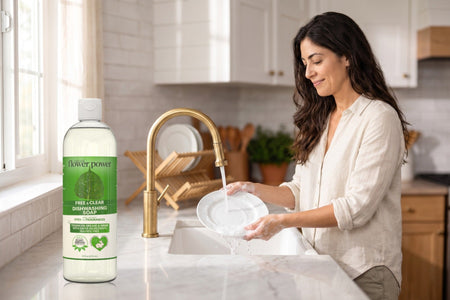
If you want to see the difference in practice, our dish soaps are a good test. They're concentrated, so you use less per wash. The plant-derived surfactant blend cuts grease without stripping your hands. And they rinse clean — no film, no residue. That last part is actually harder to achieve than it sounds, and it's where the surfactant blend design really matters.
The Short Version
Sulfates are effective, inexpensive surfactants that work well in cleaning products. They're also harsh on skin with repeated use, and SLES carries a manufacturing byproduct risk that requires active management.
Sulfate-free formulations replace them with alternative surfactants — often plant-derived — that can match the cleaning performance when the formula is designed well. The label "sulfate-free" alone doesn't guarantee quality, transparency, or better performance. The formulation behind it does.
If you're choosing between products, look past the front-of-label claim and ask what's actually in the bottle and why. That tells you a lot more than "sulfate-free" by itself ever will.
