
What It Is
Sodium lauryl sulfate (SLS) is an anionic surfactant with the chemical formula CH3(CH2)11OSO3Na (CAS 151-21-3). It is produced by sulfation of lauryl alcohol (derived from coconut or palm kernel oil, or from petroleum) followed by neutralization with sodium hydroxide. SLS is a white or cream-colored powder that dissolves readily in water. Its primary function is as a cleanser, foaming agent, and emulsifier in personal care and household cleaning products.
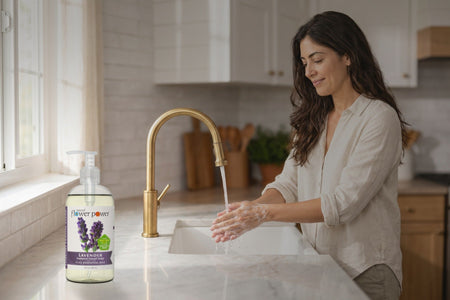
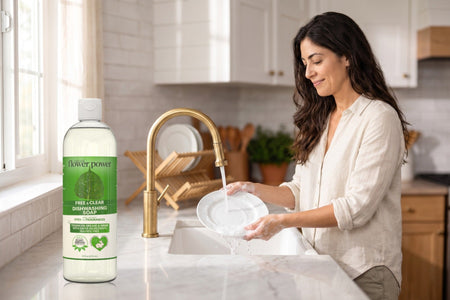
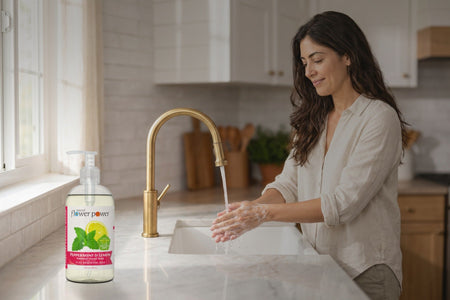
What we make for this
Common Uses
SLS is one of the most widely used surfactants in consumer products globally. It appears in shampoos, body washes, hand soaps, toothpastes, dish soaps, laundry detergents, all-purpose cleaners, and industrial cleaning formulations. Its popularity is driven by strong cleaning performance, high foam generation, low cost, and availability in both plant-derived and petroleum-derived forms. The FDA's Voluntary Cosmetic Registration Program reports SLS in thousands of cosmetic formulations across virtually every product category.
How It Works
SLS works by reducing the surface tension of water. Its molecular structure has a hydrophilic sulfate head group (which carries a negative charge and dissolves in water) and a hydrophobic 12-carbon fatty chain (which repels water and attracts oils). When dissolved in water above its critical micelle concentration, SLS molecules assemble into micelles -- spherical clusters with the fatty tails pointing inward. These micelles surround oil, grease, and dirt particles, suspending them in water so they can be rinsed away.
SLS produces higher foam volume and stronger raw cleaning power than most nonionic and amphoteric surfactants at equivalent concentrations. The negative charge on its sulfate head group also makes it more aggressive at interacting with skin proteins and lipids, which contributes to its cleaning effectiveness but also underlies its irritation potential.
Safety and Regulation
The CIR Expert Panel concluded in 1983 (reaffirmed in 2002 and 2015) that SLS is safe for use in cosmetics when formulated to minimize irritation (CIR, 1983). The FDA classifies SLS as GRAS for food contact applications at concentrations below 1% (21 CFR 172.822).
SLS is a well-documented skin irritant at concentrations above approximately 1%-2% in prolonged skin contact. It disrupts the stratum corneum (outermost skin layer) by extracting lipids and denaturing proteins, which increases transepidermal water loss and can cause dryness, redness, and irritation (Agner, 1991). The degree of irritation is dose-dependent, exposure-time dependent, and varies by individual. In rinse-off products (where contact time is brief), irritation risk is lower than in leave-on applications.
SLS is not a carcinogen. Despite persistent internet claims to the contrary, no credible regulatory body or peer-reviewed safety assessment has identified carcinogenic properties in SLS. The International Agency for Research on Cancer (IARC) has not classified SLS as a carcinogen. SLS is also not a contact allergen -- it is an irritant, which is a mechanistically different reaction that does not involve the immune system.
SLS is readily biodegradable and does not bioaccumulate in aquatic environments.
Why Natural Flower Power Does Not Use It
Natural Flower Power does not use sodium lauryl sulfate in any product.
SLS is an effective surfactant -- there is no question about its cleaning performance. Our decision to exclude it is based on formulation standards, not safety fears. SLS is more irritating to skin than the plant-derived surfactants we use (decyl glucoside, cocamidopropyl betaine, sodium alpha olefin sulfonate), and since our hand soaps and dish soaps are products people use multiple times a day on their skin, we formulated to minimize cumulative irritation. The tradeoff is that our surfactant blends produce less foam and somewhat lower raw degreasing power per unit of surfactant than SLS-based formulas. We compensate by using surfactant combinations that complement each other's cleaning and foaming characteristics.
Related Ingredients
Sodium laureth sulfate (SLES) is the ethoxylated form of SLS, designed to be less irritating while retaining strong cleaning performance. Ammonium lauryl sulfate is another sulfate surfactant with slightly different solubility characteristics. Decyl glucoside is the primary plant-derived surfactant Natural Flower Power uses instead of SLS in its cleaning formulations. Sodium alpha olefin sulfonate serves as the primary anionic surfactant in NFP's soaps -- a sulfate-free alternative with a different irritation profile.
Sources
- Cosmetic Ingredient Review (CIR). "Final Report on the Safety Assessment of Sodium Lauryl Sulfate and Ammonium Lauryl Sulfate." Journal of the American College of Toxicology, vol. 2, no. 7, 1983, pp. 127-181. Reaffirmed 2002, 2015.
- Agner, T. "Susceptibility of Atopic Dermatitis Patients to Irritant Dermatitis Caused by Sodium Lauryl Sulphate." Acta Dermato-Venereologica, vol. 71, no. 4, 1991, pp. 296-300.
- U.S. Food and Drug Administration. 21 CFR 172.822 -- Sodium Lauryl Sulfate.
