What It Is
Ammonium lauryl sulfate (ALS) is an anionic surfactant consisting of the sulfate ester of lauryl alcohol neutralized with ammonium hydroxide rather than sodium hydroxide (CAS 2235-54-3). Like sodium lauryl sulfate, it is produced by sulfation of lauryl alcohol derived from coconut oil, palm kernel oil, or petroleum. ALS is a clear to slightly yellow liquid that functions as a cleanser, foaming agent, and emulsifier in personal care and cleaning products.
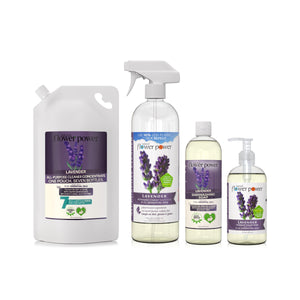
What we make for this
Common Uses
ALS is used primarily in shampoos, body washes, and facial cleansers. It is less common than SLS or SLES in household cleaning products but appears in some dish soaps and specialized cleaners. ALS is sometimes preferred in hair care formulations because the ammonium counterion gives it slightly different solubility and foaming characteristics compared to the sodium version. It produces a dense, creamy foam that some formulators prefer for shampoos.
How It Works
ALS works through the same surfactant mechanism as SLS -- the lauryl sulfate portion of the molecule is identical. The only structural difference is the counterion: ammonium (NH4+) instead of sodium (Na+). This difference affects solubility (ALS is somewhat easier to formulate at high surfactant concentrations) and pH behavior (ammonium-based systems can produce slightly lower pH formulations without additional adjustment), but the cleaning and foaming mechanism is fundamentally the same.
ALS has a similar irritation profile to SLS. Both disrupt the skin's lipid barrier through the same mechanism -- the irritation comes from the lauryl sulfate portion, not the counterion. Clinical patch testing shows comparable irritation scores between ALS and SLS at equivalent concentrations (CIR, 1983).
Safety and Regulation
The CIR Expert Panel assessed ALS alongside SLS in 1983 (reaffirmed 2002, 2015) and concluded it is safe as a cosmetic ingredient when formulated to minimize irritation (CIR, 1983). The irritation potential is comparable to SLS and is concentration- and exposure-time-dependent.
ALS is not a contact allergen or carcinogen. It does not undergo ethoxylation, so the 1,4-dioxane contamination concern associated with SLES does not apply to ALS. ALS is readily biodegradable and does not bioaccumulate.
Why Natural Flower Power Does Not Use It
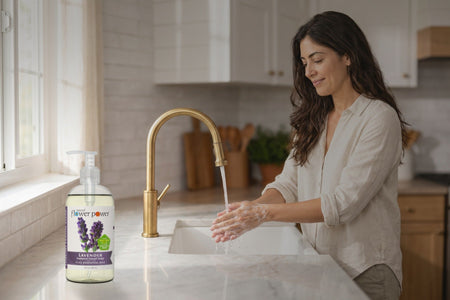
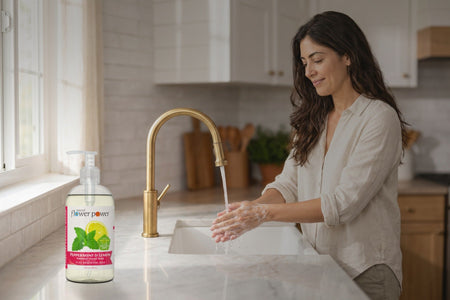
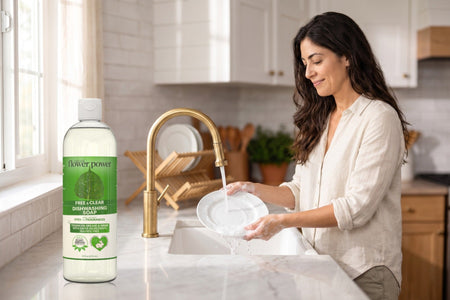
Natural Flower Power does not use ammonium lauryl sulfate in any product.
ALS is excluded under the same sulfate-free formulation standard that applies to SLS and SLES. The irritation profile is comparable to SLS, and the switch to an ammonium counterion does not meaningfully change the skin interaction for our product types. Our surfactant system -- built around decyl glucoside, cocamidopropyl betaine, and sodium alpha olefin sulfonate -- achieves the cleaning performance we need for hand soaps, dish soaps, and all-purpose cleaners without relying on any sulfate-based surfactants.
Related Ingredients
Sodium lauryl sulfate (SLS) is the sodium-counterion version of the same lauryl sulfate molecule, with identical cleaning and irritation characteristics. Sodium laureth sulfate (SLES) is the ethoxylated form of SLS, designed to be less irritating. Sodium alpha olefin sulfonate is the sulfate-free anionic surfactant Natural Flower Power uses instead of sulfate-based alternatives.
Sources
- Cosmetic Ingredient Review (CIR). "Final Report on the Safety Assessment of Sodium Lauryl Sulfate and Ammonium Lauryl Sulfate." Journal of the American College of Toxicology, vol. 2, no. 7, 1983, pp. 127-181. Reaffirmed 2002, 2015.
