
This ingredient is used in our products.
What It Is
Citric acid is a weak organic acid with the chemical formula C₆H₈O₇ (CAS 77-92-9). It occurs naturally in citrus fruits — lemons, limes, oranges, and grapefruits all contain significant concentrations. Commercial citric acid is produced primarily through the fermentation of sugars (typically from corn or cane sugar) by the mold Aspergillus niger. Its primary functions in consumer products are pH adjustment, chelation (binding metal ions), and preservative enhancement.
What we make for this


Common Uses
Citric acid is one of the most widely used ingredients in consumer products across nearly every category. It appears in all-purpose cleaners, dish soaps, hand soaps, shampoos, lotions, beverages, foods, and pharmaceutical products. In cleaning products and personal care, it is primarily used to lower and stabilize pH. In some cleaning applications, it also contributes mild descaling or hard water mineral removal due to its chelating ability. Citric acid is also a common food additive (E330), used as a flavoring agent and preservative.
How It Works
As a pH adjuster, citric acid donates hydrogen ions to a solution, lowering its pH (making it more acidic). Most surfactant-based cleaning products and personal care products perform best within a specific pH range, and citric acid is used to bring the formula into that range during manufacturing. Maintaining proper pH also extends shelf life and keeps preservatives working effectively — many preservatives, including BIT, perform differently at different pH levels.
As a chelating agent, citric acid binds to metal ions (calcium, magnesium, iron) present in hard water. These ions can interfere with surfactant performance — they react with soap molecules and reduce cleaning effectiveness. By binding those ions, citric acid keeps the surfactants free to do their job. This chelating effect is milder than dedicated chelating agents like sodium gluconate or EDTA, but it contributes meaningfully in formulations where it is already present for pH control.
Safety and Regulation
Citric acid is classified as Generally Recognized As Safe (GRAS) by the FDA for use in food (21 CFR 184.1033). It is approved for use in cosmetics and cleaning products without concentration limits by all major regulatory bodies worldwide. The CIR Expert Panel reviewed citric acid and its salts and concluded they are safe as used in cosmetics (CIR, 2012).
Citric acid is a mild skin irritant at high concentrations — direct application of concentrated citric acid (pure powder or concentrated solutions) can cause redness and stinging. In finished consumer products, where it is typically present at well under 1%, irritation is not a practical concern. People with very sensitive skin or damaged skin barrier may notice mild sensitivity to highly acidic products, but this applies to the pH of the overall formula rather than to citric acid specifically.
Citric acid is fully biodegradable and is a normal component of biological systems — the human body produces and metabolizes citric acid continuously as part of the citric acid cycle (Krebs cycle).
Why Natural Flower Power Uses It
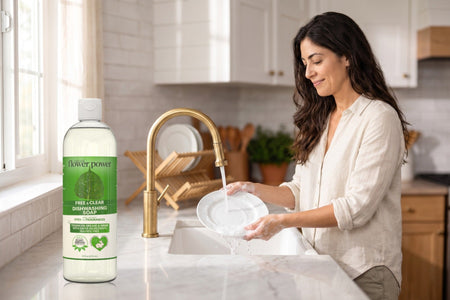
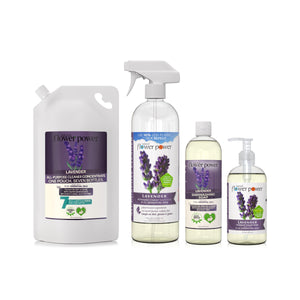
Natural Flower Power uses citric acid in its all-purpose cleaners, hand soaps, dish soaps, and air fresheners — every product line.
Its role is consistent across all formulas: it sets and stabilizes the pH. Each product has a target pH range that keeps the surfactants performing correctly and the preservative (BIT or SD Alcohol 40B) working at its most effective level. Citric acid is how we get there. It also provides mild chelating support in the all-purpose cleaners, where hard water performance matters — though sodium gluconate handles the heavier chelation work in that formula.
We chose citric acid over other pH adjusters (like phosphoric acid or hydrochloric acid) because it is plant-derived, well-understood, and does not introduce any additional hazard profile to the formula. It is one of the least complicated ingredient decisions we make.
Related Ingredients
Sodium gluconate is the dedicated chelating agent in NFP's all-purpose cleaners, handling hard water mineral binding more aggressively than citric acid alone. Sodium chloride is another simple, functional ingredient in NFP formulas — it adjusts viscosity rather than pH. Benzisothiazolinone (BIT) is the preservative whose effectiveness is partly maintained by the pH environment citric acid creates.
Sources
- U.S. FDA. 21 CFR 184.1033 — Citric Acid. GRAS classification.
- Cosmetic Ingredient Review (CIR). "Safety Assessment of Citric Acid, Inorganic Citrate Salts, and Alkyl Citrate Esters as Used in Cosmetics." 2012.
