
This ingredient is used in our products.
What It Is
Sodium gluconate is the sodium salt of gluconic acid, an organic compound produced commercially by the fermentation of glucose (CAS 527-07-1). It is classified as a chelating agent — a substance that binds metal ions and prevents them from interfering with other ingredients in a formula. Sodium gluconate is derived from renewable plant sources (typically corn sugar) and is widely used in both food and cleaning applications.
What we make for this


Common Uses
Sodium gluconate is used in all-purpose cleaners, industrial and institutional cleaning products, concrete admixtures, food processing, and pharmaceutical formulations. In household cleaning products, it serves as a chelating agent that improves cleaning performance in hard water. It is also used in bottle washing, metal surface cleaning, and textile processing where mineral deposit control is important.
How It Works
Hard water contains dissolved calcium and magnesium ions. These ions interfere with surfactant performance — they bind to surfactant molecules, reducing their ability to form micelles and clean effectively. In practical terms, hard water makes cleaners less effective and can leave mineral residue on surfaces.
Sodium gluconate works by binding (chelating) those calcium and magnesium ions, forming stable, water-soluble complexes that are rinsed away. Once the metal ions are bound, they can no longer interfere with the surfactants. The result is better cleaning performance, less residue, and more consistent results across different water conditions.
Compared to stronger chelating agents like EDTA (ethylenediaminetetraacetic acid), sodium gluconate is less aggressive but also more biodegradable. It provides effective chelation for typical household cleaning tasks without the environmental persistence concerns associated with EDTA.
Safety and Regulation
Sodium gluconate is classified as Generally Recognized As Safe (GRAS) by the FDA for use in food (21 CFR 184.1318). It is approved for use in cleaning products and cosmetics without specific concentration restrictions. The EPA includes gluconic acid and its salts on the Safer Chemical Ingredients List.
Sodium gluconate has very low toxicity by all routes of exposure. It is not a skin sensitizer, not an eye irritant at typical use concentrations, and not classified as a carcinogen, mutagen, or reproductive toxicant. It is fully biodegradable under standard conditions — it breaks down quickly and completely in wastewater treatment systems.
Why Natural Flower Power Uses It
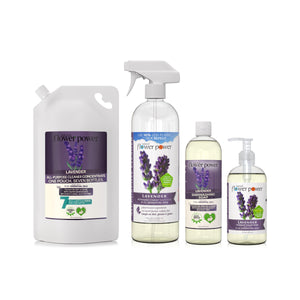
Natural Flower Power uses sodium gluconate in its all-purpose cleaners.
Hard water is a real-world variable that affects cleaning results in millions of homes. A cleaner that works well in the lab with purified water but underperforms in a home with hard well water is not a well-formulated product. Sodium gluconate is how we address that variable. It binds the calcium and magnesium that would otherwise reduce our surfactants' effectiveness, so the cleaner performs consistently regardless of local water quality.
We use sodium gluconate rather than EDTA for two reasons: it is naturally derived (produced by fermentation of corn sugar, consistent with our plant-derived ingredient standard), and it is fully biodegradable. EDTA is more powerful as a chelator but persists in the environment and can mobilize heavy metals in waterways. For a household all-purpose cleaner, sodium gluconate provides more than enough chelation without those environmental concerns.
Related Ingredients
Citric acid also provides mild chelating action in NFP formulas and is present alongside sodium gluconate in the all-purpose cleaners. Decyl glucoside and lauramine oxide are the surfactants in the all-purpose cleaner formula whose performance sodium gluconate helps protect in hard water conditions.
Sources
- U.S. FDA. 21 CFR 184.1318 — Glucono Delta-Lactone / Sodium Gluconate. GRAS classification.
- U.S. EPA Safer Chemical Ingredients List. epa.gov/saferchoice.
