
What It Is
"Fragrance" or "parfum" on an ingredient label is an umbrella term, not a single ingredient. A single fragrance can be a blend of dozens to hundreds of individual aroma chemicals, and most of those are synthetic — manufactured aroma molecules, scent-extending fixatives, and solvents. This family includes the general category of synthetic fragrances, specific aroma chemicals such as synthetic limonene, classes such as synthetic musks, and fixative compounds such as diethyl phthalate that are added to make a scent last longer. Each has its own dedicated page; this hub explains the umbrella term and the classes beneath it.
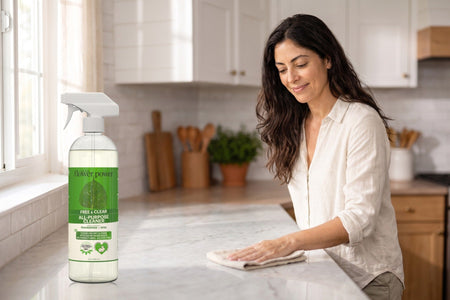
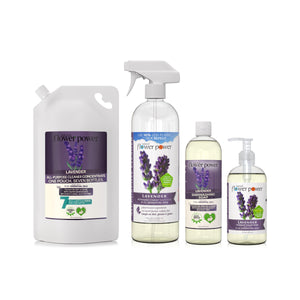
What we make for this


Common Uses
Synthetic fragrance is one of the most widely used ingredient categories in consumer goods. In cleaning and air care it appears in all-purpose sprays, dish and hand soaps, laundry products, surface wipes, plug-in and aerosol air fresheners, and scent beads. Aroma chemicals like synthetic limonene supply citrus notes, synthetic musks provide the soft, lingering base notes in laundry and softeners, and phthalate fixatives such as diethyl phthalate slow evaporation so a scent persists on surfaces, skin, or in the air. Because a fragrance blend can be disclosed on the label with the single word "fragrance," the specific components are often not itemized.
How It Works
Scent works by volatile molecules evaporating and reaching odor receptors. Perfumers build a fragrance in layers — bright, fast-evaporating top notes, mid notes, and heavy, slow base notes — to control how a scent unfolds and how long it lasts. Fixatives are the mechanism behind longevity: a fixative such as diethyl phthalate has low volatility and, blended with lighter aroma chemicals, slows their evaporation so the scent lingers. Synthetic aroma chemicals let manufacturers reproduce a consistent scent at scale and at low cost, and supply notes (certain musks, for example) that are difficult or expensive to source from botanicals.
Safety and Regulation
Fragrance disclosure is governed by labeling rather than a single safety verdict. Under U.S. federal cosmetic labeling rules, the individual components of a fragrance may be declared collectively as "fragrance" and are treated as protected trade-secret information, so they are not individually itemized (U.S. FDA; 21 CFR 701.3). California's Cleaning Product Right to Know Act of 2017 (SB 258) requires manufacturers of cleaning products to disclose certain fragrance ingredients, including designated fragrance allergens, on labels and websites. In the European Union, the Cosmetics Regulation (EC) No 1223/2009 requires a defined set of fragrance allergens — limonene among them, once oxidized — to be named individually on the label. The International Fragrance Association (IFRA) publishes usage standards for individual fragrance materials. Individual compound pages carry the specific detail.
Why Natural Flower Power Does Not Use It
Natural Flower Power does not use synthetic fragrance, synthetic aroma chemicals, synthetic musks, or phthalate fixatives in any product.
We scent our products with cold-pressed citrus oils and essential oils — the aromatic oils pressed or distilled directly from plants — rather than with a synthetic fragrance blend. That choice means the scent in our cleaners and air care comes from named botanical oils we can point to, not from an undisclosed "fragrance" declaration. It also means we do not use diethyl phthalate or other synthetic fixatives to extend scent life. Our scents are shorter and truer to the plant as a direct result of that formulation decision.
Related Ingredients
This family page anchors the synthetic-fragrance ingredient entries. Synthetic fragrances covers the umbrella "fragrance" term and how blends are built. Synthetic limonene is the lab-made citrus aroma chemical and its oxidation-allergen context. Synthetic musks are the persistent base-note compounds, and diethyl phthalate is the phthalate fixative used to extend scent. On the plant-derived side, cold-pressed citrus oils and the essential oils in cleaning guide explain what Natural Flower Power scents with instead. Related reading: why Natural Flower Power avoids synthetic fragrances and what "fragrance" means on cleaning product labels.
Sources
- U.S. Food and Drug Administration (FDA). "Fragrances in Cosmetics." Label declaration under 21 CFR 701.3.
- California Legislature. "Cleaning Product Right to Know Act of 2017" (SB 258).
- European Commission. Regulation (EC) No 1223/2009 on Cosmetic Products, Annex III (fragrance allergen labeling).
- International Fragrance Association (IFRA). "IFRA Standards" (usage standards for fragrance materials).
