
What It Is
Synthetic fragrances are laboratory-produced aroma chemicals or blends of aroma chemicals designed to impart scent to consumer products. Unlike essential oils, which are complex mixtures extracted from plants, synthetic fragrances are manufactured to achieve specific scent profiles through controlled chemical synthesis. On product ingredient labels, synthetic fragrances typically appear as a single entry -- "fragrance," "parfum," or "fragrance oil" -- regardless of how many individual chemical components the blend contains. A single "fragrance" listing can represent anywhere from a handful to over 100 individual synthetic chemicals.
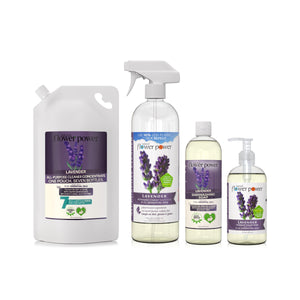
What we make for this



Common Uses
Synthetic fragrances are used in the vast majority of conventional cleaning products, air fresheners, laundry detergents, hand soaps, dish soaps, candles, personal care products, and household goods. The global fragrance industry produces thousands of distinct aroma chemicals, with the major fragrance houses (Givaudan, Firmenich, IFF, Symrise) supplying custom blends to product manufacturers. Synthetic fragrances dominate the market because they are cheaper, more consistent batch-to-batch, more stable, and available in scent profiles that cannot be achieved with natural ingredients alone.
How It Works
Synthetic fragrance chemicals work the same way natural aroma chemicals do -- they volatilize (evaporate) and interact with olfactory receptors in the nose to produce the perception of scent. Many synthetic fragrance chemicals are structurally identical to compounds found in nature (synthetic linalool, for example, is chemically the same as linalool from lavender oil). Others are entirely novel molecules designed in fragrance laboratories to produce scents that do not exist in nature or to replicate scents from natural sources that are too expensive or scarce to extract.
Synthetic fragrances are engineered for performance characteristics that natural essential oils often cannot match: longer-lasting scent, greater stability in alkaline or acidic formulations, resistance to oxidation, and consistency across production batches.
Safety and Regulation
In the United States, fragrance formulations are protected as trade secrets under the Fair Packaging and Labeling Act, which allows manufacturers to list all fragrance ingredients under the single term "fragrance" without disclosing individual components. The FDA does not require pre-market approval of fragrance ingredients in cosmetics. The fragrance industry self-regulates through the International Fragrance Association (IFRA) and the Research Institute for Fragrance Materials (RIFM), which conduct safety assessments and set use standards for individual fragrance chemicals.
The EU requires disclosure of 26 specific fragrance allergens on product labels when present above specified concentration thresholds (EC No 1223/2009, Annex III). A 2023 update expanded this list further. These include naturally occurring compounds like linalool and limonene as well as synthetic compounds like HICC (hydroxyisohexyl 3-cyclohexene carboxaldehyde, now banned in the EU).
Documented concerns with synthetic fragrance blends include contact allergy (fragrance is the most common cause of cosmetic contact allergy globally), respiratory sensitization in susceptible individuals, and the presence of phthalates (particularly diethyl phthalate / DEP) as fragrance fixatives. The lack of full ingredient disclosure makes it difficult for consumers or healthcare providers to identify specific sensitizing components.
Why Natural Flower Power Does Not Use Them
Natural Flower Power does not use synthetic fragrances in any product. All scent in our products comes from pure essential oils.
The primary reason is transparency. When we list lavender oil, lemon oil, or peppermint oil on our ingredient labels, customers know exactly what is providing the scent. A single "fragrance" listing tells them nothing. The tradeoff is real: essential oils cost more than synthetic fragrance blends, they vary slightly from batch to batch depending on growing conditions, and their scent does not last as long in finished products. We accept those tradeoffs because ingredient transparency is a core part of how we operate. We also avoid the phthalate exposure vector that comes with many synthetic fragrance systems -- DEP is commonly used as a fragrance fixative in synthetic blends and would not appear on our labels even if we used it, since it would be hidden under "fragrance."
Related Ingredients
Synthetic musks are a specific category of synthetic fragrance chemicals with environmental persistence concerns. Synthetic limonene is a manufactured version of the naturally occurring citrus terpene. Diethyl phthalate (DEP) is a phthalate commonly used as a fragrance fixative in synthetic blends. Lavender oil, lemon oil, and peppermint oil are examples of the essential oils Natural Flower Power uses instead of synthetic fragrances.
Sources
- European Commission. Regulation (EC) No 1223/2009 on Cosmetic Products. Annex III (Fragrance Allergens).
- Steinemann, A. "Fragranced Consumer Products: Exposures and Effects from Emissions." Air Quality, Atmosphere & Health, vol. 9, no. 8, 2016, pp. 861-866.
- IFRA. "Standards Library." ifrafragrance.org.
