
What It Is
Triethanolamine (TEA) is an organic compound with the chemical formula N(CH2CH2OH)3 (CAS 102-71-6). It is a tertiary amine with three hydroxyl groups, produced by reacting ethylene oxide with ammonia. TEA is a viscous, colorless to pale yellow liquid with a faint ammonia-like odor. In cleaning and personal care products, TEA functions as a pH adjuster, emulsifier, and surfactant.
What we make for this


Common Uses
TEA is used in cosmetic creams and lotions (where it emulsifies oils and water), liquid soaps, shampoos, shaving creams, household cleaners, and metalworking fluids. In emulsion products, TEA neutralizes fatty acids to form soap-like emulsifiers that stabilize oil-in-water formulations. It is also used as a pH adjuster in a wide range of cosmetic formulations. TEA has been a staple ingredient in cosmetic chemistry for decades, though its use has declined as manufacturers respond to consumer concern about ethanolamines.
How It Works
TEA's primary function is as a neutralizing agent. It reacts with fatty acids (like stearic acid or oleic acid) to form amine soaps, which act as emulsifiers in cream and lotion formulations. These amine soaps position themselves at the interface between oil droplets and water, stabilizing the emulsion. As a pH adjuster, TEA raises the pH of acidic formulations -- its three hydroxyl groups and amine nitrogen provide buffering capacity across a useful pH range.
TEA can also function as a weak surfactant on its own, though this is not its primary role in most formulations.
Safety and Regulation
The CIR Expert Panel concluded in 2013 that TEA is safe as a cosmetic ingredient in current practices of use and concentration when formulated to avoid nitrosamine formation (CIR, 2013). The EU Cosmetics Regulation (EC No 1223/2009) permits TEA in cosmetics with a maximum concentration of 2.5% and prohibits its use in combination with nitrosating agents.
Like DEA, TEA can react with nitrosating agents to form nitrosamines, though TEA is a tertiary amine and forms nitrosamines less readily than DEA (a secondary amine). The concern is the same in principle: under certain conditions, a probable carcinogen can form in the product. The likelihood is lower with TEA, but not zero.
TEA itself is not classified as a carcinogen. Skin irritation and sensitization at typical cosmetic concentrations are uncommon. The IARC has not classified TEA as a carcinogen, but N-nitrosodiethanolamine (which can form from TEA under certain conditions) is classified as Group 2B (possibly carcinogenic to humans).
Why Natural Flower Power Does Not Use It
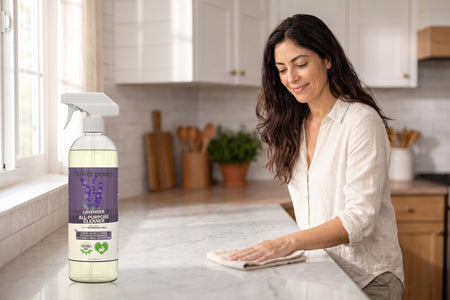
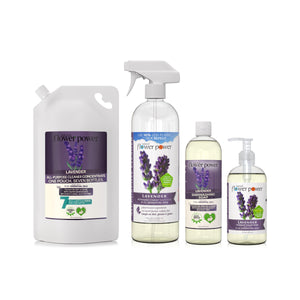
Natural Flower Power does not use triethanolamine in any product.
The reasoning is the same as for DEA: we avoid the entire ethanolamine family to eliminate nitrosamine contamination potential from our formulations. TEA carries lower risk than DEA on this front, but eliminating the concern entirely is simpler than monitoring and controlling it. Our formulations do not require amine-based pH adjustment or amine soap emulsification -- citric acid handles pH adjustment across our product line, and our surfactant system does not depend on amine soap formation for stability.
Related Ingredients
Diethanolamine (DEA) is a related ethanolamine with two hydroxyl groups, carrying higher nitrosamine formation risk. Citric acid is the pH adjuster Natural Flower Power uses instead of amine-based systems. Cocamide DIPA is the foam stabilizer and thickener NFP uses in place of DEA-based foam boosters. Monoethanolamine (MEA) is the simplest ethanolamine compound, with one hydroxyl group and similar regulatory concerns.
Sources
- Cosmetic Ingredient Review (CIR). "Amended Safety Assessment of Triethanolamine and Related Ingredients." International Journal of Toxicology, vol. 32, Suppl. 1, 2013, pp. 59S-83S.
- European Commission. Regulation (EC) No 1223/2009 on Cosmetic Products. Annex III, Entry 61.
