

Your teenager comes home with a rash on their hands. Your partner develops a sore throat after cleaning the bathroom. You open a bottle of "fresh linen" all-purpose cleaner and immediately feel light-headed. You flip the label to understand what went wrong, and there it is, buried in the ingredient list: fragrance.
That single word could represent anywhere from five chemicals to fifty-five chemicals. The law allows it. The company doesn't have to name them. And you're standing in your kitchen with no way to know which one just made your family uncomfortable.
This is the core frustration that led us to formulate our entire line without synthetic fragrances. After years of working with customers, listening to what they needed, and testing formulas in our own production facility, we realized that transparency starts with understanding what "fragrance" actually hides—and why most companies rely on it in the first place.
The Legal Definition of "Fragrance" (And Why It's So Loose)
In the United States, the FDA and FTC have agreed on a definition of fragrance, but the definition is intentionally broad. "Fragrance" or "parfum" on an ingredient list can legally include any combination of fragrant compounds—essential oils, synthetic aroma chemicals, carriers, fixatives, and preservatives that keep the fragrance stable—as long as the total package creates a scent.
This loophole is called "fragrance masking" or the fragrance exemption. A cleaning product manufacturer can list fifty different fragrant chemicals under a single word. In cosmetics and personal care products, fragrance is actually the most common allergen reported to the FDA.
The reasoning behind this rule is old. Fragrance formulas were considered proprietary trade secrets—companies didn't want competitors to reverse-engineer their signature scents, so regulators carved out an exception to ingredient disclosure laws. That made sense decades ago when formulations were genuinely complex and closely guarded. What doesn't make sense now is that the rule persists unchanged while synthetic fragrance chemistry has exploded into thousands of individual compounds, many of which have never been safety-tested in real-world products.

What we make for this

What's Actually Hidden Under That Word
When you buy a cleaning product labeled with "fragrance," you might be getting:
Synthetic aroma chemicals. These are lab-made molecules designed to smell like something—lemon, lavender, ocean breeze, fresh rain—without actually containing any lemon, lavender, ocean, or rain. Common ones include limonene (which can trigger allergies), linalool (a neurotoxic compound at high doses), and acetone derivatives. Manufacturers prefer these because they're cheap, stable, consistent, and more powerful than essential oils. A small amount goes a long way.
Essential oils or fragrant plant extracts. Sometimes fragrance does contain real plant material. But here's what the label won't tell you: essential oils are concentrated. A drop of lavender essential oil isn't the same as touching a lavender plant. Concentrations that seem tiny can provoke reactions in sensitive people, and essential oils degrade in storage, producing breakdown compounds that may irritate skin or lungs.
Carriers and solvents. The fragrant compounds need to be dissolved or dispersed. Companies use chemicals like diethyl phthalate (DEP) or other solvents to keep everything liquid and mixed. These carriers don't smell like much, but they're part of the "fragrance" ingredient and they're part of what you're breathing when you use the product.
Fixatives and preservatives. To keep fragrance from evaporating or degrading, formulators add other chemicals. These might be musks (which accumulate in body tissue) or phenolic compounds (which can cause systemic effects). Again, all hidden under one word.
The result is that "fragrance" might be anywhere from 2% to 20% of the product by weight, and you have no way to know which chemicals are doing the work—or which one is causing your reaction.
Why Even Small Amounts Matter to Sensitive People
If you have fragrance sensitivity or chemical sensitivity, you've probably learned not to trust the word "unscented." A product labeled unscented can still contain fragrance—companies just add a second fragrance chemical to mask the smell of other ingredients, and then claim the product is "unscented" because the fragrance isn't the point.
For sensitive people, the dose doesn't have to be huge to cause a reaction. A single synthetic fragrance molecule can trigger histamine release in mast cells, activate inflammatory pathways, or irritate mucous membranes—especially in people whose immune systems are primed to overreact. Some synthetic fragrances are photosensitizers, meaning they can make your skin more reactive under sunlight. Others cross the blood-brain barrier and accumulate.
The paradox is that fragrance is optional. It doesn't make the product cleaner. It doesn't improve the formula. It's there because consumers have been trained to expect scent, and because it's cheap enough that margins stay high even at budget price points. Removing it means losing a key marketing tool, and most manufacturers aren't willing to sacrifice that perceived value.
How We Approach Fragrance at Natural Flower Power
When we started formulating in 2012, we tested with customers immediately. We didn't build in a lab and launch from a marketing plan. We made small batches, got feedback, and iterated. One of the earliest patterns we noticed was that people with sensitive skin and respiratory sensitivities kept asking for the same thing: products that worked without triggering reactions.
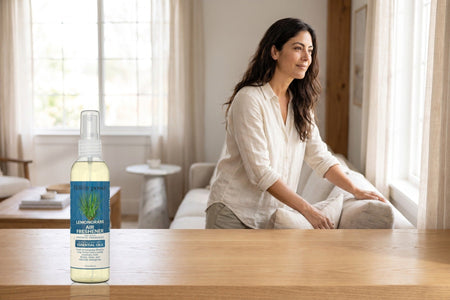
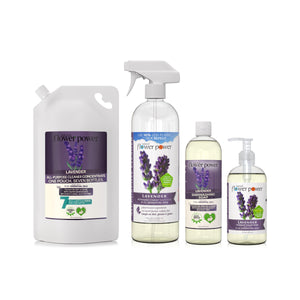
So we made a choice that sounds simple but changes everything operationally: we would never use synthetic fragrances. All of our scented products use essential oils only. No carriers, no fixatives masking as fragrance, no synthetic aromatics.
That choice has real tradeoffs. Essential oils cost more than synthetic chemicals. They're less stable—they oxidize and degrade over time, which changes the smell. We have to be careful about concentration because even plant-derived oils can irritate sensitive mucous membranes. Our "fresh linen" scent can't smell exactly the same six months from now as it does today, because the essential oil profile will have shifted slightly.
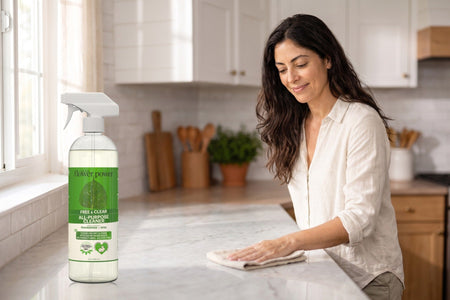
We also offer a complete hand soap line and dish soap line that are entirely unscented—our Free & Clear line. No essential oils, no fragrance of any kind. For people who are multiply sensitive or who prefer not to have scent added to products that touch their skin all day, these are the safe choice.
This is how we've built our label transparency: by not creating situations where we need to hide behind the word "fragrance." Every scent we use is named. Every ingredient is listed. The tradeoff is that we cost more, our products have a shorter shelf life, and our scents are subtler than heavily fragranced competitors. For the customers we're built to serve, that's exactly what they want. For mass-market consumers who expect a cloud of smell and rock-bottom prices, we're not the fit.
Reading Labels: What Actually Tells You What You Need to Know
If you're looking for a cleaning product that won't trigger your sensitivity or your family's allergies, here's what to look for and what to ignore.
Ignore "natural fragrance." This term has no legal definition. It can include essential oils, plant-derived fragrance chemicals, and synthetic chemicals deemed "derived from nature." It's marketing language, not ingredient transparency.
Ignore "hypoallergenic." There's no legal definition for this either. It's a claim companies can make without proving anything to regulators. It doesn't mean your skin won't react.
Look for specific ingredient names. If the label says "lavender essential oil" or "lemon oil," that's a name. If it says "fragrance," "parfum," or "fragrance blend," you're back to square one. Better companies will list the specific essential oils they use. The best companies will list them in order of concentration.
Check for the word "unscented." Truly unscented products have no fragrance ingredient at all—not because they claim it, but because it simply doesn't appear on the ingredient list. Some companies use unscented formulas as their sensitive-skin option.
Watch for multiple fragrance entries. If you see "fragrance," "fragrance blend," "essential oil blend," and "natural fragrance" all on the same label, that's a red flag. Each one of those is hiding a different set of chemical compounds. You're looking at heavy fragrance loading.
Pay attention to order. Ingredients are listed by concentration. If fragrance appears in the first five ingredients, it's a major component of the product—not just for smell, but probably also for preservation and stability.
When you see transparency about fragrance, it usually means the company made a deliberate choice to be transparent. They could hide behind the legal exemption, but they didn't. That often signals intentionality about other ingredients too. You can learn more about our full approach at Our Story & Standards.
The Sensitivity Connection: Why Fragrance Is Where Reactions Start
If you've had a reaction to a "gentle" or "hypoallergenic" cleaning product, fragrance is often the culprit. It's the one ingredient that doesn't have to be named, so when you try to figure out what went wrong, you hit a wall. You can't narrow it down. You can't avoid it with other brands because they all use the same legal loophole.
For people with multiple chemical sensitivities (MCS), fragrance is a known trigger category. Some sensitive people react specifically to synthetic musks, others to aldehydes, others to individual terpenes like limonene. Because everything is lumped under "fragrance," you can't find out which compound in which product affected you. You have to avoid the whole category.
This is why we designed our formulas the way we did. The customers who reach out with sensitivity concerns don't need marketing reassurance. They need products that actually work for their bodies. That means no hidden ingredients. No guessing. No fragrance loopholes.
What This Means for Your Household
If someone in your home gets rashes, hives, or respiratory responses when using cleaning products, fragrance is where to start investigating. Switch to a product with named fragrance ingredients—just essential oils, no "fragrance" or "parfum" on the label—and track whether symptoms improve. If they do, you've found your culprit. If symptoms persist even without synthetic fragrance, another ingredient is likely responsible, and you've narrowed the field.
For people who are neurodivergent or have sensory processing sensitivities, heavy fragrance in cleaning products can be overwhelming. The same mechanism that makes fragrance pleasant to smell can be a source of distraction or discomfort for brains that process sensory input differently. Unscented options give those households the choice to avoid that entirely.
For concerned parents trying to reduce chemical exposures in the home, fragrance is the obvious starting point because it's optional. You don't need fragrance to clean. Removing it removes dozens of unknown chemicals from your home without any loss of cleaning performance. It's not a risk you have to take.
The word "fragrance" on a cleaning product label represents a choice by the manufacturer: transparency or simplicity, clarity or margin. It's a choice that plays out every time you use the product, particularly if your body is sensitive to what's in it. Understanding what's actually hidden under that word is the first step toward taking back control of what you're bringing into your home.
