


TL;DR: If fragrance triggers your skin, the first thing to know is that "fragrance-free," "unscented," and "free and clear" don't mean the same thing, and none of them are legally defined in the US. Essential oils aren't automatically safe either: they contain known allergens, and they get more allergenic as they oxidize on the shelf. Dermatologists recommend eliminating fragrance entirely for anyone with known sensitivities. The reliable path is to start fragrance-free, isolate what your skin tolerates, and only add a tested scent back if and when you want to.
If you've stopped buying cleaning products because they make your hands burn or trigger a rash, you're not alone. Many people with eczema, dermatitis, or just generally reactive skin have learned the hard way that fragrance is the first suspect when a product causes trouble. The question becomes whether to eliminate fragrance entirely, or look for products scented with gentler options like essential oils.
This choice is harder than it should be. Most product labels don't tell you what "fragrance-free" actually means, and there's genuine confusion between "fragrance-free," "unscented," and "free and clear" because these terms aren't legally defined in the US. What makes the decision even murkier is that essential oils, which sound safer because they're plant-derived, actually carry sensitization risk that many people don't know about. You need to understand what you're looking at before making this choice.
Why labels mislead you
The US doesn't regulate how companies can use fragrance-related marketing terms. This creates a gap between what "fragrance-free" sounds like and what it actually is. A study of 174 bestselling moisturizers from major retailers found that 45 percent of products labeled as "fragrance-free" contained fragrance chemicals anyway. That's not a bug in the labeling system; it's how the system works.
When you see "unscented," the product often contains fragrance materials that were not used to create a scent. Instead, it contains masking chemicals designed to neutralize or cloak the odors of other ingredients. This means an unscented product might actually contain more fragrance-related chemicals than a scented one. The term "free and clear" sounds definitive but it's just marketing language, and individual companies interpret it however they want.
The real category that matters is "fragrance-free," which is meant to mean that neither fragrance materials nor masking scents are used. But even that term lacks legal teeth in the United States, which is why you can't fully trust a label without digging into the actual ingredient list. (We unpack this loophole in detail in what "fragrance" actually means on a label.)
US regulations create a structural problem that careful reading alone can't solve. Companies are allowed to list "fragrance" or "parfum" as a single line item even though that umbrella term can hide a long list of individual aroma chemicals, synthetic or natural. So you could buy a "fragrance-free" product and never know whether it actually contains no fragrance or just undisclosed masking agents.

What we make for this
The essential oil conversation
If fragrance has triggered your skin reactions before, you might assume switching to essential oil scents would solve the problem. Essential oils sound natural, they're plant-derived, and they're definitely not synthetic fragrances. But the research on essential oil sensitization tells a more complicated story, and it's worth understanding the difference between essential oils and fragrance oils before you decide.
Essential oils carry sensitization risk for sensitive skin. They contain naturally high concentrations of fragrance chemicals known to cause allergic contact dermatitis. Lavender, lemongrass, citrus oils, clove, and ylang ylang all contain compounds like linalool, limonene, citral, and eugenol, which appear regularly on allergen lists. A dermatology study analyzing nearly 11,000 patients with contact dermatitis found that 8.3 percent tested positive to at least one essential oil, with ylang ylang showing a 3.9 percent sensitization rate and lemongrass at 2.6 percent.
But here's the part most product marketing misses: oxidation changes everything. When essential oils sit in a bottle and are exposed to air, heat, and light, the compounds in them oxidize and become even more allergenic than their non-oxidized forms. Research comparing oxidized versus non-oxidized geraniol found that the oxidized form caused reaction rates several times higher than the pure form. That means an essential oil that started out gentle can become more problematic the longer it sits on a shelf.
This is why freshness matters. An essential oil scent in a product is less of a problem if that product was recently made and the oil hasn't had time to oxidize significantly. But once a product sits in storage or on a retailer's shelf, the risk increases, and neither you nor the brand may know exactly how long the oil has been oxidizing.
Synthetic and natural fragrances cause sensitization through different chemical pathways, but the outcome can be similar. Some synthetic compounds require oxidation to become allergenic, while others require metabolic transformation by your skin's enzymes. Essential oils contain compounds that work both ways. The chemical structure and oxidation state determine allergen risk, not whether the fragrance came from a plant or a lab, because once it's in a cleaning product, your skin doesn't distinguish between the sources.
What dermatologists actually recommend
The American Academy of Dermatology identifies fragrance as one of the most common allergens in personal care products. For patients with eczema, dermatitis, or any history of fragrance-related reactions, dermatologists recommend fragrance elimination entirely. This recommendation spans both synthetic and natural fragrance sources, because even essential oils carry sensitization risk for people with known sensitivities. It's the same reasoning behind how we think about cleaning products for sensitive skin.
The specificity of fragrance allergens is expanding too. In the European Union, companies must disclose dozens of individual fragrance allergens on product labels if they're present above certain thresholds. This matters because a European consumer can read "linalool," "limonene," or "citral" on a cleaning product label and understand exactly which compounds they're avoiding. A US consumer sees only the word "fragrance" and has to contact the company directly to learn more. This regulatory gap means EU shoppers with known sensitivities have much clearer information than US shoppers do, even though we're buying similar products.
Health Canada has aligned with EU standards, requiring disclosure of a comparable list of fragrance allergens. The US is moving in this direction under the Modernization of Cosmetics Regulation Act, but the timeline is slower and the transition is ongoing.
Transparency as a differentiator
Most "fragrance-free" cleaning products don't tell you much about their formulations. Larger companies often use fragrance suppliers who provide proprietary blends, which means even the brand doesn't know exactly which compounds are being used. That makes it impossible for them to disclose specifics to customers who need that information.
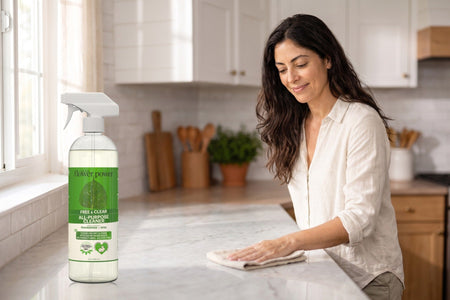
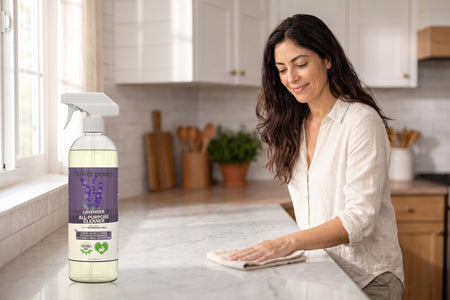
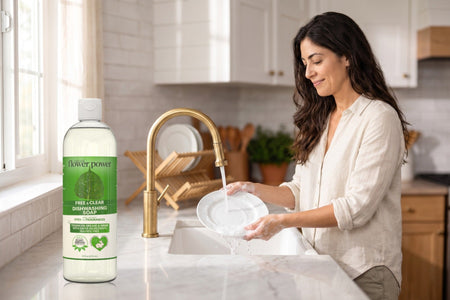
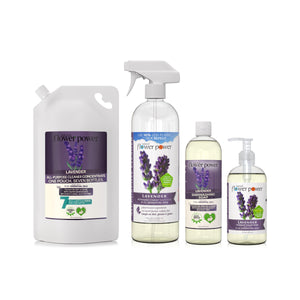
Manufacturing in-house changes this. Because we formulate and make Natural Flower Power products in our own facility in Cameron Park, California, where we've worked since 2012, we have complete visibility into every fragrance component we use. Our Free & Clear line contains no added fragrance and no masking agents, full stop. Our scented products use only essential oils, with nothing synthetic added. If you need to know which specific essential oils are in a product and want to check whether you've reacted to those compounds before, we can tell you exactly what's there. (It's part of why we don't use synthetic fragrance at all.)
This is a structural advantage most brands can't match, not because they don't want to be transparent, but because their supply chains don't allow it. When you buy from a company that controls its own manufacturing, you're buying from someone who can actually explain every ingredient choice.
Making your decision
If you're starting fresh after a fragrance reaction, fragrance-free is the logical starting point. It removes fragrance as a variable entirely, which lets you isolate whether your skin reacts to other ingredients in the formula. Many people find this is where they need to be and stay there indefinitely, and that's perfectly valid. The goal isn't to smell something nice in your cleaning products; the goal is to clean things without triggering a reaction.
If you tolerate fragrance-free products well and are curious about scented options, you could explore products with essential oils through patch testing. This means trying a small amount on a discrete area of skin first, then watching for delayed reactions over the next few days, before using it on larger areas or your hands. Essential oils lower in highly allergenic compounds, like chamomile or frankincense, might be gentler than ones known to be stronger sensitizers, such as lavender or clove, though individual responses vary widely.
The patch testing step matters because sensitivity isn't binary. Someone can tolerate lemongrass in a hand soap they use for thirty seconds and immediately rinse off, but react to lavender in the same product. Exposure time, concentration, and individual susceptibility all factor in. You're looking for products where you can keep contact with the fragrance compound as short as possible, because rinse-off exposure is generally lower-risk than leave-on exposure.
If you patch test and find that even gentle essential oils trigger a reaction, that's information too. It tells you that fragrance elimination is your answer, and there's no shame in that. Fragrances aren't essential for cleaning anything. They exist to make using the product more pleasant, and that's a nice-to-have that becomes a no-go when it causes real physical symptoms.
The shelf-life factor
If you decide to use products with essential oils, storage and freshness matter more than with fragrance-free alternatives. The longer essential oils are exposed to air and stored at warm temperatures, the more they oxidize and the higher the sensitization risk becomes. Buy products you'll use within a reasonable timeframe, store them in a cool place if possible, and be aware that a year-old product is riskier than a recent one.
With fragrance-free products, this concern doesn't exist. No added fragrance means no fragrance oxidation risk, and stability is simpler. But if you're using a scented product and you know it's been sitting on a shelf for an extended time, that's a point to consider when deciding whether to patch test.
Where to start
If fragrance reactions are new for you, or you're still trying to figure out what's actually triggering your skin, begin fragrance-free and remove the variable entirely. Our Free & Clear line has no added fragrance, no masking agents, no dyes, and plant-derived surfactants, with a complete ingredient list on every page. Most people start with the Free & Clear hand soap, the product your hands meet most often, and use it consistently for a few weeks. If your skin improves, that tells you fragrance was likely the culprit. If reactions continue, you can explore other ingredient categories while keeping fragrance eliminated.
If you've established that fragrance-free works and want to test a single, named scent, our scented hand soaps use only essential oils with nothing synthetic added, so you can check the exact oils against what you've reacted to before and patch test one option at a time. A single-scent product like the lavender hand soap makes that easier than a multi-scent blend.
Every NFP product is backed by our 90-Day Love-It Guarantee: if it doesn't work for your household, for any reason, we make it right. For fragrance-sensitive skin that's the honest way to try something new: test it against your own skin first, with no risk if it isn't the right fit. Your skin will tell you what it needs; the label is just the beginning.
