

Your hands get red and raw after doing the dishes. You notice a rash on your forearms the day after cleaning the bathroom. You switch to a product labeled "gentle" or "hypoallergenic" and still end up in the same place—uncomfortable, itchy, reaching for hydrocortisone cream. The frustration isn't just physical. It's the feeling that you've already tried everything, you've read the labels, and nothing seems to make sense. One product claims to be safe, and your skin says otherwise. Where's the disconnect?
This is the core question we hear from customers constantly at Natural Flower Power. People with eczema, contact dermatitis, chemical sensitivities, or even just easily irritated skin come to us because they're tired of vague marketing language and products that promise sensitivity care but deliver reactions. They've been sold terms like "hypoallergenic" that don't actually mean anything legally. They've been told to avoid "chemicals" when literally everything is made of chemicals. And they're stuck in a cycle of trial and error because most cleaning product companies rely on ingredient hiding to protect profit margins.
After years of working with sensitive-skin customers and formulating specifically for their needs, we've learned what actually causes reactions, which ingredients to genuinely avoid, and how to read product labels past the marketing. This guide walks through that knowledge, so you can make choices based on what's actually in the bottle, not on what's advertised on the front.
Why Sensitive Skin Reacts to Cleaning Products
Sensitivity isn't a single thing. Your skin might react to one ingredient and be fine with others. But the mechanism is usually the same: a substance breaks down the skin barrier, triggers an inflammatory response, or directly irritates nerve endings. For people with eczema or diagnosed dermatitis, the skin barrier is already compromised—it doesn't hold water in as efficiently and it lets irritants in more easily. For people with chemical sensitivities, the immune system overreacts, treating a mild irritant as a threat. For everyone else, repeated exposure to certain molecules can eventually cause a reaction that wasn't there before.
The problem is that cleaning products are designed to break down oils and dirt. They're inherently alkaline and harsh. The challenge is finding one that does that job without also breaking down the protective lipid layer on your skin. Most commercial cleaning products solve this by using strong surfactants (the cleaning molecules) paired with heavy fragrance to cover up the chemical smell. For sensitive skin, both of those choices are problems.
What we make for this

The Specific Culprits: Ingredients That Cause Reactions
When we talk to customers who've had reactions to cleaning products, we ask detailed questions: Did your skin feel tight immediately? Did the reaction come hours later? Did it spread? These patterns tell us which ingredient was likely responsible. Over time, we've identified the repeat offenders. These are the ingredients you should specifically look for on a label and actively avoid if you have sensitive skin.
Sulfates (Sodium Lauryl Sulfate and Sodium Laureth Sulfate)
Sulfates are surfactants—they're what makes soap bubble and what makes cleansers effective at stripping oil. The problem is that they're very good at stripping. They don't discriminate between the dirt on your hands and the protective oils in your skin. People with eczema or dermatitis often report that sulfates cause immediate tightness, redness, and sometimes burning. The reaction can happen within minutes of washing your hands with a sulfate-containing product. Once the skin barrier is compromised, it takes hours or days for it to repair. For people who wash their hands ten times a day (parents, healthcare workers, kitchen staff), sulfates become a compounding problem. Each exposure makes the next irritation worse.
What makes sulfates particularly tricky is that they're effective, they're cheap, and they're in most mainstream cleaning products. When you see a product labeled "sulfate-free," that's actually meaningful—the company made a deliberate formulation choice. Our hand soaps and dish soaps use plant-derived surfactants instead, which clean effectively without the aggressive stripping action.
Synthetic Fragrances and "Fragrance" Ingredients
We covered fragrance extensively in our fragrance guide, but it deserves specific mention here because fragrance sensitivity is one of the most common triggers for skin reactions. The word "fragrance" on a label can hide anywhere from five to fifty-five different chemicals. Among those chemicals, synthetic aromatics like limonene, linalool, and aldehydes are frequent culprits. Fragrance is optional. It doesn't make the product cleaner. It's there entirely for marketing—to make the product smell appealing. For sensitive skin, it's a pure cost-benefit loss.
Even "natural fragrance" or "essential oil" in high concentrations can cause reactions. Essential oils are plant-derived, yes, but they're concentrated. Lavender oil isn't the same as touching a lavender plant. People with respiratory sensitivities or skin sensitivities can have reactions to essential oils just as easily as to synthetic compounds. The difference is that with essential oils, the company should list them specifically. If it says "fragrance," you're back to the hiding game.
Methylisothiazolinone (MI) and Methylchloroisothiazolinone (MCI)
This is a preservative you'll see in many "gentle" and "hypoallergenic" products. It's used to prevent bacterial and mold growth in the bottle. It's effective, it's inexpensive, and it's also a known contact allergen. Studies have shown that MI causes allergic contact dermatitis in a significant portion of the population, particularly people with eczema or existing skin sensitivities. The ironic part: products marketed as sensitive-skin safe often contain MI because it's assumed to be milder than other preservatives. For someone who already has compromised skin, it's a direct irritant.
If you have eczema or a history of contact dermatitis, MI is worth learning to spot on ingredient lists. It's sometimes labeled as Kathon CG or isothiazolinone preservative. If a product causes a reaction and you see MI in the ingredient list, that's your answer.
Formaldehyde-Releasing Preservatives
Products like quaternium-15, dmdm hydantoin, and imidazolidinyl urea slowly release formaldehyde to preserve the product. Formaldehyde is a well-known skin irritant and sensitizer. For people with eczema or sensitive skin, formaldehyde-releasing preservatives can trigger inflammation, redness, and contact dermatitis. These preservatives are less common in hand soaps and dish soaps than in other personal care products, but they show up in some cleaning concentrates and all-purpose cleaners.
The frustrating part is that these preservatives work well—they keep products shelf-stable and prevent contamination. But for sensitive skin, they're a non-negotiable avoid. When you see them on a label, move on.
Dyes and Colorants
Most dyes don't add any functional value. They're there to make the product look good on the shelf or in the bottle. For sensitive skin, they're an easy eliminate. D&C and FD&C colors can trigger reactions in people with dye sensitivities, and colorants serve no purpose in a cleaning product beyond marketing. Clear or white products work just as well. Most people with eczema or sensitive skin naturally avoid dyed products once they make the connection.
How to Read a Label: The Practical Walkthrough
You've got a product in your hand. You're trying to figure out if it's safe for your sensitive skin. Here's the exact approach that works.
Step 1: Find the full ingredient list. It should be on the back or bottom of the product. If you can't find an ingredient list at all, that's already a red flag. Companies that aren't transparent about their formulation often have something to hide.
Step 2: Look at the order. Ingredients are listed by concentration, highest first. If a product has water, plant-derived surfactant, and then a long list of other things, you have a sense of what's actually doing the work. If fragrance is in the top five ingredients, the product is heavily scented—more potential for irritation.
Step 3: Scan for the culprits named above. Is there sodium lauryl sulfate? Any form of "fragrance"? Methylisothiazolinone? Formaldehyde-releasing preservatives? If yes to any, move to the next product. This isn't about being perfect—it's about removing known irritants.
Step 4: Check what preservative system is used. Good alternatives to the irritating ones above include potassium sorbate, sodium benzoate, and plant-derived preservatives like rosemary extract. These are gentler and still effective at preventing contamination. The company should list the preservative by name. If they don't, ask.
Step 5: Look for surfactant specificity. A label that says "plant-derived surfactants" is better than one that just says "surfactants." Better still is one that names them specifically—coco-glucoside, decyl glucoside, or sodium cocoyl isethionate are examples. Specific names mean transparency. Vague categories mean they might be hiding something.
If a product passes all of these checks and still causes a reaction, it might be that you have a specific sensitivity to an ingredient that's not a known common irritant. Keep that product and note what happened. The more specific you can be about your reactions, the easier it gets to find products that work.

The Honest Tradeoff: What Works Without Compromise
We formulate for sensitivity sufferers specifically, which means we make tradeoffs that bigger companies won't. I want to be clear about what those are, because understanding them helps you evaluate whether any product is actually built for your needs or whether it's built for the mass market with sensitivity-friendly marketing on top.
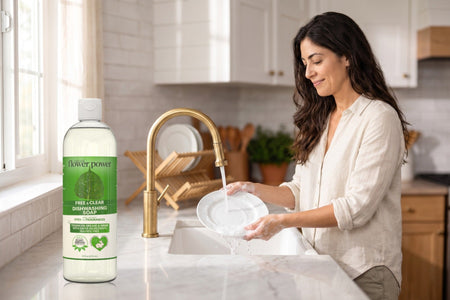
Our hand soaps and dish soaps skip sulfates entirely, use only essential oil fragrance (or no fragrance at all in our Free & Clear line), and use gentle preservative systems. That means they cost more to make, they have a shorter shelf life because essential oils oxidize over time, and they're less flashy on the shelf because they don't have bright dyes. For sensitive skin, that's exactly right. For someone buying a $1 bottle of dish soap at a big-box store, it's not our fit.
What we don't compromise on is cleaning performance. This is critical: you should never have to choose between safety and cleanliness. A good product for sensitive skin cleans well and doesn't irritate. If a product makes you choose, it's not actually solving your problem. It's just trading one issue for another. When customers tell us their skin improved after switching to our products, it's not because we're magic—it's because we systematically removed the irritants and kept everything else.
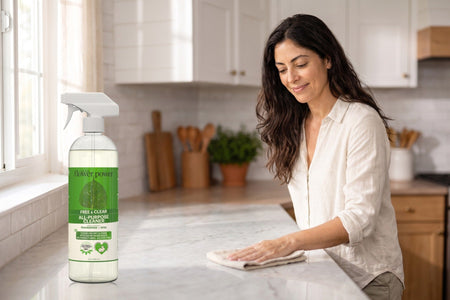
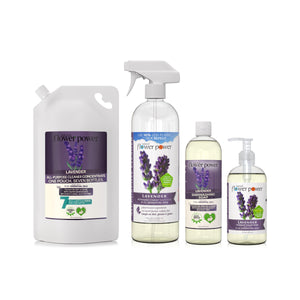
We also offer our full hand soap line with scent options, and a dish soap line that covers most households. The Free & Clear variants of both are for people who want absolutely no fragrance at all. That choice exists because we know that even essential oils can trigger some people. Not all sensitivity is the same, and our product range reflects that.
Reading Beyond the Front Label
Companies put marketing language on the front of the bottle because that's what sells products. "Gentle," "hypoallergenic," "dermatologist-tested," "sensitive skin formula"—none of these terms are legally defined. They can claim any of them without proving anything to regulators. Your job is to ignore the front and read the back.
When you see a product labeled "fragrance-free," that should mean no fragrance ingredient at all—none. If you see "unscented," that can be a trick; some companies use a fragrance chemical to cover up the smell of other ingredients, then call it "unscented" because the fragrance isn't the point. A truly unscented product has no fragrance entry on the ingredient list, period.
"Hypoallergenic" is meaningless without looking at what's actually in it. We see products with MI (a known allergen) marketed as hypoallergenic. It's technically accurate from a marketing standpoint—the company just hasn't had lawsuits yet—but it's not safe for your skin. The label is nearly useless without the ingredient list to back it up.
"Dermatologist-tested" means a dermatologist looked at it. It doesn't mean they recommended it or that it won't cause reactions. It's a claim that requires almost no substantiation. What matters is whether a dermatologist would recommend it to you specifically with your skin type, and that requires more information than a label claim can provide.
This is why we prioritize full ingredient transparency over marketing language. A list of ingredients you can understand tells you everything you need to know. The front of our bottle tells you what it is. The back tells you what's actually in it and what your skin is actually getting.
What to Do When You React to a Product
Even with careful label reading, you might still have a reaction. Individual skin is unpredictable, and sensitivities vary widely. Here's how to respond so you can actually identify the culprit instead of just avoiding everything.
Stop using the product immediately. Don't assume you need to keep using it to "build tolerance." That's not how contact dermatitis works. Continued exposure typically makes the reaction worse, not better. Patch off the irritated area and let your skin settle for a few days.
Once the acute irritation is gone, look at the ingredient list of the product that caused it. Make a note of every ingredient, especially the preservative system, fragrance type, and surfactants. If you move to a new product, try to change only one of those variables at a time. If the new product has a different fragrance but the same surfactant, and you don't react, you just identified your culprit. This is slow, but it's the only way to actually figure out your specific sensitivities.
For people with multiple chemical sensitivities or severe eczema, we recommend starting with a product you know is safe (often after months of trial and error), then expanding from there very carefully. Our Free & Clear hand and dish soaps are specifically designed as a safe starting point—no fragrance, no harsh surfactants, no known irritants. Once you know your skin tolerates those, you can experiment with scented options if you want them.
If you're in a situation where you need to use a cleaning product and you know it bothers your skin, wear gloves. Gloves create a barrier. A lot of hand irritation could be prevented if people simply wore protection while cleaning, rather than trying to find a perfect product. Sometimes the simplest solution is the right one.
Sensitive skin isn't a reason to accept low-quality products or settle for vague marketing. It's a reason to demand transparency, to ask questions, and to move your business to companies that actually deliver what they claim. Your skin will tell you whether a product works. The company's job is to make sure their labels tell you what's actually in the bottle, so you can make decisions before you have a reaction instead of after.
If you want to understand more about how we approach product standards and formulation, our story and standards page goes deeper into our decision-making process. The product may be different, but the principle is the same: you should know exactly what you're putting on your skin and why it's safe for you.
