


TL;DR: Most household bathrooms don't need bleach — they need consistent cleaning plus moisture and ventilation control. With three things on hand (white vinegar, baking soda, and a plant-derived all-purpose cleaner) you can handle soap scum, hard water deposits, early mould, and the toilet bowl. The technique is different from bleach: give the cleaner a few minutes of contact time instead of spraying and wiping. And the real reason a bathroom stays clean isn't a weekly chlorine assault — it's keeping it dry between uses.
The first time I noticed my daughter coughing every time I cleaned the bathroom, I was using bleach the way I'd always used it. Spray it down, let it sit, the tiles looked white. But something wasn't working anymore. After she left the room, I'd stand there thinking about what I was actually introducing to our home each week. That's not the same as fear-based thinking. It's just the arithmetic: if something makes my kid cough, I shouldn't use it regularly, especially not in a room with a closed door and a single exhaust fan.
Most household bathrooms don't need bleach. That's the starting point. What they need is consistent cleaning with something that handles soap buildup, hard water deposits, and mild mould growth without releasing chlorine fumes. Plant-derived all-purpose cleaners can do this effectively, but the technique is different from what bleach marketing taught us to expect. Bleach (sodium hypochlorite) works by oxidizing organic matter fast. Plant-derived cleaners work by breaking down dirt and grime so water can rinse it away. It's a different mechanism, which means a different application.
The other thing that changes: your bathroom doesn't stay clean because of a weekly bleach assault. It stays clean because you're managing moisture and ventilation, addressing stains as they appear, and using a cleaner that actually works on the materials in your bathroom. That system is not harder than bleach. It's just different. If you're still weighing whether you need the chlorine at all, it's worth reading why "chemical-free" doesn't make sense — because the goal isn't avoiding chemistry, it's choosing the right one for the job.
Understand what bathroom cleaning actually requires
Bathrooms present a specific set of jobs: mould and mildew in grout and corners, soap scum on tiles and doors, hard water deposits on fixtures, toilet bowl stains, and general surface grime. You don't need one product that does everything equally. You need approaches that work for each situation. The first step is separating cleaning from disinfection. Most household bathrooms with healthy residents need cleaning only. Disinfection matters when someone is sick or immunocompromised, and the CDC draws this line clearly. If you're thinking about whether your bathroom needs bleach, you're likely thinking about a weekly cleaning, not a disinfection. That matters. It means you're solving for cleanliness and appearance, not pathogen control. Plant-derived all-purpose cleaners handle the actual job in front of you.

What we make for this
Building your working set
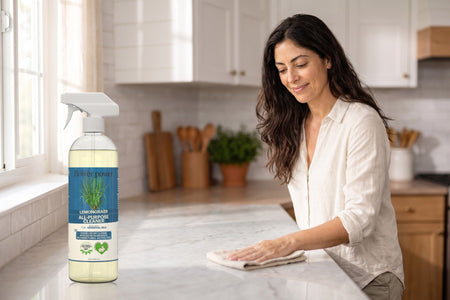
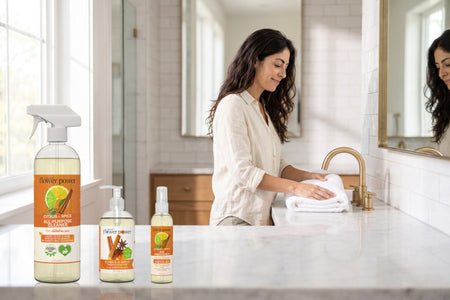
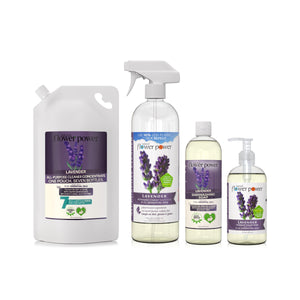
Keep three items in your bathroom: white vinegar, baking soda, and a plant-derived all-purpose cleaner. That's your complete toolkit. If your all-purpose cleaner uses sulfate-free, plant-derived surfactants like decyl glucoside and coco-glucoside, it can handle most of your regular cleaning. The surfactants in these formulations break down grease and grime by reducing surface tension, which allows dirt to rinse away with water. They're not designed to oxidize organic matter the way bleach does. Instead, they work by mechanical and chemical action together. You'll notice the difference in how you apply them.
Vinegar is your acid solution for mineral deposits and hard water stains. Baking soda is your gentle abrasive for scrubbing and your supplementary tool for odour management. We manufacture our all-purpose cleaner in-house at our facility in Cameron Park, California, where we've made everything ourselves since 2012 — which means we control every ingredient and can tell you exactly why we chose each one. We use plant-derived surfactants because they're effective at cleaning, they break down in water systems, and they don't create the respiratory hazard bleach does. That's not marketing. That's the decision we made about what goes into bottles we put into homes with families.
Cleaning soap scum and shower walls
Spray your all-purpose cleaner on shower tiles and doors, then let it sit for 5 to 10 minutes. This contact time is critical. Bleach works fast enough that you can almost spray and wipe. Plant-derived cleaners need a few minutes to break down the buildup. After the contact time, wipe with a damp cloth or sponge. For stubborn scum, spray again and let sit 15 to 20 minutes, then scrub lightly in circular motions before wiping. For soap scum that's been building for months, make a thicker solution by mixing your all-purpose cleaner with a small amount of baking soda until it forms a paste. Apply to the affected area, let it sit 10 minutes, scrub gently, and rinse. The combination of the surfactant and the abrasive action handles heavy buildup without scratching most tile surfaces.
Handling hard water deposits
Hard water leaves mineral deposits on faucets, fixtures, and chrome. White vinegar is your solution here. Soak paper towels in vinegar and wrap them around the affected area — faucet heads, shower arms, tile grout. Leave them for 1 to 2 hours. The acetic acid in vinegar dissolves calcium and magnesium deposits. After soaking, unwrap the towels and scrub the area with a soft brush or old toothbrush. Rinse thoroughly with water. For lighter deposits, you can skip the soaking and just spray vinegar directly on the surface, let it sit 15 to 30 minutes, then wipe. The vinegar smell dissipates as it dries.
Mould and mildew in grout and corners
Early mould growth responds well to plant-derived approaches. If you catch it early, before it's deeply embedded in porous grout, baking soda and vinegar work effectively. Spray undiluted vinegar onto the affected grout lines or corners. Let it sit for 30 minutes. Sprinkle baking soda over the vinegar and watch it fizz. Let it work for another 10 minutes. Then scrub with an old toothbrush or a small stiff brush, working the paste into the grout. Rinse with water. The fizzing action helps dislodge the mould while both vinegar and baking soda have mild antimicrobial properties.
For prevention, the chemical cleaner is secondary. The real work is environmental. Keep bathroom humidity below 50 percent by running your exhaust fan during and for at least 30 minutes after showers. Open windows when weather allows. Use a microfiber cloth to wipe down tiles and fixtures after showers so water doesn't pool and sit. Squeeze water off shower walls. If your bathroom stays dry between uses, mould can't establish itself. This is the difference between reactive bleaching and active maintenance. You're not trying to kill mould with chemistry. You're preventing the conditions that allow it to grow — which, as a bonus, is also one of the simplest things you can do for your indoor air quality.
Toilet bowl cleaning
Pour a half cup of baking soda into the toilet bowl, followed by a cup of white vinegar. Watch it fizz and bubble for 10 to 15 minutes. The bubbling action helps loosen stains and mineral deposits. Scrub the bowl with a toilet brush, working the paste into stubborn stains. Flush. For urine stains or rust rings, repeat the process and let the mixture sit for 30 minutes before scrubbing. If you're concerned about disinfection after someone in your household has been sick, spray the bowl with your all-purpose cleaner after the baking soda and vinegar step, let it sit 5 minutes, then brush and flush. For regular maintenance of a healthy household, the baking soda and vinegar combination is sufficient.
General surface cleaning
Spray your plant-derived all-purpose cleaner on counters, sinks, and other surfaces. Let it sit briefly, then wipe. For a weekly bathroom that's not heavily soiled, 2 to 3 minutes is enough. If you're catching buildup or grime, 10 minutes gives the surfactants more time to break down the dirt. This is different from how quickly bleach works, and it requires a small shift in your rhythm. You're not spraying and wiping immediately. You're giving the cleaner a few minutes to do its chemistry before you wipe. The same principle carries straight over to the rest of the house — it's exactly how we'd approach a deep clean of a kitchen without harsh chemicals. Most people find this actually takes less time overall because you're scrubbing less hard. The cleaner is doing more of the work.
What you're actually gaining
The practical benefit is immediate: no coughing in a closed bathroom. No chemical burn risk if a bottle tips over during a kid's bath time. No worry about what happens if someone accidentally mixes your cleaner with something else. The bigger benefit is that you're managing your bathroom's actual needs rather than overdoing chemical intervention. Bathrooms that are cleaned regularly with plant-derived products, kept dry through good ventilation, and maintained weekly stay clean. Not because of chemistry brute force, but because you're actually managing the conditions that keep them clean.
Where to start
If you want to clean your bathroom without the chlorine, our Free & Clear all-purpose cleaner is built for exactly this job: sulfate-free, plant-derived surfactants, no synthetic fragrance, no dyes, and a complete ingredient list on the page. Pair it with white vinegar and baking soda and you have everything the methods above call for. If you'd rather compare scents or formats first, the full all-purpose cleaners collection lists what's in each bottle so you can check it before you buy, and our Ingredients & Transparency hub explains every surfactant we use and why.
Every NFP product is backed by our 90-Day Love-It Guarantee — if it doesn't work for your household, for any reason, we make it right. That's the honest way to switch away from bleach: try it on your own tiles, grout, and fixtures, with no risk if it isn't the right fit.
