


TL;DR: Deep cleaning a kitchen comes down to technique, not stronger products. Plant-derived all-purpose cleaners handle grease, food residue, and grime on every surface when you use the right contact time and tools. This step-by-step walks through counters, range, sink, cabinets, floors, and the spots most people skip — with the timing and tool choices that actually move the needle.
A deep kitchen clean comes down to technique, not stronger products. Most people assume that harsh chemicals are what make a difference, that plant-derived cleaners are compromise solutions, and that skipping the harsh chemical fumes means accepting a less-clean kitchen. None of that is true, but getting actual results requires understanding how cleaners actually work.
The reality is more practical: plant-derived all-purpose cleaners are effective because they lift dirt and grease, but they work differently than chemically aggressive cleaners. They need contact time. They need the right dilution for the job. They need technique—the right amount of agitation, the right tools, the approach that fits the surface. Get those elements right, and your kitchen will be genuinely clean without bringing toxins into your home.
Understanding Contact Time and Dilution
Plant-derived surfactants (the compounds that break down grease and lift dirt) rely on chemistry, not brute force. They bond to oils and grease molecules, surrounding them and loosening them from the surface so they can be wiped away. But unlike harsher chemical cleaners that strip surfaces through corrosive action, plant-derived cleaners need time to do this work. They also need to be at the right concentration for the specific job.
Our all-purpose cleaner concentrate ships without water, which means you mix it at home at ratios that match your cleaning task. This isn't added friction—it's actually efficiency. A light dusting or normal daily cleaning uses a different ratio than a deep clean on heavily soiled surfaces. Using the wrong strength means either wasting product or not getting results. Understanding dilution puts actual control in your hands.
For most everyday cleaning, a 1:4 ratio (one part concentrate to four parts water) works well. For deep cleaning tough buildup—stovetop splatters, hard-water deposits, grease around cabinet handles—use a 1:2 ratio. The cleaner solution is stronger, which means the surfactants can work faster and more effectively on stubborn soils. This is not about "stronger chemicals"—it's about giving the plant-derived cleaners enough surfactant concentration to handle the job efficiently.

What we make for this
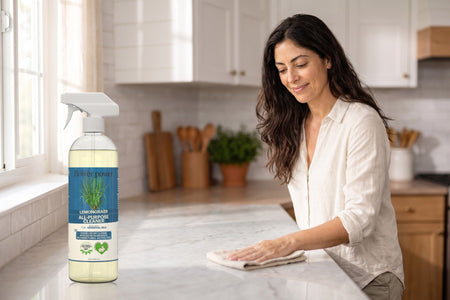
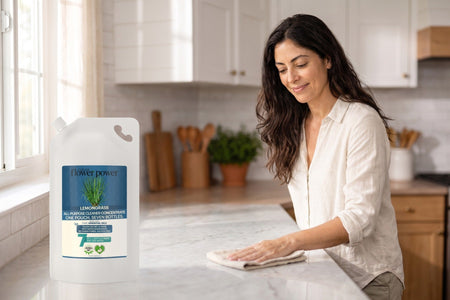
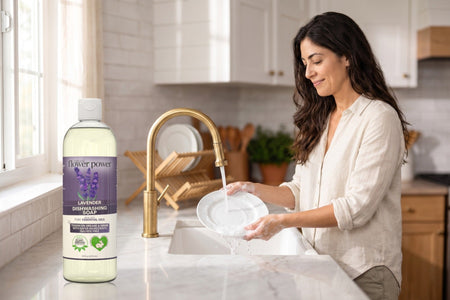
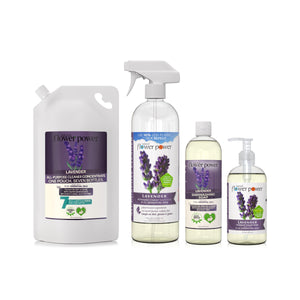
Countertops: Clearing Surface Buildup
Start with countertops because they're accessible and relatively straightforward. Most kitchen counter buildup is a combination of dried food residue, grease spatter, and dust. The key is recognizing that dried food needs moisture and time to soften before you can wipe it away cleanly.
Use your 1:2 dilution ratio and spray the entire countertop surface generously. Don't just mist it—you want visible wetness. Let it sit for two to three minutes. This contact time allows the surfactants to break down the bond between the residue and the counter surface. While it's sitting, you're not standing there waiting; move to the next surface or prepping your next task.
After contact time, wipe with a damp cloth or soft sponge using circular motions. You're not scrubbing hard—you're letting the cleaner do the chemical work while you provide light physical agitation to help things along. If you hit a stubborn spot (dried sauce, grease buildup), spray it again, let it sit for another minute, then wipe. Dried-on messes usually yield on the second pass.
Once you've wiped the entire surface, go back with a clean, damp cloth to remove any residual cleaner. This final pass prevents sticky spots and streaking. If you have a particularly glossy or polished countertop (granite, marble, quartz), this rinse step is especially important because cleaner residue can leave a haze.
The Stovetop and Range: Tackling Grease and Splatters
A stovetop accumulates months of spattered cooking oil, dried food, and heat-baked residue. This is where contact time becomes absolutely critical, and where many people give up on plant-derived cleaners—not because they don't work, but because they're expecting instant results and applying them like harsher chemicals.
Spray the entire stovetop surface with your 1:2 solution and let it sit for five minutes. This is longer contact time than countertops because the buildup is thicker and the oils are more stubborn. While you're waiting, you can clean the countertops around the stove or move on to the next area.
After five minutes, use a slightly damp cloth or soft-bristled brush with light to moderate pressure. The key word is light—you're not trying to physically scrub the grease off. The cleaner has already done the chemical work of loosening the bond. Your friction is just finishing the job. Hard scrubbing won't speed things up and can scratch the surface.
If you have burnt-on or extremely stubborn splatters, respray that specific area, let it sit another two to three minutes, and wipe again. You'll be surprised how much moves on the second pass. Once the visible grime is gone, do a final pass with clean water on a damp cloth to remove cleaner residue.
The glass stovetop top can be more delicate than the surrounding metal, so adjust your agitation accordingly. A soft cloth instead of a brush works better here. If you have removable grates (gas stove), remove them and soak them in a sink or basin with the 1:2 solution for 10-15 minutes before wiping. This lets gravity and submersion do more of the work.
The Oven Exterior and Sides
The oven exterior gets grease splatter, cooking splatters, and dust, but it's usually not as heavily built up as the stovetop. Use your 1:2 dilution and spray the sides and front, giving extra attention to any obvious splatters or stains.
Let it sit for three to four minutes. Wipe with a damp cloth using moderate pressure. The metal or painted surfaces of most ovens are durable, so you can use a bit more agitation than you would on the stovetop itself. One wipe-down usually does it, then finish with a clean water rinse.
The oven interior—the inside chamber—is a different job entirely and honestly depends on how built up it is. If you're doing regular deep cleans (every 4-6 months) and managing spills as they happen, interior buildup stays manageable with the same plant-derived approach. If you haven't touched the interior in years and there's carbonized food coating the bottom, that's a specialty job. Plant-derived cleaners will help, but you may also want a dedicated oven cleaner for interior work. We're direct about this: some jobs benefit from specialized products, and that's okay. What matters is not using harsh chemicals for routine cleaning when you don't have to.
The Sink and Faucet: Stainless Steel and Mineral Deposits
Kitchen sinks see a lot of abuse—food debris, hard water deposits, soap scum, and fingerprints on stainless steel. The approach here is a bit different because you're working with both the basin and the faucet, and water quality (hard water especially) can affect results.
Start by removing any loose debris—dishes, food scraps, drain catch. Then spray the entire sink with your 1:2 solution, paying special attention to the faucet base and handle where mineral deposits and soap buildup accumulate. Let it sit for three minutes.
Wipe the basin with a soft cloth or sponge. For stainless steel sinks, wipe in the direction of the grain to avoid streaking. The faucet gets the same treatment—wipe the spout, the handles, and especially under the base where water splashes and deposits build up.
For hard water stains (white, chalky deposits), the contact time approach works here too. Spray the affected area with your cleaner solution and let it sit for five minutes. If deposits are extremely stubborn, a slightly dampened cloth with a tiny bit of white vinegar (not mixed with the cleaner—just a backup for the most stubborn mineral buildup) can help, but the plant-derived cleaner alone handles most hard water deposits if you give it time and let it sit twice.
Rinse thoroughly under running water. Dry the sink and faucet with a clean cloth to prevent water spots and mineral residue.
Cabinet Fronts and Handles: Oil and Fingerprints
Cabinet fronts accumulate grease splatter from cooking and fingerprints from regular use. This is usually a lighter cleaning job than stovetops, but handles get heavy buildup from hand oils and cooking splatter.
Use your standard 1:4 dilution for general cabinet surface cleaning. Spray and let sit for two minutes, then wipe with a damp cloth. For cabinet handles, which see concentrated contact with hands and cooking splatter, use the 1:2 solution. Spray, let sit for three minutes, and wipe with a damp cloth. Handles often need a second pass because they're higher-contact points.
If your cabinets have grooved or textured fronts, you might need a soft brush or an old toothbrush to work the cleaner into the texture and lift out accumulated dust. Do this gently—you're enhancing the cleaner's work, not forcing anything.
Finish with a dry cloth to prevent water marks, especially on wood or finished surfaces. If you have stainless steel cabinet hardware, follow the same stainless steel grain-direction wiping approach as you did for the sink.
The Floor: Different Approach for Different Surfaces
Kitchen floors vary dramatically—tile, linoleum, laminate, or wood—and each one needs slightly different treatment with a plant-derived cleaner.
For tile with grout, use your 1:2 solution. Spray a section, let it sit for three to four minutes, then wipe with a mop or cloth. Pay attention to grout lines, where grease and dust accumulate. A slightly dampened grout brush (much gentler than a wire brush) can help loosen buildup in the lines. Tile is durable, so you have more flexibility with agitation than you would on other surfaces. Finish by mopping with plain water to rinse away cleaner residue.
For laminate or linoleum, use your 1:4 dilution (not the stronger solution). These surfaces are less durable than tile and don't handle excess moisture as well. Spray a section lightly, let it sit for two minutes, and wipe with a damp (not wet) mop or cloth. Wring out your mop well so you're not leaving standing water. Laminate and linoleum can swell or warp if exposed to too much moisture for too long.
For wood floors, use an even lighter touch. Mix your all-purpose cleaner at 1:6 or 1:8 (one part concentrate to six to eight parts water) to keep the solution very dilute. Spray lightly, wipe immediately with a barely-damp cloth, and dry the surface right behind yourself. Wood is porous and can be damaged by moisture. If your wood floor has significant buildup, this might be a job where you test in an inconspicuous area first.
Start with high-traffic areas and obviously soiled spots, then work through the rest of the floor systematically. Don't try to do the entire floor at once unless you have a large amount of cleaner mixed and ready. Working in sections keeps the cleaner at optimal strength and keeps you from spreading dirty water around.
The Bigger Picture: Why Technique Matters More Than Product Strength
At Natural Flower Power, we've been working with plant-derived formulations for over a decade. The pattern we see consistently is that people struggle with our products not because they're weak, but because they're different. People expect cleaning to happen instantly, the way it does with harsher chemicals that literally strip surfaces. Plant-derived cleaners don't work that way. They're gentler on surfaces and skin, which means they take an extra few minutes. That's not a weakness—that's the point.
Once you adjust your approach to include contact time and the right dilution ratio, results are equivalent. Sometimes better, because you're not damaging surfaces or breathing fumes while you clean. The additional few minutes per surface add maybe 10-15 minutes to a full kitchen deep clean compared to harsh chemical cleaning. For most people managing a household with kids, pets, or sensitivities, that's a worthwhile trade.
Honest About Limitations
If your kitchen has extremely heavy buildup—years of accumulated grease, burnt-on food that's turned to carbon, or significant hard water scaling—you may need to do multiple passes or consider specialty products for the most stubborn spots. Plant-derived cleaners work, but they're not infinitely more powerful. The trade-off for not using harsh chemicals is sometimes accepting that a truly neglected situation takes more time or a second product to fully resolve.
Similarly, if you're dealing with certain types of stubborn residue (like adhesive from old stickers), you might want a dedicated product rather than trying to force a general-purpose cleaner to do that job. This isn't a failure of plant-derived products—it's recognizing that not every cleaning challenge is the same, and matching the tool to the job matters.
The point is: for routine and moderate deep cleaning, which covers most household situations, plant-derived all-purpose cleaners work beautifully when you understand how to use them. For edge cases and specialty situations, it's okay to reach for something different. What you avoid through regular use of gentler products is the constant exposure to harsher chemicals that your household doesn't actually need.
A deep kitchen clean with plant-derived products means letting the chemistry do the work instead of forcing it through aggression. It means mixing your cleaner concentrate at the right strength for each job, giving it time to loosen buildup, then wiping it away with reasonable agitation. It means your kitchen gets genuinely clean, your family isn't breathing the VOCs that come with conventional cleaners, and you can see exactly what's on every label. That's a measurable upgrade over the conventional approach. For more on how we formulate our cleaners, explore our all-purpose cleaners or visit Our Story & Standards to understand our approach to product development. Every NFP product is backed by our 90-Day Love-It Guarantee — if it doesn't work for your household, we make it right.
