


TL;DR: Sulfate-based dish soaps strip grease through aggressive surfactants and a lot of foam. Plant-derived soaps cut grease through the same underlying chemistry, with a slightly different feel — water temperature, contact time, and soap concentration each carry more weight. Adjust those three and a sulfate-free soap matches the conventional version, with far less drying on your hands.
You switch from conventional dish soap to a sulfate-free version, and on your first sink full of oily plates, something feels off. The soap isn't foaming the way you expected. Your hands don't feel that tight, clean sensation. You scrub harder, wondering if the product actually works, and then halfway through rinsing you realize the grease is gone—it's just not advertising itself with a mountain of bubbles.
This moment confuses most people, and for good reason. We've been trained for decades to equate suds with cleaning power. Sulfates are cheap foaming agents, and manufacturers use them specifically because people see foam and believe the product is working. Sulfate-free soaps, especially those made with plant-derived surfactants, generate less visible lather but deliver the same cleaning performance—they just require you to understand how they actually work and adjust your technique accordingly.
After 14 years formulating plant-derived cleaning products and testing them across thousands of real household sinks, we've learned exactly which methods cut through grease without sulfates. The techniques aren't complicated, but they are different enough from what you're probably doing now that they're worth learning deliberately.
Why Plant-Derived Soaps Work Differently (And Why That Matters)
Both sulfate-based soaps and plant-derived soaps accomplish the same fundamental task: they break grease into droplets small enough to rinse away. The active molecules doing this work are called surfactants—molecules with one end that attracts water and another that attracts oil. When a surfactant surrounds a glob of grease, it forces the oil molecules to disperse, a process called emulsification.
The difference between sulfates and plant-derived surfactants isn't in this core mechanism. It's in how aggressively they generate foam, how they interact with your skin, and how they break down in the environment. Plant-derived surfactants—most commonly derived from coconut oil or fruit sugars—emulsify grease just as effectively. They create less visible foam because they're less aggressive foaming agents, not because they're weaker cleaners. This is an important distinction because it explains why your technique needs to shift. If you expect the bubbles to do the work, you'll apply the product too lightly and blame the soap.
The practical implication is that you need more direct contact between the soap and the grease, and more time for the surfactant to do its job, because you're not relying on mechanical foam action to break things apart. Once you know this, everything changes.

What we make for this

Method 1: The Hot Water Start
Water temperature matters more with plant-derived soaps than it does with sulfate-based ones. This is the single most important shift you can make.
When grease is cold, it hardens and clings to the dish surface. When it's warm, it becomes fluid and less sticky. With sulfate-based soaps, the aggressive foaming action can overcome this resistance even with lukewarm water. With plant-derived surfactants, water temperature does real work — treat it as part of the technique, not an afterthought.
The technique is straightforward: rinse your greasy dishes or cookware with the hottest water you can comfortably handle for about 30 seconds before applying soap. The heat alone will loosen dried grease and reduce the amount of work the soap has to do. Then add your plant-derived soap to a wet sponge or directly to the warm dish, and scrub. The combination of heat, surfactant, and physical scrubbing works faster than the soap alone could.
If you're hand-washing cast iron, stainless steel pans with stuck-on food, or dishes from a heavy cooking night, the hot-water start is non-negotiable. This single step reduces the time and effort by 30 to 50 percent because you're not fighting cold grease.
Method 2: The Contact Time Technique
Let the soap sit on the grease for 30 to 60 seconds before you scrub. This feels counterintuitive if you're used to soaps that foam aggressively on contact, but it's essential with plant-derived formulations.
During those 30 to 60 seconds, the surfactant molecules are working on surrounding and breaking down the grease. You're not watching them work because there's minimal visible foam to signal progress. But chemically, emulsification is happening. Starting to scrub immediately means you're interrupting the process before it's complete, and you'll end up scrubbing harder for longer.
The method: Apply your plant-derived soap to a wet sponge, make contact with the greasy surface, and pause. Let the soapy sponge sit in place for 30 to 60 seconds. Then scrub normally. You'll notice that the grease lifts more easily, and the overall process feels less laborious.
For heavy grease—cast iron that's been used for frying, baking dishes with dried cheese or meat residue—extend the contact time to 60 to 90 seconds. This is different from aggressive soaking (you're not leaving the dish sitting overnight), but it's long enough for the surfactants to fully surround the grease globules.
Method 3: Using Slightly More Product
With sulfate-based soaps, a small squirt of product creates a huge amount of foam, which can cover a lot of surface area and feels like it's doing heavy work. With plant-derived soaps, that same small squirt will be less visible but no less effective—it's just not creating the perceptual feedback you're used to.
The practical adjustment: use about 25 to 50 percent more product than you would with a conventional sulfate soap. You're not using a massive excess. You're using an amount that feels more proportional to the actual grease you're cleaning, because you're not getting a foam illusion.
One full squirt from a pump bottle, or one generous pump if you're using a concentrated version, is often enough for a normal sink of dishes. For a pan with heavy grease buildup, two full squirts on the sponge will give you the surfactant concentration you need. This is still economical compared to the environmental cost of sulfate runoff, and it works faster than fighting with insufficient soap.
Method 4: The Pre-Treat Option for Stubborn Grease
If you have baked-on grease, oil-caked cookware, or a roasting pan that's seen hard use, a 10 to 15-minute presoak with plant-derived soap can save you serious scrubbing time.
The process: Fill your sink or the cookware with hot water, add one to two pumps of your plant-derived dish soap, and submerge the greasy dish. Let it sit for 10 to 15 minutes. The warmth of the water keeps grease soft, and the surfactant has uninterrupted time to emulsify it. When you come back, the grease that seemed baked-on is now loosened and washes away with light scrubbing.
This is not an overnight soak. You're not waiting for the soap to do all the work. You're giving it a head start, which makes the scrubbing phase quick and efficient. For people who prefer not to scrub hard or who are dealing with particularly stubborn messes, this presoak is a game-changer.
What Plant-Derived Surfactants Actually Are (And Why This Matters)
Most of our plant-derived dish soaps use surfactants derived from coconut oil and fruit sugars—molecules like coco-glucoside and decyl glucoside. These are real plant materials, processed into surfactant form, and they perform identically to their synthetic counterparts in terms of greasing-cutting ability. The difference is in how they break down after they leave your sink. Synthetic sulfates persist in waterways and take longer to biodegrade. Plant-derived surfactants break down much faster in the environment, which is why we choose them.
But understanding what they are helps you understand why the technique shifts. These surfactants are less aggressive than sulfates. They're gentler on skin—our customers with sensitive hands notice this immediately. And they generate less foam because they don't have the aggressive bubble-promoting structure that sulfates do. This isn't a weakness of the ingredient. It's exactly the tradeoff we made deliberately.
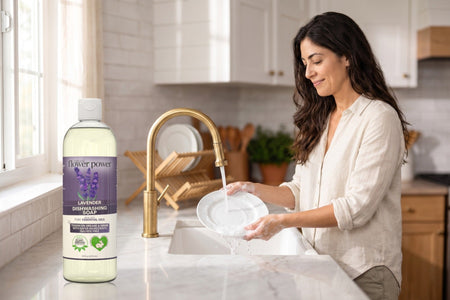
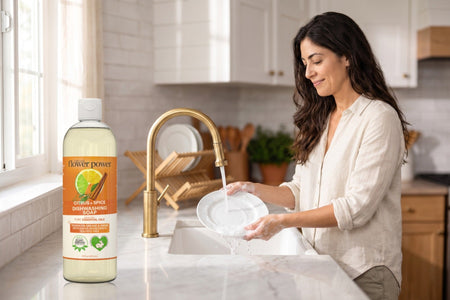
Our Free & Clear variant uses the same surfactants with no added scent, making it the choice for people who are multiply sensitive or prefer fragrance-free dishes. Our scented options—Peppermint & Lemon, Lemongrass, and Citrus Spice—use the same surfactant base with essential oils added for scent. Every NFP product is backed by our 90-Day Love-It Guarantee — if it doesn't work for your household, we make it right.
The Myth of Suds as a Cleaning Signal
This deserves its own section because it's the biggest reason people feel uncertain about sulfate-free soaps, even when the soap is working perfectly.
Foam is not a measure of cleaning power. It's a measure of how aggressively a soap foams. Sulfates foam aggressively. Plant-derived surfactants foam less. Neither of these facts has anything to do with how effectively the soap cuts grease. Yet we've been conditioned—through decades of advertising—to trust the bubbles.
The best test is not visual. It's tactile. Dip a soapy sponge into a greasy surface and feel whether the grease is breaking apart and lifting. With plant-derived soap, this happens quickly, even without massive foam. Once you've felt this a few times, the visual difference becomes irrelevant. You're no longer watching for confirmation from bubbles. You're feeling the grease emulsify under your hands.
This is a genuinely different sensory experience, and it takes about one week of adjusted technique for most people to trust it completely. By the second week, you'll wonder why you ever thought foam was necessary.
Putting It Together: A Practical Sequence
Here's how a typical greasy-dish wash goes when you're using plant-derived soap:
For normal dishes with light to moderate grease: Rinse with hot water, apply soap to a wet sponge, let it sit for 30 seconds, scrub quickly, rinse clean. Total time: 2 to 3 minutes per dish or cookware item.
For heavy grease or dried-on food: Hot water rinse for 30 seconds to loosen, apply double the normal soap amount, wait 60 seconds, scrub, rinse. Total time: 4 to 5 minutes per item.
For cast iron or seriously stuck-on residue: Fill sink with hot water, add soap, submerge cookware for 10 to 15 minutes, then scrub lightly. Total time: 15 to 20 minutes of mostly waiting, 2 to 3 minutes of active scrubbing.
Across all three scenarios, the actual scrubbing time is often less than it would be with sulfate-based soaps, because you're not fighting invisible chemical resistance. You're working with a plant-derived surfactant that's already begun the work, and your scrubbing is the finishing step, not the entire process.
Pairing Plant-Derived Soap with Water Temperature and Material
Different cookware benefits from different approaches, all grounded in the methods above but adjusted for the surface.
Stainless steel: Tolerates hot water and aggressive scrubbing. Use hot water, the contact time method, and normal pressure. Your dishes will be clean and streak-free.
Non-stick cookware: Requires gentler scrubbing because the coating is delicate. Use hot water, the contact time method, and a soft sponge. The plant-derived surfactant will do most of the work, so you don't need pressure—gentleness is sufficient.
Cast iron: Benefits from hot water and the presoak option. If you're worried about washing away seasoning, plant-derived soaps are gentler on the protective oil layer than conventional sulfate-based soaps are. Use warm to hot water, apply soap, let it sit, scrub lightly, and rinse quickly.
Delicate glassware: Use warm water (not boiling), the contact time method, and minimal pressure. Plant-derived soaps are less likely to dry out or irritate hands with repeated use, so your hands will stay comfortable even with a full sink.
Why This Matters Beyond the Sink
Learning to use plant-derived soap correctly on dishes is actually learning to trust a fundamentally different chemistry. Once you adjust your expectations and technique, you realize you've been paying for aggressive foaming agents all these years—agents that were never necessary for cleaning. You've also been rinsing sulfates down your drain every single day, contributing to water pollution and bioaccumulation in aquatic ecosystems.
Switching to plant-derived soap is a move to a product that works just as well and asks you to trust chemistry over marketing theater. For more on how we approach formulation decisions and ingredient transparency, visit our Our Story & Standards page, or browse our plant-derived dish soap collection directly.
Once you've mastered grease removal with sulfate-free dish soap, you've solved the most common objection people raise about plant-derived products. You've proven to yourself that they work. Everything else—whether that's hand soap, all-purpose cleaner, or other products—becomes easier to approach because you've already moved past the "but does it actually clean?" question.
