


TL;DR: A septic system is a living bacterial ecosystem, not a storage tank, and your cleaning products flow straight into it. Bleach, antibacterial and disinfecting cleaners, phosphates, harsh drain cleaners, and slow-to-degrade synthetic surfactants suppress the bacteria that treat your wastewater—and the repair bills run into the thousands. "Septic safe" is an unregulated marketing claim, so the real tool is a complete ingredient list. Plant-derived surfactants break down readily because septic bacteria recognize them, which protects both your system and your budget.
If you manage a home with a septic system, you already know that what goes down your drain matters. But most homeowners don't realize how fragile the bacterial ecosystem is that makes the whole system work. The cleaning products you use daily, the ones that feel routine and safe, can actually damage the system in ways that lead to thousands of dollars in repairs.
This guide addresses a specific question: which ingredients actually protect your septic system, which ones harm it, and how do you evaluate products independently instead of relying on marketing claims that say "septic safe" without any real meaning behind them.
How septic systems work, and why your cleaning products matter
A septic system is not a storage tank. It is a working biological system that treats wastewater through bacterial breakdown. When wastewater enters your septic tank (typically 1,000 to 1,500 gallons), it separates into three layers: solids settle as sludge on the bottom, oils and grease float as scum on the surface, and the liquid flows through to a drain field. Two types of bacteria do the actual work: anaerobic bacteria in the tank sludge break down organic waste into harmless liquids and biogas, while aerobic bacteria in the drain field (which has oxygen) further process contaminants as water percolates through soil.
Your cleaning products enter directly into this bacterial ecosystem through your drains. Any chemical that kills or suppresses bacteria compromises the entire treatment process. The bacteria cannot differentiate between harmful pathogens and beneficial treatment organisms, so an antibacterial cleaner that kills kitchen bacteria also kills the bacteria your septic system depends on.

What we make for this
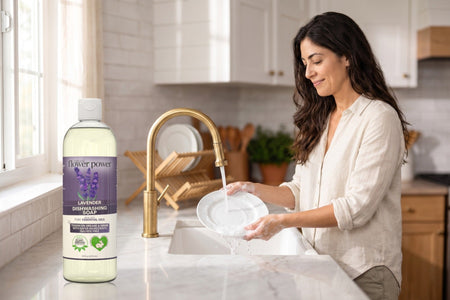

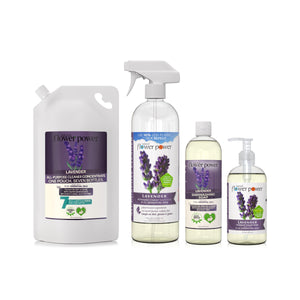
Ingredients that damage septic systems
Bleach is the most obvious culprit. The indiscriminate antimicrobial effect that makes bleach effective at killing mold and odor-causing bacteria in your bathroom also kills the treatment bacteria in your tank. Chronic exposure is what causes real damage: occasional use of diluted bleach in normal laundry loads (about 3/4 cup or less) typically does not harm the system because bacteria can recover from rare exposure. But daily use, or pouring bleach directly down the drain, overwhelms the bacterial colonies faster than they can regenerate.
Antibacterial soaps and cleaners present a different kind of cumulative risk. Products labeled "antibacterial" or "disinfecting" are specifically formulated to kill bacteria. When used occasionally and diluted with normal household water use, the damage may be negligible. When used chronically, particularly products like automatic toilet bowl cleaners that release chemicals with every flush, the bacterial populations deteriorate under constant chemical pressure.
Synthetic surfactants (the compounds that do the actual cleaning) are a less visible but more persistent problem. To understand why they matter so much, it helps to know what surfactants are and how they clean: they're the molecules that lift grease and grime so water can rinse it away. Many synthetic versions are long-chain molecules derived from petroleum, and their structure resists breakdown by the microbes in your septic system. Instead of biodegrading readily, they accumulate in the tank and drain field, causing buildup that clogs the system. Synthetic surfactants also create excessive foaming, which interferes with proper tank layering and slows treatment. The financial consequence is significant: drain field clogging or damage can cost $3,000 to $15,000 or more to repair.
Phosphates encourage algae blooms both inside the septic tank and downstream in waterways. The algae consumes oxygen, suppressing or killing beneficial bacteria. Over time, excessive algae growth can destroy the drain field. Methylisothiazolinone, a synthetic antimicrobial preservative common in household cleaners, is particularly harmful because it is often not listed prominently on labels and is toxic to both septic bacteria and aquatic life.
Concentrated drain cleaners, particularly foaming, solid, or crystal formulas, are catastrophic for septic systems. These products are caustic enough to damage tank walls and pipes while killing bacteria outright. Enzyme-based drain cleaners are safer alternatives, though preventing the need for drain cleaners in the first place is always preferable.
Plant-derived surfactants and why they matter
The best septic-safe cleaning products use plant-derived surfactants instead of synthetic ones. Plant-derived surfactants come from renewable sources like coconut, sugars, or other plant compounds. Their advantage is not ideological; it is functional. The carbon chain structures in plant-derived surfactants closely resemble organic compounds found naturally in soil and water, which means septic bacteria recognize them and break them down efficiently. Many synthetic surfactants, by contrast, have structures that bacteria cannot process quickly, leading to accumulation.
Specific plant-derived surfactants like decyl glucoside and coco glucoside biodegrade readily in aquatic and septic environments. When we formulated Natural Flower Power's cleaners, the choice of plant-derived surfactants was not made because we wanted to market an "eco" angle. It was made because we knew these surfactants would clean effectively while actually protecting the septic systems of homeowners using the products. We've manufactured everything in-house in Cameron Park, California since 2012, so we control formulation and ingredient selection directly. That control means we can ensure consistency and transparency in a way that brands sourcing pre-formulated cleaners cannot.
There is a tradeoff worth knowing about. Plant-derived surfactants perform well in most household cleaning tasks, but they do not all match the foaming or bubbling characteristics of synthetic ones. Some people initially perceive less sudsing as less cleaning power, even when the cleaning performance is identical or better. The low-sudsing profile is actually an advantage for septic systems because excessive foam interferes with tank layering and treatment. But it requires a small adjustment in expectations if you are accustomed to highly foaming cleaners.
What "septic safe" actually means, and when labels don't say what they should
Here is the part that matters most: "septic safe" is largely unregulated at the federal level. The EPA does not certify products as septic-safe, and manufacturers can label products with this claim without any testing, third-party verification, or regulatory review. This is different from other product claims that face oversight. You should assume that many products labeled "septic safe" are manufacturer assertions rather than verified facts.
There are voluntary certifications that correlate with septic safety. EPA Safer Choice products are screened by EPA scientists for ingredients that harm aquatic organisms, and since septic bacteria are aquatic microorganisms, products meeting these standards tend to be safer for septic systems. ECOCERT certification for homecare products requires biodegradability for all surfactants and bans synthetic alternatives and phosphates. Both certifications require ongoing verification, unlike "septic safe" labels that exist primarily in marketing copy.
The practical consequence of this regulatory gap is that you cannot simply read a label and know whether a product is truly septic-safe. You need to read ingredients or verify third-party certifications. Look for the absence of: bleach, synthetic antimicrobial agents (particularly methylisothiazolinone), slow-degrading synthetic surfactants, phosphates, and antibacterial claims. Look for the presence of: plant-derived surfactants, biodegradable ingredients, and ideally an EPA Safer Choice or ECOCERT mark.
Dilution, concentration, and what single-use actually means
The dose and frequency matter more than the mere presence of a potentially harmful ingredient. A single use of diluted bleach in a laundry load does not typically cause system failure because the bleach is diluted many times over as it flows through your home's plumbing into the septic tank. The normal household water volume further dilutes it in the tank. Septic bacteria can recover from occasional chemical exposure but deteriorate under chronic assault.
Manufacturer dilution instructions exist partly for this reason. A concentrated all-purpose cleaner that you dilute according to label directions is far safer than using the product undiluted or exceeding recommended doses. Using concentrated cleaners directly in drains or exceeding the suggested amount significantly increases risk because the bacteria do not get the benefit of downstream dilution.
Hydraulic retention time, the 24 to 48 hours that wastewater spends in your septic tank before flowing to the drain field, works in your favor. The longer timeframe allows some chemical breakdown and bacterial recovery between exposures. Seasonal homes or vacation properties where water use is infrequent face higher risk from chemical buildup because the dilution effect is reduced.
The practical takeaway is straightforward: occasional use of diluted septic-safe products is low-risk. Chronic daily use of concentrated chemicals, or any use of products specifically designed to kill bacteria, creates cumulative risk that becomes expensive over time.
The cost of damage, and why product choice is an investment
Most homeowners think about cleaning product cost as a few dollars per bottle. They do not think about the cost of septic system damage because they assume it will not happen to them. The financial consequence of that assumption can be substantial.
A general septic inspection and minor repairs run $600 to $3,000. Septic pump replacement costs $1,000 and up. Drain field damage or partial replacement runs $1,500 to $10,000, and a full drain field replacement can easily exceed $15,000. Complete system replacement (tank and drain field, including permits and labor) typically costs $10,000 to $25,000. Chemical damage from years of accumulation—buildup from slow-degrading surfactants, phosphate accumulation, or corrosion from harsh cleaners—pushes toward the higher end of those ranges because the damage is often extensive by the time it is discovered.
A homeowner purchasing a bottle of cleaning product for $10 is not actually spending $10. They are making a decision about system longevity. Using a plant-derived, septic-safe product is an investment in avoiding a $5,000 to $20,000 repair. That math changes how you evaluate product cost—and it's part of why "chemical-free" thinking misses the point: the goal isn't avoiding chemistry, it's choosing the chemistry your system can break down.
Evaluating products: what to look for and what to disregard
Start by looking at the ingredient list, not the marketing copy. If a product does not disclose full ingredients, move on. Transparency about what is actually inside is the first signal of a brand that respects your intelligence and your home system.
Look for plant-derived surfactants by name. You might see decyl glucoside, coco glucoside, or capryl glucoside. These names indicate plant-derived formulation and correlate with septic safety. If the ingredient list says "surfactants" without specifying the source, you cannot verify the claim.
Look for the absence of antibacterial claims. A product that does not say "antibacterial," "antimicrobial," or "disinfecting" is generally safer than one that does. These claims signal that the product is formulated to kill bacteria, which is precisely what you do not want in your drains.
Check whether the product contains or discloses phosphates, bleach, ammonia, or synthetic fragrances. None of these belong in products used in homes with septic systems. Synthetic fragrances in particular often contain preservatives like methylisothiazolinone that are not labeled separately but carry significant septic risk. This is one more reason ingredient transparency matters for the air you breathe and the water you treat.
If the product carries EPA Safer Choice certification or ECOCERT, that is a reliable shorthand. These certifications require verification and ongoing compliance, unlike "septic safe" labels. You can search the EPA Safer Choice database directly to verify product status.
Consider the brand's manufacturing approach. A company that manufactures in-house can guarantee ingredient selection and concentration in ways that a brand sourcing pre-formulated cleaners cannot. This operational control is what enabled Natural Flower Power to eliminate methylisothiazolinone entirely when we accounted for its septic and aquatic risk, rather than waiting for pre-formulated suppliers to update their mixes or hoping a retailer would phase out a problematic supplier. That kind of decisive ingredient control is only possible when formulation and manufacturing are under one roof.
Practical transition: how to move to septic-safe products without waste
You do not need to throw out what you already have. Replace one product at a time, ideally when the current product runs out. This approach avoids waste, prevents overwhelm, and lets you actually feel the difference in performance before moving to the next product. Most people who make the transition find they prefer plant-derived products because the cleaning works well and the products do not leave residue or harsh chemical smells.
Dish soaps and all-purpose cleaners are good starting places because you use them frequently and notice performance immediately. Hand soaps come next if you have been using antibacterial varieties. Air fresheners are often the last transition because they feel optional, but switching them is valuable because synthetic fragrance preservatives contribute significantly to chemical load on septic systems.
Simple staples like distilled white vinegar and baking soda are genuinely useful for certain tasks and carry low septic risk. Vinegar deodorizes and baking soda provides gentle abrasion. They do not replace effective cleaners for heavy-duty tasks, but they are worth keeping on hand for daily maintenance alongside products formulated to clean and rinse cleanly.
Where to start
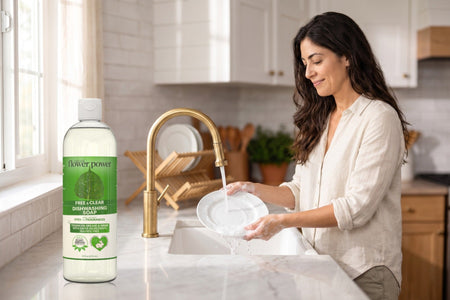
If you want septic-safe cleaning with nothing harsh going down the drain, our Free & Clear line is a straightforward place to begin: plant-derived surfactants, no added fragrance, no dyes, and a complete ingredient list on every page so you can verify it against everything in this guide. The two products that touch your drains most often are Free & Clear dish soap and the Free & Clear all-purpose cleaner for counters and surfaces. If you'd rather check the chemistry yourself first, our Ingredients & Transparency hub names every component we use and explains what it does.
Every NFP product is backed by our 90-Day Love-It Guarantee—if it doesn't work for your household, for any reason, we make it right. For a home running on a septic system, that's the honest way to try something new: test the cleaning performance, confirm the ingredient list against your standards, and keep it only if it earns a place under your sink.
