


TL;DR: Lemongrass appears in several of our products because it does two things at once: it smells genuinely bright and clean, and its chemistry actually contributes to the formulation. The active compound, citral, makes up 70 to 85 percent of a quality East Indian oil and has documented antimicrobial and deodorizing activity. That lab activity doesn't translate into miracle cleaning at home, and the real differences between oils come down to sourcing, distillation, and GC-MS testing. Here's what the oil actually is, how it functions, and why we prefer it to synthetic lemongrass fragrance.
When you open a bottle of our lemongrass dish soap, the first thing that hits you is the scent. It's bright and green-citrus, with a slight herbal backbone that feels clean without being thin or synthetic. That sensory impression is the whole point. Lemongrass appears across several of our product lines because we've found that it does something most fragrances can't do simultaneously: it smells genuinely good and it actually works in the formulation.
For the first decade we were formulating, we tested everything. Synthetic lemongrass blends, isolated citral compounds, other essential oils that promised similar effects. Every time we came back to the natural lemongrass oil from India. Not because it was the most convenient choice—it's actually the hardest to work with—but because it delivered something irreplaceable. When you source responsibly, distill properly, and understand what's actually in the bottle, lemongrass does two things at once.
What lemongrass oil actually is
Lemongrass comes from the leaves of Cymbopogon flexuosus, a tropical grass native to South Asia. We use the East Indian variety because it has a higher and more consistent citral content—the primary active compound—than the West Indian species. The oil is extracted through steam distillation, a process that uses steam to separate the volatile aromatic compounds from the plant material without using solvents or chemicals that would alter the oil's composition.
What makes lemongrass functionally interesting is its chemical makeup. Citral comprises 70 to 85 percent of a quality East Indian oil. It's accompanied by limonene, geraniol, and several minor compounds that contribute both to the scent profile and to the oil's antimicrobial properties. This matters for cleaning because citral isn't just the scent carrier—it's the active ingredient driving the oil's ability to disrupt microbial growth.
When you buy lemongrass oil, you should expect your supplier to provide a GC-MS analysis, which measures the exact chemical composition and verifies the citral percentage. This isn't esoteric lab work. It's the only defensible way to confirm you're getting actual lemongrass oil rather than a diluted blend or a mixture of citral with filler oil. We request this analysis from our supplier before every bulk order.

What we make for this


How it functions in cleaning products
Lemongrass oil serves two distinct roles in formulation, and the confusion between them is why some essential oil products feel like pure scent marketing. In our products, the oil is both fragrance and functional ingredient. That distinction—the gap between an oil that only smells like something and an oil that also does something—is the heart of why essential oils earn their place in a formula beyond scent.
As fragrance, it provides the sensory quality that customers recognize and associate with cleanliness. There's a reason that fresh, bright citrus scents have become shorthand for "clean" in the category—they signal freshness, they cut through heavier odors, and they leave no residue of chemical smell. A high-quality lemongrass oil does all of that without requiring synthetic amplifiers or fixatives through composition alone.
As a functional ingredient, the citral and geraniol in lemongrass oil possess documented antimicrobial properties. The research shows efficacy against gram-positive bacteria like Staphylococcus aureus, and meaningful antifungal activity against Candida species and common postharvest plant pathogens. In the context of dish soap and all-purpose cleaner, this means the oil is contributing real action, not just masking odor with another scent. The limonene in the oil adds to this effect, particularly in degreasing applications—it helps break down organic residues while the citral handles the antimicrobial work.
This is why we chose not to use synthetic lemongrass fragrance alternatives. They exist, they're cheaper, and they're easier to formulate around because their composition is completely controlled. But they provide only scent. We could buy a synthetic lemongrass accord, add it to our cleaner, and call it done. The product would smell identical on first spray. But it wouldn't have the functional layer. The difference between a true plant extract and a lab-built scent accord is exactly the line we draw in essential oils versus fragrance oils, and for the customer who is actually asking what ingredients do and why we made specific choices, that line matters.
What research actually shows
The research on lemongrass antimicrobial activity is robust but comes with an important asterisk: laboratory efficacy under controlled conditions doesn't automatically translate to real-world cleaning performance. In vitro studies show that citral disrupts bacterial cell membranes and inhibits fungal spore production at specific concentrations and with adequate contact time. That's legitimate science. But in a real home, variables shift. The pH of your water, the hardness, the type of soil you're cleaning, how long the product actually contacts the surface—all of these affect the outcome.
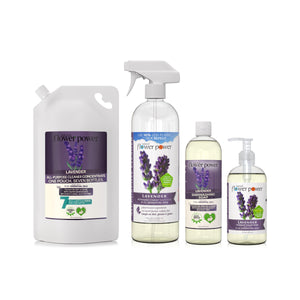
The value of lemongrass lies not in miracle properties but in specific chemical compounds—citral, geraniol, and limonene—with documented antimicrobial activity. We selected it for formulation because those mechanisms address real cleaning challenges. This isn't about essential oils being magical. It's about one particular plant having chemical compounds with documented activity against specific microbes under studied conditions, and we've included it because those properties are useful in the cleaning context. This same evidence-first lens shapes how we talk about every oil we use, including what lavender oil can and can't do in a cleaner.
The one safety note worth understanding: lemongrass oil is classified as mildly photosensitive. The citral content can increase skin sensitivity to UV radiation, which is why it's not suitable for leave-on skincare products used before sun exposure. For rinse-off products like dish soap, or for diluted cleaning sprays used indoors, this isn't a practical concern. It's worth knowing for completeness, but it's not a barrier to using the ingredient responsibly.
Why quality and sourcing matter
Not all lemongrass oil is made equal. The geography matters. India produces the highest-citral oils consistently because the growing conditions and farming practices have been refined over decades. The harvest timing matters—too early and the citral content is lower, too late and other compounds dominate. The drying method affects whether volatile compounds are retained or lost before distillation. The distillation temperature and duration directly change what ends up in the final oil.
This is where the adulteration risk enters. Synthetic citral is cheaper than pure lemongrass oil, and adding it to a less-expensive base oil creates something that looks like premium lemongrass to the untrained eye. Some suppliers mix the higher-citral East Indian species with the lower-citral West Indian variety and call it all the same product. Without third-party testing, you can't know what you're buying.
We source our lemongrass from a supplier we've worked with for over eight years, chosen because they provide complete transparency on origin, harvest period, distillation parameters, and GC-MS certification with every batch. We pay more than we would for an untested oil from a broker with no supply chain documentation. We do this because that chain of custody is the actual guarantee that the product does what we say it does. It's the same reason we formulate and manufacture everything ourselves, in-house in Cameron Park, California, where we've made our products since 2012.
Where you encounter it in our products
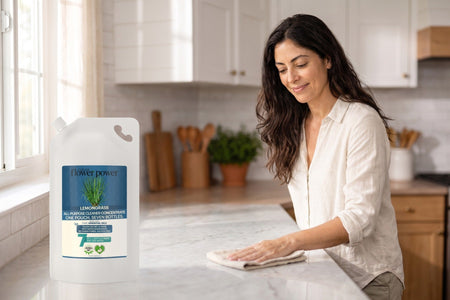
We use lemongrass in our dish soap, hand soap, and all-purpose cleaner. In each formulation, it's paired with complementary essential oils—lemon and rosemary in most cases—to create a coherent scent profile while allowing each oil to contribute its specific functional properties. The lemongrass carries the antimicrobial load, the lemon adds brightness and degreasing support, the rosemary brings both herbal complexity and antioxidant properties. That's formulation thinking, where each ingredient pulls its weight.
If you're considering lemongrass products, look for the same markers we do: verifiable sourcing, GC-MS testing, and transparent information about citral content. Not every essential oil brand provides this. Many prefer to keep their supply chain opaque. If a product doesn't tell you where the oil comes from or what concentration you're actually getting, that's a reasonable signal to be skeptical about the claims.
Lemongrass essential oil isn't a miracle ingredient. It's a plant-derived extract with proven chemical properties that are genuinely useful in cleaning formulations when sourced and used correctly. For us, that combination of real function and honest sourcing is why it remains a core part of how we formulate. The customer who thinks carefully about their products has every reason to expect that standard.
Where to start
If the lemongrass scent appeals to you, it runs through several of our everyday products: the lemongrass dish soap and lemongrass hand soap are where most people meet it first, and the lemongrass all-purpose cleaner carries the same oil onto counters and surfaces. Each one lists the full ingredient set on its page, so you can see exactly what you're getting. If you'd rather browse by scent or compare oils side by side, our essential oils collection gathers the scented lines in one place, and the lemongrass oil page goes deeper on the chemistry behind all of them.
Every NFP product is backed by our 90-Day Love-It Guarantee—if it doesn't work for your household, for any reason, we make it right. That's the honest way to try a new scent: live with it on your own dishes and counters, and if it isn't the right fit, there's no risk in finding out.
