
What It Is
Thyme oil is an essential oil steam-distilled from the flowering tops and leaves of Thymus vulgaris (common thyme), CAS 8007-46-3. The oil is a reddish-brown to amber liquid with a warm, herbaceous, slightly medicinal scent. Thyme oil exists in several chemotypes depending on growing conditions and geographic origin: the "thymol" chemotype contains thymol as its dominant compound (typically 30%–50%), while the "linalool" chemotype contains linalool as the primary constituent. Which chemotype you have changes both the scent and the chemistry, which is why the botanical name alone doesn't tell you much.
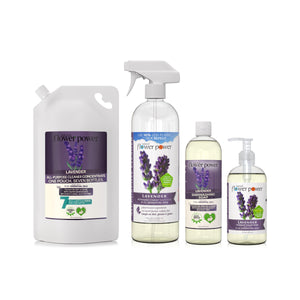
What we make for this



Common Uses
Thyme oil is used in all-purpose cleaners, disinfectant sprays, hand soaps, mouthwashes, and topical antiseptic preparations. Thymol, its primary active compound in the thymol chemotype, is an EPA-registered antimicrobial active ingredient and serves as the active in several commercially registered disinfectant products. Thyme oil also appears in culinary applications, as the herb itself or as a flavoring extract, and in traditional herbal medicine. Spain, France, and Morocco are major production regions.
How It Works
Thymol works by disrupting microbial cell membranes. It integrates into the phospholipid bilayer, increasing membrane permeability and causing leakage of intracellular contents (Marchese et al., 2016). This mechanism is active against a broad range of bacteria and fungi, including Escherichia coli, Staphylococcus aureus, Salmonella species, and Candida albicans.
The decisive detail is that this activity is concentration-dependent, and the two use cases sit far apart. In an EPA-registered disinfectant, thymol is present as a declared active ingredient at a concentration chosen to deliver efficacy, and the finished product has been through registration to make that claim. In an essential-oil blend used for fragrance, thymol is typically present well below 1% of the finished product. Those are different products doing different jobs, and the presence of the same molecule in both does not transfer the disinfectant's performance to the scented cleaner. Registration attaches to a tested product, not to an ingredient.
The scent contribution of thyme oil is warm and herbaceous, with the thymol component adding a sharp, medicinal edge.
Safety and Regulation
The FDA classifies thyme oil as generally recognized as safe for food use (21 CFR 182.20). IFRA permits thyme oil in cosmetic and household products with application-specific concentration limits.
Thyme oil of the thymol chemotype is a stronger skin irritant than most other essential oils and should not be applied undiluted to skin. The CIR Expert Panel has not published a standalone safety assessment for thyme oil. Thymol is not currently listed as a fragrance allergen requiring declaration under EU cosmetic regulations, though it can cause contact sensitization in predisposed individuals at higher concentrations.
Thyme oil is toxic if ingested in concentrated form, with reported symptoms including nausea, vomiting, and respiratory depression. As with any concentrated essential oil, the concern attaches to the neat oil rather than to a finished product containing it at fragrance levels.
Why Natural Flower Power Does Not Use It
We don't use thyme oil in any of our products, and we don't sell it on its own. This page exists because thyme oil comes up constantly in natural-cleaning writing, and an ingredient library that only covers what we do use isn't much of a reference.
The reasoning is close to our reasoning on tea tree oil. Thyme's appeal in this category rests on the antimicrobial story, and that story is real in the places it has been tested — registered disinfectants built around thymol at working concentrations. We don't make disinfectant products. Our cleaners are cleaners: we hold no pesticide registration and make no germ-kill claims, so an ingredient whose main draw is an implied antimicrobial benefit would be doing nothing for us except inviting a claim we're not entitled to make.
That leaves scent, and on scent thyme is a hard sell. It is sharp and medicinal, it is a stronger skin irritant than most of the oils we work with, and the warm herbaceous note it contributes is available from rosemary without the same irritation profile. So we scent with oils that earn their place on their own terms: lavender, lemongrass, peppermint, lemon, and orange, with rosemary as a supporting note. For anyone who would rather have no added fragrance at all, our Free & Clear line is unscented.
We have formulated and manufactured in-house since 2012, which is what lets us say plainly which oils are in a product and which are not.
Related Ingredients
Tea tree oil is the most comparable essential oil in terms of antimicrobial reputation, though its active compound (terpinen-4-ol) works through a related but distinct mechanism — and we don't use that one either, for much the same reasons. Rosemary oil shares thyme's herbaceous character and is one we do use. Lavender oil has a very different scent profile and is frequently paired with thyme in other companies' formulations. Oregano oil (Origanum vulgare) is closely related to thyme both botanically and chemically, containing both thymol and carvacrol, and is likewise not used by Natural Flower Power. For the family overview see the essential oils in cleaning guide, and browse the essential oils collection for the oils we do use.
Sources
- Marchese, A., Orhan, I.E., Daglia, M., Barbieri, R., Di Lorenzo, A., Nabavi, S.F., Gortzi, O., Izadi, M., and Nabavi, S.M. "Antibacterial and Antifungal Activities of Thymol: A Brief Review of the Literature." Food Chemistry, vol. 210, 2016, pp. 402–414.
- U.S. Food and Drug Administration. 21 CFR 182.20 — Essential Oils, Oleoresins, and Natural Extractives, GRAS.
- U.S. Environmental Protection Agency. Antimicrobial pesticide registration requirements under the Federal Insecticide, Fungicide, and Rodenticide Act.
- International Fragrance Association. IFRA Standards, application-specific limits.
