


TL;DR: Birds absorb roughly 90% of the airborne particles they inhale (versus about 30% for humans), so cleaners that barely affect you or a dog can harm a bird within hours. The genuine dangers are bleach, ammonia, quaternary ammonium disinfectants (QACs), phenols, PTFE/non-stick fumes, synthetic fragrances, and any aerosol spray. Essential oils are not automatically safe just because they're plant-derived. The real tool isn't a "bird-safe" label but a complete ingredient list you can check, plus simple cleaning that works without fumes. For bird households, our fragrance-free Free & Clear line is the place to start.
A bird owner called us last month to ask whether our all-purpose cleaner was safe for her parrot. Not whether it was "natural" or "gentle," but whether she could actually use it in the same room without worrying. That question is more serious than it sounds. Bird respiratory systems don't work like ours, and that difference changes everything about cleaning product safety.
Birds absorb roughly 90% of the airborne particles they inhale, compared to about 30% absorption in humans. This isn't a minor difference. Combined with the unique anatomy of avian lungs, it means cleaning products that would barely affect you or a dog can cause respiratory distress or death in a bird within hours. The challenge, though, is that "bird-safe" has become marketing language divorced from chemistry. You need to know what actually matters.
Why birds are differently vulnerable
To understand which cleaning products are actually dangerous, you need to know how bird lungs work. Most mammals, including humans, breathe with bidirectional airflow: air flows in through your mouth and nose, fills your lungs, and flows back out the same way. Birds don't work this way. They have a system of air sacs connected to rigid lungs, and air flows through in one constant direction, even while they exhale. This unidirectional flow allows them to extract more oxygen from each breath, which is how they manage the energy demands of flight.
The problem is that this same system is a superhighway for toxins. There's no upper respiratory filtering mechanism like humans have. Inhaled particles and chemical fumes bypass natural defenses entirely and travel directly into sensitive lung tissue. Couple that 90% absorption rate with a bird's smaller body size and faster metabolism, and you have an animal that can accumulate toxins rapidly and show symptoms fast.
This is why cleaning safety for bird owners isn't simply an extension of normal pet-safe cleaning. It's a different category altogether.

What we make for this
Ingredients that are genuinely dangerous around birds
Ammonia and bleach
These are the two biggest offenders. Ammonia shows up in many all-purpose cleaners and glass cleaners, and it irritates avian respiratory tissue directly. Bleach (sodium hypochlorite) is worse; it releases chlorine gas, especially in warm environments or enclosed spaces like a bird cage. Even diluted bleach solutions can generate enough fumes in that environment to cause airway inflammation or pulmonary edema.
The reason these are on every "avoid" list is that they cause respiratory distress quickly and visibly. If you've used them, your bird will show it.
Disinfectant "quats" (QACs)
Quaternary ammonium compounds, often abbreviated QACs or "quats," are the disinfectant chemicals behind many antibacterial and antimicrobial sprays and wipes. They're effective germ-killers, but they're also airway irritants and known sensitizers, and birds are far more sensitive to them than we are. If a product's job is to "disinfect" or "kill 99.9% of germs," it's worth checking whether quats are how it does that before using it anywhere near a bird.
Aerosol sprays
This one is absolute, and it applies to any aerosol, regardless of what's inside it. Aerosol particles remain suspended in air for extended periods, travel through ventilation systems and open doorways, and penetrate cage bars and small spaces. Even if the ingredient itself were safe, the delivery method makes it dangerous. Every resource on bird safety agrees: do not use aerosol sprays anywhere in a home with birds.
Phenols, PTFE fumes, and synthetic fragrances
Phenols are antimicrobial compounds found in some disinfectants and are highly toxic to bird respiratory tissue. They accumulate in organs, which means exposure has both immediate and chronic effects. PTFE toxicity (the non-stick coating commonly known by the brand name Teflon, part of the broader PFAS family) is less about cleaning products and more about non-stick cookware releasing fumes when overheated, but it's worth mentioning: if your home has non-stick cookware, it's a bigger risk than most cleaning products. Synthetic fragrances are volatile organic compounds (VOCs) designed to smell good, but they impair bird respiration and can affect neurological function. Birds show dramatically heightened sensitivity to VOCs compared to mammals, which is part of why we don't use synthetic fragrance in the first place.
The common thread is that none of these are traditional "cleaning" ingredients; they're additives. Your cleaner works without them.
The essential oil question
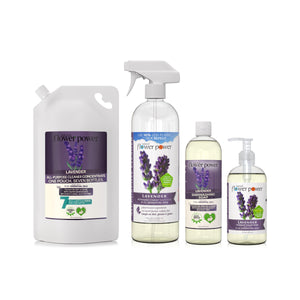
This is where we need to be direct with you. Natural Flower Power sells essential oils, and some of our scented cleaning products contain them. Essential oils are not inherently safe around birds just because they're plant-derived. Certain oils—tea tree, cedarwood, eucalyptus, and citrus oils—are confirmed toxic to birds even at relatively low concentrations. Others carry research gaps; we simply don't know enough yet.
The consensus among avian veterinarians is that even "safer" essential oils require caution. Concentrations matter enormously: the safety guideline cited across avian medicine is roughly 1 drop per liter of water. But that guideline assumes the oil isn't heated (which concentrates it), isn't aerosolized, and is a pure, high-quality oil rather than synthetic fragrance masquerading as an essential oil.
Here's what this means practically: if you're buying a cleaning product that contains essential oils, you need to know which oils are in it and at what concentration. If the label doesn't say, ask before buying. If a company won't disclose it, that's reason enough to look elsewhere. And if the product contains any of the clearly toxic oils, don't use it around birds, regardless of brand.
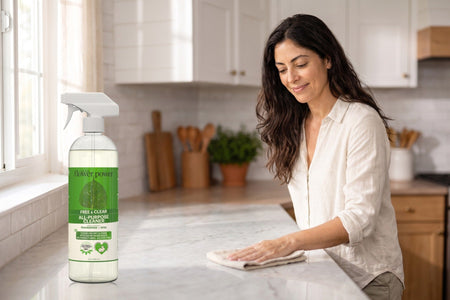
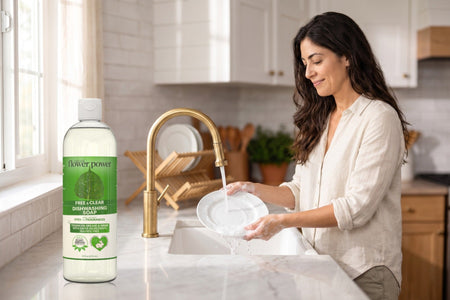
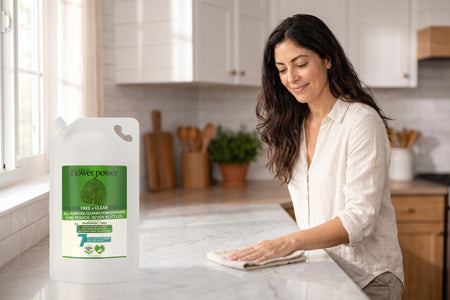
Our Free & Clear line doesn't contain any essential oils. For households with birds, that's the line to choose from our products. If you want to use one of our scented products, consult with your avian veterinarian first, bring the label, and make your choice based on actual concentrations, not marketing claims.
What actually works for bird-safe cleaning
The good news is that effective bird-safe cleaning exists. Vinegar (white vinegar diluted 1:9 with water) is a legitimate cleaner that removes grease and odors without fumes. It has limits—it's not as powerful as bleach—but for regular cage maintenance, it works. Hydrogen peroxide (3% diluted 1:9 with water) is the bleach alternative veterinarians recommend; it kills bacteria and mold through oxidation without releasing toxic byproducts.
Castile soap, which is plant-derived and usually olive oil-based, is a gentle surfactant that breaks down oils and dirt without harsh chemicals. Baking soda is simultaneously a scouring agent and odor control, and it's safe in normal use. These ingredients have one thing in common: they clean through mechanical or chemical processes, not through fumes or toxic activity.
The reason these work is straightforward. Cleaning doesn't require toxicity. A surfactant removes dirt. Acidity or oxidation kills bacteria. Abrasion scrubs away debris. None of that depends on inhaling something harsh.
Where plant-derived formulations come in is that they achieve these same mechanisms without synthetic fragrances, ammonia, bleach, phenols, quats, or aerosolization. Our plant-derived, sulfate-free all-purpose cleaners and dish soaps use plant-derived surfactants and natural pH adjusters to do the job. That's the advantage: they work because the formulation works, not because they smell like cleaning is happening.
The actual cleaning protocol
How you use a product matters as much as what's in it. Before you clean your bird's cage, move the bird to a separate room with the door closed. Remove all cage items: toys, perches, food dishes, water bowls. Apply your cleaner using a liquid bottle (never aerosol), let it sit for 5–10 minutes to work, then scrub with a soft brush or cloth. Rinse thoroughly multiple times with fresh water. Dry everything completely with clean towels and allow additional air-dry time. Open windows or turn on exhaust fans during and for at least 30–60 minutes after cleaning—ventilation does real work for your indoor air quality, and it matters even more in a home with birds.
Don't return your bird until the cage is completely dry and odor-free. If you used any product with essential oils or strong scent, extend that ventilation window to 2–3 hours. This isn't caution for its own sake: it's the difference between a routine cleaning and an irritant exposure.
For daily maintenance, use water or mild soap and water only. Save the disinfectant for weekly deep cleans. Water bowls and feeders get daily changes and rinsing. Spot clean droppings immediately with a damp cloth. The deep clean—full disassembly, thorough scrubbing, and disinfection—happens weekly.
Choosing products: what to look for
If you're buying a cleaning product marketed for bird owners, verify three things. First, check the ingredient label. You should see plant-derived surfactants, natural pH adjusters, and water. You should not see ammonia, bleach, phenols, quats, synthetic fragrances ("fragrance" or "parfum" on the label), or aerosol propellants. Second, if the product contains essential oils, confirm which oils and at what concentration. If the label doesn't specify, email the company and ask. Third, consider format; liquid squeeze bottles or trigger sprays are acceptable, while aerosol cans are not.
For our products specifically, the Free & Clear line is formulated without any essential oils, synthetic fragrances, dyes, or sulfates. It's designed for sensitive situations, and bird-owning households fall into that category. If you're considering one of our scented products, look at the Ingredients & Transparency hub to see what essential oils are used, consult your vet, and make an informed choice.
Beyond brand choices, remember that simple ingredients work well. Many bird owners use plain white vinegar diluted in water for regular cleaning and reserve stronger options for deep disinfection only. We formulate and manufacture everything in-house in Cameron Park, California, where we've made our products since 2012, and our approach starts with this same principle: use what works, nothing more.
Reading between the marketing
You'll see "pet-safe" and "all-natural" labels on products that absolutely should not be used around birds. "Pet-safe" sometimes means it won't harm a dog's skin if they brush against it—not that it's safe to inhale. "All-natural" is unregulated marketing language that can apply to products with high concentrations of essential oils or plant-derived compounds that are still dangerous when aerosolized or inhaled. "Non-toxic" implies a regulatory classification that doesn't exist for cleaning products.
Read the actual ingredients. If the label doesn't list them completely, that's a signal. Ask questions before you buy. Call the company, find their customer service email, message them on social media. If they're evasive or defensive, take your money elsewhere. The company that makes your bird's cleaning products should be able to explain exactly what's in the bottle and why.
Where to start
If you've been using conventional cleaners around your bird without incident, that doesn't mean it's safe to continue. Some birds tolerate lower-level irritation silently until they don't. A cleaner choice—literally—is available, and you don't need to spend more money or sacrifice performance to make it.
For bird households, our fragrance-free Free & Clear line is the place to begin: no added fragrance, no essential oils, no dyes, plant-derived and sulfate-free surfactants, and a complete ingredient list on every page. Most people start with the Free & Clear hand soap and Free & Clear dish soap, then add the liquid (not aerosol) Free & Clear all-purpose cleaner for the cage, counters, and surfaces. Switch product by product as the ones you're using run out—that's practical, honest, and doesn't ask you to overhaul your routine overnight.
Every NFP product is backed by our 90-Day Love-It Guarantee—if it doesn't work for your household, for any reason, we make it right. For a bird-owning home that's the honest way to try something new: test it in your own space, with no risk if it isn't the right fit. Your bird's respiratory system can't defend itself against fumes the way you can. The cleaning still gets done. The choice is whether it gets done safely.
