

TL;DR: Federal law doesn't require cleaning products to list their ingredients at all — disclosure is voluntary, even though your food, shampoo, and vitamins are all mandated. That gap lets "fragrance" stand in for hundreds of undisclosed chemicals, lets "inert" ingredients fill most of the bottle without being named, and lets words like "natural" and "hypoallergenic" mean nothing legally. The real tool isn't a reassuring claim — it's a complete ingredient list you can actually read. Here's what labels hide, why, and how to spot a brand that tells you the truth.
You're standing in the cleaning aisle or looking at a bottle under your kitchen sink, and you decide to turn it over and read what's actually in there. Maybe your kid asked you a question. Maybe you're worried about something you heard. Maybe you're just tired of buying products and wondering what you're really using. So you read the label. And that's when you start discovering things.
The first discovery, if you're paying attention: most cleaning product labels don't tell you much about what's actually in the bottle. Not because the law forbids it, but because federal law doesn't require it. The Federal Hazardous Substances Act requires warnings if a product is dangerous—toxicity warnings, caution statements, first-aid instructions, storage guidance. But ingredients? That's not mandated. It's voluntary.
That's worth sitting with for a moment. Your food comes with a complete ingredient list because federal law requires it. Your shampoo, your sunscreen, your vitamins—all mandated ingredient disclosure. But the bottle of all-purpose cleaner you've been spraying on surfaces your kids touch? Federal law doesn't require the manufacturer to tell you what's in it at all.
The gaps in what labels can tell you
When you actually read labels long enough, you start noticing what's absent. No concentration percentages. You might see "Active ingredients ___%" and "Other ingredients ___%" but nothing more specific. That means you have no way to know whether a particular ingredient is 0.01% of the formula or 50%. You can't tell whether you're getting a heavy dose of something or a trace amount just by reading the label.
You won't see testing data. Labels don't disclose whether a product has been tested for stability, whether cleaning claims have been verified, whether anything has been safety-tested on skin. They don't tell you where ingredients come from, how they were sourced, or whether they've been evaluated for health concerns by any organization outside the company that makes them.
And you won't see what happens to these ingredients in your home or in the water system. There's no information about persistence, bioaccumulation, aquatic toxicity, or environmental fate. You can't learn from a label whether an ingredient stays in waterways or breaks down quickly, whether it harms fish, or whether it has been studied for long-term exposure effects. (If you want the step-by-step method for parsing what is printed there, we walk through it in how to read a cleaning product label.)

What we make for this
The fragrance loophole: where hundreds of chemicals hide behind one word
This is the discovery that catches most people off guard. You see "fragrance" listed as a single ingredient, and you assume it's one thing. It's not. The fragrance industry's approved ingredient list contains over 3,600 different chemicals. A single product's fragrance blend can contain anywhere from 46 to 229 individual chemicals, and none of those specifics appear on the label.
How is this legal? Fragrance formulations are protected as trade secrets. The industry argues that disclosing the exact blend would expose proprietary information, so manufacturers don't have to list what's actually in that fragrance component. Even the companies using pre-blended fragrances from suppliers often don't get complete disclosure from those suppliers—they may not fully know what's in their own products. This is exactly the loophole we unpack in what "fragrance" actually means on a label.
The fragrance industry maintains a restricted list, but only a fraction of those thousands of chemicals are actually restricted. The rest are permitted for use with minimal safety review. Much of the research used to establish these standards comes from the industry itself, not from independent agencies. And compliance with fragrance restrictions is largely voluntary—there's little legal enforcement.
What does this mean for you reading the label? "Fragrance" could contain chemicals associated with respiratory irritation, endocrine disruption, or allergies, and you have no way to know which ones from reading the label alone. This is true whether the word stands for a petrochemical blend of synthetic fragrances or for naturally-occurring compounds like limonene—what matters is that "fragrance" hides the specifics. There's only one real exception: California requires fragrance allergens to be disclosed at very low concentrations. If you buy cleaning products in California, you'll see more fragrance detail than anywhere else in the country. Everywhere else, it remains opaque.
The "inert ingredients" surprise
You'll often see cleaners listed as having "Active ingredients" followed by "Other ingredients." That "other ingredients" category can make up 50 to 97% of the entire bottle, depending on the product. These are the inert ingredients—the solvents, preservatives, dyes, and other chemicals that aren't the active cleaning agents.
The word "inert" is misleading. It doesn't mean safe or harmless. The EPA itself acknowledges that "the term 'inert' does not imply that the chemical is nontoxic." Some of those "other ingredients" can irritate skin, trigger respiratory issues, or persist in the environment. But they don't have to be named on the label. You just see a percentage, and that's it. The specific chemistry of most of your cleaning product can remain completely undisclosed.
Marketing claims with no legal meaning
As you read more labels, you'll notice words that feel reassuring but aren't actually regulated. "Natural," "green," "eco-friendly," "plant-based," "hypoallergenic"—these terms sound specific, but there's no federal definition for any of them in cleaning products. A company can put "natural" on a bottle of entirely synthetic chemicals and be technically legal. "Organic" has no legal constraints on cleaning products, unlike food. "Hypoallergenic" has no legal definition and no requirement for testing—the FDA notes that there is no such thing as a truly nonallergenic product.
Some of these terms are enforced loosely by the FTC, which expects companies to substantiate claims like "hypoallergenic" or "natural." But enforcement is inconsistent, and most small brands face no scrutiny at all. On a typical store shelf, you're often reading marketing language, not regulated claims. Learning to spot greenwashing is most of the battle, and there's a reason we're careful about which words we'll put on a bottle ourselves—including why we won't call our products "non-toxic".
What about "plant-based"? Even setting aside that the more accurate term is plant-derived, the bigger problem is that the word promises safety it can't deliver: a plant-derived surfactant can still irritate skin or trigger allergies. The fact that something comes from a plant doesn't automatically make it gentler or safer. Essential oils are natural, but they're also concentrated and can be irritating, especially for kids and people with sensitive skin.
What California requires (and what it reveals about the gaps everywhere else)
Here's a useful benchmark. California's Cleaning Product Right to Know Act (effective since 2021) requires manufacturers to disclose all ingredients at concentrations of 0.01% or higher, plus any ingredient on California's designated hazard lists regardless of concentration. This includes fragrance allergens. For the first time in U.S. regulation, this law overrides the fragrance industry's trade secret protection—you have to disclose fragrance allergens in California even if you claim they're proprietary.
If you buy cleaning products in California or online from California retailers, you see ingredient lists that don't exist on the same products sold in other states. This alone reveals that full disclosure is possible. It's a choice, not a regulatory impossibility. Most companies simply choose not to do it unless the law forces them.
EPA Safer Choice: what actually gets reviewed
When you're reading labels, you might encounter the EPA Safer Choice label—a third-party certification that's different from marketing claims. Safer Choice is one of the more rigorous standards available for cleaning products. It's voluntary; companies don't have to pursue it. But if they do, it means every ingredient has been evaluated against criteria for carcinogenicity, reproductive harm, persistence in the environment, and bioaccumulation. pH levels are checked to minimize skin and eye irritation. Manufacturing practices are audited on-site. This is actual vetting, not a marketing claim.
It's not perfect—it doesn't verify that cleaning claims are true, only that the product is formulated to limit harm to you and the environment from the ingredients it contains. But it's among the closest things to real oversight that exist for household cleaners. When you see it, you know something credible has happened behind the scenes.
In-house manufacturing and what it means for transparency
There's a structural reason some companies can disclose more than others. If a brand outsources manufacturing or sources pre-blended fragrances from third parties, it hits a transparency ceiling. The fragrance supplier claims trade secret protection and provides minimal ingredient disclosure. The brand is still responsible for telling consumers what's in their product, but the supply chain won't give them complete information. So they legally cannot disclose what they don't know.
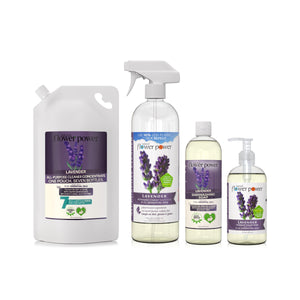
In-house manufacturing solves this differently. When a company formulates and manufactures its own products under one roof, it controls the entire ingredient journey. There's no supplier withholding information about fragrance blends because there is no external supplier—the company is doing the formulation itself. We make every Natural Flower Power product in our own facility in Cameron Park, California, and have since 2012, which is the whole reason we can publish what's in each bottle. The same applies to plant-derived essential oils: because they come from botanical sources rather than opaque synthetic fragrance suppliers, they're inherently more traceable and disclosable.
This isn't marketing mythology. It's a practical consequence of how manufacturing and supply chains work. Companies that source everything themselves can know exactly what's in their products and can choose to disclose it fully, even when federal law doesn't require it. Other companies hit a knowledge ceiling built into their supply chains. Understanding this structural difference helps explain why some brands publish complete ingredient lists and others cannot—not because of differing principles, but because of how they're built to operate.
What to actually look for when you read labels
You now know what federal law requires and what it doesn't. You know fragrance can hide hundreds of chemicals. You know "natural" and "eco-friendly" are marketing language without legal definitions. So what do you actually do with a bottle in your hand?
First: does the label disclose ingredients at all? Many brands don't, because they don't have to. If the label lists nothing or just warns about hazards with no ingredient information, you're looking at a company choosing to hide what's in the formula. That alone tells you something.
If ingredients are listed, look for specificity. "Fragrance" tells you almost nothing. A brand that lists "lavender essential oil" or "lemongrass essential oil" is being more transparent. A company that uses plant-derived essential oils rather than synthetic fragrances removes the entire trade secret problem. You can actually know what you're buying.
Check for the EPA Safer Choice label if safety and environmental impact matter to you. It's not common, but when you see it, you know every ingredient has been vetted against real standards. If you're in California, you have legal protection: ingredient lists are mandated, so what you see is what's there. If you're elsewhere, ingredients that appear on a California label but not on the rest-of-US label reveal exactly how much is being withheld.
Be skeptical of undefended marketing claims. "Hypoallergenic," "all-natural," "eco-friendly"—these are marketing language. They might point you toward a genuinely thoughtful product, or they might be covering up gaps in disclosure. The claim itself proves nothing. If you want the full methodology on how to parse ingredient order, signal words, and caution statements, our detailed how-to guide walks through it line by line.
The difference transparency makes
Reading labels teaches you something simple: if a company won't tell you what's in a product, it's worth asking why. Maybe they're bound by trade secret laws and supply chain limitations. Maybe they're hiding something. Either way, you have a choice. You can buy the opaque bottle, or you can find a brand that discloses what you're actually bringing into your home.
You're not looking for perfection. You're looking for honesty. A company that can tell you exactly what's in the bottle, why those ingredients are there, and what trade-offs exist—that company is doing something most others aren't. That honesty is worth noticing. It usually means someone at that company cares about the product more than just the profit of the sale.
When you read labels closely, you're not just learning chemistry. You're learning how to trust what you read and who's worth buying from again.
Where to start
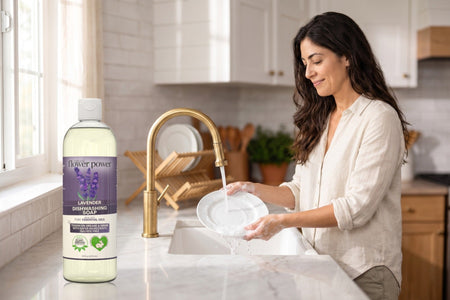
If you want to see what full disclosure looks like in practice, start with our Ingredients & Transparency hub, where every ingredient we use has its own page explaining what it is and why it's in the bottle—the opposite of "fragrance" standing in for hundreds of unnamed chemicals. It's also worth reading exactly what we put in our products (and what we leave out) so you can hold us to the same standard this guide asks of everyone else.
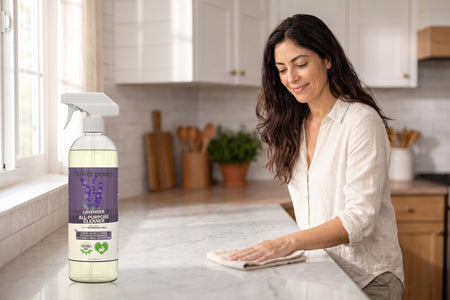
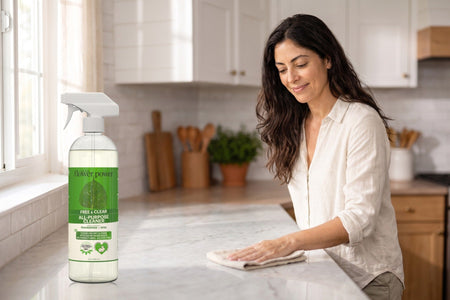
When you're ready to put a transparent label in your hand, our all-purpose cleaners are a good place to begin—every ingredient on every label is one you can identify and look up—or browse our best sellers to see what most households reach for first.
Every NFP product is backed by our 90-Day Love-It Guarantee—if it doesn't work for your household, for any reason, we make it right. That's the honest way to try something new: read exactly what's in it first, then test it in your own home with no risk if it isn't the right fit.
