


TL;DR: We've sourced essential oils for cleaning products since 2012, and the work happens long before a drop goes into a batch. We evaluate every supplier on batch-specific GC-MS reports cross-checked against our own spec sheets, on where they sit in the supply chain (we prefer producers over traders), on organic and fair-trade standards, and on stable pricing as a proxy for stable sourcing. It costs more, and we accept that tradeoff because consistency bought upfront is cheaper than inconsistency managed later.
We've formulated cleaning products with essential oils since 2012, and for most of that time, sourcing has been one of the less-visible parts of what we do. Customers see the scent—lavender in the hand soap, peppermint & lemon in the all-purpose cleaner—but they don't see the work that happens before a single drop goes into a batch. That work is sourcing, and it's more complicated than you might think.
When you source essential oils for a cleaning product manufacturer, you're not buying fragrance to make something smell nice. You're buying a raw material whose exact chemical composition has to stay consistent across batches so that the formulation works the same way every time. As we explain in why essential oils do more than add scent, these are functional ingredients, not perfume. A 2% variance in one compound can change the scent profile enough that customers notice. It can affect how well the product cleans, how stable it is on a shelf, and whether the finished product delivers the same experience whether they bought it last month or this month. That consistency requirement changes everything about how we evaluate suppliers.
What batch consistency actually means for a formula
When we lock in a formulation—say, our citrus spice cleaner—we're locking it to specific chemical ratios inside the essential oil itself. We know that our blend contains X percent limonene, Y percent caryophyllene, and Z percent of several other compounds, because that's what makes the scent profile and efficacy work. If a new batch of citrus oil comes in with significantly different percentages of those same compounds, the formulation no longer behaves the way we designed it to. The scent might be dimmer or sharper. The way it mixes into the base formula might change. The way it ages in storage might shift.
For a large company that outsources fragrance to a supplier who handles formulation consistency, this isn't a daily operational problem. They buy a proprietary fragrance blend that the supplier guarantees will be consistent. For us, we own the formulation. We source the individual essential oils and blend them ourselves. Which means we live with the consequences when a batch is off spec. A supplier change that would cost a large brand a single purchase order costs us a reformulation and a production delay. So we don't chase the cheapest option. We chase suppliers who understand what batch-to-batch consistency actually means and who can document it. It's the same discipline that drives how we formulate our products in the first place.

What we make for this



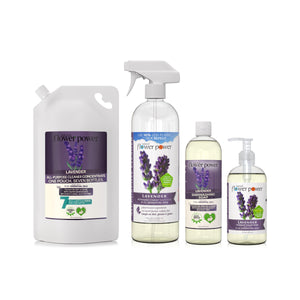
How we actually evaluate a supplier
The first thing we ask for is a batch-specific GC-MS report. GC-MS (Gas Chromatography-Mass Spectrometry) is the standard analytical method for essential oils. It breaks down the chemical composition of a specific batch—not a generic "typical" analysis, but the actual sample we're considering purchasing. That report shows us the percentages of each major compound in that batch. We compare it against our spec sheet for that oil. If it's in range, we move forward. If it's outside the range we need, we pass, even if the price is good.
A batch-specific report tells us two things: first, that the supplier has laboratory access and testing discipline, and second, that they're willing to share data before we commit to a purchase. That willingness matters because it signals a supplier who's confident in their consistency and who sees transparency as a competitive advantage, not a liability. Once we've bought from them a few times and confirmed that the reports match the actual performance in our formulations, we build a relationship where we trust their process and data enough to do less redundant testing on our end.
Beyond GC-MS, we look at what kind of supplier we're working with. The supply chain has three layers: traders at the bottom, who buy and sell oils without owning manufacturing equipment; distributors in the middle, who buy in bulk and portion out to smaller buyers; and manufacturers or producer-partners at the top, who either own their own distillation equipment or work directly with farms. We prefer working directly with manufacturers or producers when we can, because they have direct control over harvest timing, extraction methods, and quality monitoring. A distributor can offer convenience, but they're buying from someone else, and you're always one extra link away from the source.
We look for consistency in price. Fluctuating prices usually signal an unstable sourcing operation. They're buying spot market whenever someone offers them volume, and that creates batch-to-batch inconsistency. A supplier with stable, predictable pricing usually means they have committed relationships with their farms or their own supply contracts, so they're not chasing the cheapest spot price every month. Stable pricing is often a proxy for stable sourcing.
The tradeoff: quality and consistency cost more
We prioritize sourcing from suppliers who work with organic farms and fair trade practices. That choice costs more than commodity sourcing. It costs more because the farms have higher labor standards, better environmental practices, and smaller margins. We make that choice anyway because when you're formulating with essential oils from healthier plants grown with fair labor standards, you're more likely to get consistent, clean oils. And because our values and our customers' expectations align on this point. If we're going to ask someone to trust us with their home and their family, we should stand behind how we source the ingredients we use. The same logic is why we make everything ourselves rather than outsource—as we cover in why we manufacture in-house.
But the cost is real. A fair-trade, organic-certified essential oil costs more than a commodity oil from a trader who's buying wherever it's cheapest. We accept that cost as part of the business. We don't hide it by cutting corners elsewhere. We don't pass it on as a markup that inflates our retail price beyond what the formulation actually justifies. It's built into how we think about margins and what we charge for our products. It's a tradeoff we've decided to make, and we're transparent about why.
There are suppliers out there who would give us better pricing for lower standards. We've turned down that offer more than once. Not because we're ethically infallible, but because tighter margins in sourcing usually show up as problems later—in batch inconsistency, in quality issues, in customer experience. For a small manufacturer, those problems are expensive. It's almost always cheaper to pay for consistency upfront than to manage the costs of inconsistency down the line.
What certifications actually tell you
When we evaluate suppliers, we look at USDA organic certification as one important data point. USDA organic means the farm uses no synthetic pesticides or fertilizers. It means the supply chain is traceable back to the original producer. That matters, and it's worth paying for. But organic certification doesn't guarantee purity or quality. An oil can be certified organic and still be adulterated with cheaper organic oils from different plants. It can be organic and inconsistent. A certification is one piece of the picture, not the complete picture.
The same goes for ISO standards, which set specifications for what a particular oil should contain chemically. These standards are useful as reference points. When a supplier tells us their lavender oil meets ISO 4719, that tells us they're testing to a recognized spec, not making things up. ISO compliance is a baseline. We look for suppliers who consistently exceed spec, not just barely meet it. We apply the same scrutiny to every oil we buy, whether it's lavender or the lemongrass oil in our brighter blends.
You'll see some suppliers talk about "therapeutic grade" essential oils. That's not a real certification. There's no official body that issues a therapeutic grade credential. It's a marketing term with no regulatory backing—the same kind of unregulated language we flag when we compare essential oils versus fragrance oils. We don't work with suppliers who lean on that language, because it usually signals they're more interested in positioning than in transparency. It's worth knowing that the same gap exists on the synthetic side, where synthetic fragrances can be listed as a single undisclosed word.
Why the small-manufacturer relationship matters
Working with a small manufacturer means you don't have the volume leverage that a large brand has. We can't dictate custom MOQs (minimum order quantities) the way a major corporation can. We can't play volume games or squeeze pricing by threatening to switch suppliers. What we can do is build a direct relationship where the supplier knows who we are, understands what we're making, and has personal investment in whether our products succeed. Over time, that relationship becomes more valuable than the volume discount we could never negotiate anyway.
Some of our suppliers we've been working with for over eight years. They know that we'll stay with them if they deliver consistency, and they know we won't stay if they don't. They know we'll pay fair prices for quality, and they know we're not looking to squeeze them on cost. That kind of clarity—understanding what you want and what you're willing to pay for it—is easier to establish with a small number of committed suppliers than to manage across dozens of transactional relationships.
They also share information with us that we wouldn't get from a purely transactional relationship. If a crop year is going to be difficult, they tell us early. If they're testing new distillation techniques that might improve consistency, they involve us. That intimacy is where real operational partnership lives.
The work behind consistency
When a customer opens a bottle of our lavender hand soap and it smells exactly like the bottle they bought six months ago, they're experiencing the result of sourcing discipline—a quality the supply chain and market don't naturally produce. We get it because we've chosen to prioritize it over price, because we've invested in relationships with suppliers who care about it, and because we're willing to test and reject batches that don't meet our standard.
That work doesn't show up in marketing. It doesn't show up on the label. It shows up in whether a customer comes back and buys again because they know what they're going to get. For us, that's where sourcing connects to trust.
Where to start
If you want to experience what that sourcing discipline produces, our essential oils collection is the place to start—every scented hand soap, dish soap, and all-purpose cleaner blended in-house from oils we've vetted batch by batch. If you'd like to see exactly which oils we use and what's in them, our Ingredients & Transparency hub lists every one by name, so you can check a scent against your own preferences before you buy.
Every NFP product is backed by our 90-Day Love-It Guarantee—if it doesn't work for your household, for any reason, we make it right. That's the honest way to try a scent: live with it in your home, and if it isn't the right fit, there's no risk.
