

You're standing at a shelf, or scrolling through product listings online, reading claims like "plant-based," "eco-conscious," "naturally derived," and "chemical-free." The packaging uses a lot of green. The images include leaves and forests. The company has a sustainability story. And you can't tell if you're buying something genuinely different or something that just looks different.
This confusion isn't accidental. Greenwashing—making products or companies appear more environmentally or health-conscious than they actually are—has become the standard marketing approach in the cleaning products category. It's cheap to do, difficult for consumers to verify, and it works until someone digs deeper.
We formulate and manufacture in our own facility in California. That gives us a view of the cleaning products industry most customers never get: we see what it actually takes to be transparent, what corners manufacturers cut to sound green without being green, and how easy it is to make claims that sound credible because the loopholes are written into the regulations. This guide walks through the most common tactics and what you should actually look for.
The Core Problem: Meaningless Language
Before diving into specific tactics, understand that the cleaning industry relies on words with no legal definitions. These terms can mean almost anything a company wants them to mean, and they're completely legal to use.
"Natural," "eco-friendly," "plant-based," "green," "sustainable," and "chemical-free" have no official meaning in cleaning products regulation. A company can use any of these words on a bottle and face no legal penalty for doing so, even if the product contains synthetic chemicals, fossil fuel inputs, and manufacturing practices that contradict those claims. The FTC has issued warnings about this for years, but enforcement is slow and penalties are small compared to the marketing value of sounding green.
This matters because consumers see these words and make assumptions. If something is labeled "natural," many people assume it's safer, better for the environment, and made with real plants. None of those assumptions are necessarily true. They're just words.
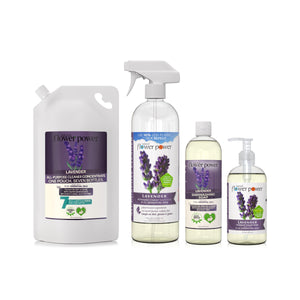
What we make for this



Greenwashing Tactic #1: The Green Label Without the Green Ingredient
A product arrives in green packaging, with leaf motifs, earth tones, and copy about "nature." The ingredient list, when you finally find it, is mostly conventional synthetic surfactants and preservatives with maybe one plant-derived ingredient added for effect.
This happens constantly. A cleaning product might be 95% conventional petrochemical-derived ingredients and 5% essential oil for scent, but it's marketed with images of forests and claims of being "naturally derived." The 5% is real. The 95% isn't addressed.
What makes this work is that most consumers don't check ingredient lists. The packaging tells a story—all green, all nature—and people trust the story. By the time someone actually reads the full ingredients and realizes there's a synthetic fragrance, preservatives from fossil fuel feedstocks, and surfactants made in a chemical plant, they've already made a purchase decision based on marketing.
Real transparency means the ingredient list tells the same story as the packaging. If a product is made primarily with plant-derived ingredients, you'll see that reflected in the ingredient list. If it's mostly conventional chemistry with a plant-derived topping, the list will show that too.
Greenwashing Tactic #2: Certification Theatre
A cleaning product bears a seal—sometimes real, sometimes made up. It says "certified," "approved," or references "green standards." The seal looks official. It suggests that some independent body has verified the claims.
Some certifications are legitimate. USDA Organic and Green Seal involve real vetting. But many seals are self-created or issued by organizations with no authority or transparency. A company can commission their own certification from a third party they control, put a fancy seal on the package, and consumers never know the difference.
The sophisticated version of this is creating an actual nonprofit-sounding body with an official name, issuing certifications to products in your own company's ecosystem, and using the seal as marketing. The more official it looks, the more trustworthy it seems. But if you look up the certifying organization, you often find it's either not independent, has weak standards, or doesn't actually conduct meaningful verification.
Even legitimate certifications have limits. A product can be "certified green" by Green Seal and still contain synthetic fragrances, still use plastic packaging without a credible end-of-life plan, still come from a company that sells 95% conventional products. The certification applies to that specific product, not to the company's overall practice.
Watch for seals that don't have verifiable information behind them. Real certifications have published standards, third-party audits, and transparent lists of certified products. If you can't find that information easily, the seal is likely decorative.
Greenwashing Tactic #3: The Eco Collection Strategy
A large conventional cleaning products manufacturer launches a new "eco-conscious" line. The new line gets prominent marketing. It's positioned as the company's answer to changing consumer values. Online reviews praise the company for stepping up.
What doesn't get mentioned is that the new "eco" line represents 1–3% of the company's production. The other 97–99% of their business continues unchanged—same formulas, same synthetic fragrances, same plastic packaging, same manufacturing footprint. But by launching the eco collection, the company signals values alignment and captures sales from consumers who now feel they have a good option.
This is called "eco collection greenwashing," and it's extremely common. A multinational conglomerate acquires or creates a small natural brand, positions it as proof of the parent company's commitment to sustainability, and uses it to attract younger consumers while their core business remains unchanged. It looks like change. It feels like progress. It isn't either.
How to spot this: research the company's full product line, not just the product you're considering. What percentage of their products are plant-derived? What's the environmental impact of their manufacturing as a whole? If 95% of their business is conventional and they're marketing heavily on their 5% eco line, that's a red flag.
Greenwashing Tactic #4: Hidden Corporate Ownership
A cleaning product brand has a compelling story. It's small, independent-seeming, with a compelling founder narrative. The website mentions values and craftsmanship. You feel good about the brand.
What's not immediately obvious is that the brand is owned by a multinational chemical company. The parent company is profitable and publicly traded partly because it manufactures products and ingredients that go into conventional cleaning supplies at scale. By owning the "natural" brand, the conglomerate captures market share in the growing segment while maintaining profitability from their core chemical business.
This ownership structure doesn't automatically make the product bad. But it does mean the company's primary incentive is shareholder returns, not the values the brand claims to stand for. When it comes time to choose between maintaining transparency and improving margins, the parent company's interests typically win.
The way to investigate this is to trace ownership. Who owns the company? If you can't find clear information, that's intentional. Does the parent company manufacture conventional products? Are there disclosed conflicts of interest between the natural brand and the parent company's other business lines? If the parent company profits from the status quo, their investment in the natural brand is likely a hedge, not a commitment.
Greenwashing Tactic #5: "Free From" Claims That Dodge Real Issues
A cleaning product is labeled "free from synthetic fragrances." That's a genuine claim—the product doesn't contain synthetic fragrances. But the same product contains methylisothiazolinone (MI), a preservative that's a known allergen, or it uses palm oil-derived ingredients that have documented environmental impact, or it's packaged in virgin plastic with minimal recycling infrastructure in the region where it's sold.
These products use "free from" marketing to highlight one genuine advantage while ignoring larger issues. Consumers see "free from synthetic fragrances" and assume the product is a better choice overall. They might not know that the actual environmental impact is worse, or that the preservative system is a recognized irritant category.
"Free from" claims work because they're easy to verify (the ingredient simply isn't on the list), they sound impressive (we removed something bad), and they let customers feel they've made a good choice without examining the bigger picture. But removing one ingredient while ignoring others is selective transparency, not real transparency.
The question to ask is: what is the product free from, and why does that matter compared to other ingredients that are still in it? If a product is "free from phthalates" but contains several other sensitizing preservatives, is that a meaningful advantage? If it's "plant-based" but 40% of its surfactants come from palm oil, what's the environmental context?
Greenwashing Tactic #6: Vague Environmental Claims
A cleaning product is marketed as "good for the planet" or "designed with the environment in mind." These phrases feel good. They suggest the company thought about impact. But they're almost completely meaningless.
"Good for the planet" doesn't describe a single, measurable thing. It could mean the packaging is slightly smaller (reducing material by 2%), or the formula is less toxic (but not measured against anything), or the company donates a percentage of profits to environmental causes (often less than 1%). All of these can be true and still used misleadingly as the marketing cornerstone.
Real environmental claims are specific. They state a measurable reduction (we reduced plastic use by 25%), they reference a standard (our surfactants meet ECOS certification), or they explain a tradeoff (our bottles are plastic because glass increases shipping emissions; here's the lifecycle analysis). When a product just says it's "good for the planet," you're reading marketing language, not information.
Watch for the absence of specificity. If an environmental claim doesn't come with a number, a certification, or an explanation of what exactly is better, it's likely greenwashing.
What We Do Differently (And What It Costs)
Because we formulate and manufacture in our own facility, we have to make transparency decisions in real time, every day. We can't hide behind "fragrance." We can't create an eco collection as a marketing stunt while the core business remains unchanged. We can't be owned by a parent company that profits from the industry practices we're trying to move away from.
But this also means we have limitations we have to acknowledge. We still use plastic bottles because, at our scale, glass increases shipping emissions and end-of-life recycling infrastructure doesn't exist uniformly across our distribution region. We still use some conventional preservatives because the plant-derived alternatives we've tested either don't preserve the product well enough or require higher concentrations that increase irritation risk. We're not perfect. We're just transparent about the tradeoffs.
What transparency actually looks like in practice: every ingredient is listed with its specific name. We explain why we made certain choices on our standards page. We acknowledge when we can't do something yet and explain why. We don't claim environmental superiority we can't substantiate. We don't market heavily on one attribute while ignoring the rest of the picture.
This approach doesn't generate the marketing power of greenwashing. We can't say our products will "heal the planet" or "transform your conscience." We can't claim we're the only truly sustainable option. But for customers who want to know what they're actually buying and why we made the choices we did, it's the kind of information that builds real trust instead of borrowed trust from marketing language.
Questions to Ask Before Buying
When you're evaluating a cleaning product that claims to be eco-conscious or natural, ask these questions. If you can't find clear answers, that's informative by itself.
What does "plant-derived" actually mean for this product? Is it 10% plant-derived and 90% conventional? 80% and 20%? Is every ingredient plant-derived, or just the surfactants? Ask the company directly, and see how specific they are willing to be in the response.
What's the ingredient list, and can you verify it independently? Full, transparent ingredient lists are non-negotiable. If a company makes vague claims without listing specifics, move on.
Who owns the company? Is it independently operated, or part of a larger conglomerate? If it's part of a larger company, what percentage of that parent company's business is conventional products? Are there disclosed conflicts of interest?
What certifications does the product have, and what do they actually verify? Look up the certifying body. Is it independent? What are the standards? Are they publicly available? A real certification will have transparent criteria and verifiable audits.
What is the product free from, and why does that matter? If it's marketed as "free from X," ask: what's the actual impact of removing X? What other potentially problematic ingredients are still in the formula? Does removing one ingredient while keeping others actually make a material difference?
What's the company's actual environmental footprint? How is the product manufactured? What about packaging and end-of-life? Does the company publish this information, or is it vague? Real sustainability commitments come with detailed, verifiable information, not marketing language.
Is this a standalone product or part of an "eco collection"? If it's part of a limited eco line from a company that sells mostly conventional products, understand what you're actually getting. The product itself might be solid, but the company's overall commitment to sustainability is limited.
The Role of Consumer Demand in Changing This
Greenwashing persists because it works. Consumers see green labels, read vague environmental claims, and make purchase decisions. Companies capture market share without fundamentally changing their practices. Until consumers demand and reward actual transparency instead of marketing language, the incentive structure doesn't change.
This doesn't require perfection. No cleaning product company is purely sustainable—there are always tradeoffs, limits, and areas where we can't do better yet. But it does require honesty about what you're making and why. It requires publishing ingredient lists, explaining formulation decisions, acknowledging limitations, and resisting the urge to claim superiority you can't prove.
When you choose a product, you're voting for a kind of business practice. If you choose based on marketing language without digging into specifics, you're rewarding greenwashing. If you ask hard questions and choose companies that answer directly and honestly, you're creating actual incentive for change. The market doesn't correct itself. Consumer attention and skepticism do. If you'd like to see what transparent labelling looks like in practice, our dish soaps and hand soaps list every ingredient by name.
Learning to spot greenwashing isn't about becoming cynical. It's about redirecting your skepticism where it's useful: toward claims that sound good but aren't substantiated, toward marketing language designed to be persuasive rather than informative, toward companies that seem to have solved a problem they haven't actually addressed. Real transparency is quieter. It comes with specifics. It acknowledges tradeoffs. And it's much rarer than greenwashing wants you to believe. When you find it, it's worth recognizing.
