

The instinct is usually to throw everything out and start fresh. You've decided conventional cleaning products aren't what you want in your home anymore, so logically, shouldn't you just clear the shelves and begin with a clean slate? The answer from our customers—and from the reality of your household budget—is no.
Over the past 14 years of formulating and selling plant-derived cleaning products, we've learned that the people who actually stick with the transition are rarely the ones who go all-in at once. They're the ones who replace one product at a time, usually when the old one runs out. That way they're not wasting money on products they already bought, they're not overwhelmed trying to evaluate everything at once, and they can actually tell whether the new product works before moving on to the next. The transition doesn't feel like a dramatic overhaul. It feels like a gradual, sensible upgrade.
This guide walks you through exactly which product to start with, what to expect during that first week, what adjustment issues are normal, and how to phase in the rest without the financial or practical friction that derails most people.
Start With the Product You Use Most (Usually Dish Soap)
Your first plant-derived product should be the one that touches your hands or your family's skin most frequently. For most households, that's dish soap.
Dish soap is the right starting point for several reasons. You use it multiple times a day—usually many more times than you use an all-purpose cleaner or a specialty product. That means you'll notice the difference quickly, for better or worse. You'll also run through a bottle in a reasonable timeframe (three to six weeks for most families), so you won't feel like you're wasting the old product by letting it sit. And because you use it on your hands and rinse it away, you'll directly notice how it treats your skin.
When you switch to a plant-derived dish soap, the first thing you'll probably observe is that it doesn't lather the same way. Conventional dish soaps often use sulfates—surfactants that create a lot of visible foam. That foam feels like cleaning is happening. Plant-derived soaps typically lather less aggressively, even though they clean just as effectively. The surfactants work differently: they're gentler on skin, they rinse away more completely, and they don't leave the film that conventional soaps sometimes do on your hands. But visually, it looks like less is happening. We've had customers call concerned that our dish soap wasn't "doing anything" because they weren't seeing a mountain of bubbles, then report back a week later that their hands actually feel better than they have in years.
The other thing you'll notice is scent. If you've been using a heavily fragranced conventional soap, the shift to essential-oil-based scent will be marked. Plant-derived fragrance is subtler. It smells more like the actual thing (actual lemon, actual lavender) rather than an amplified "lemon scent" or "lavender fantasy." Some people find this immediately preferable. Others find it less noticeable at first, then realize after a few days that they actually enjoy not having to smell a powerful fragrance every time they wash dishes. If scent is important to you, we offer multiple essential oil combinations, or you can choose our unscented Free & Clear option.
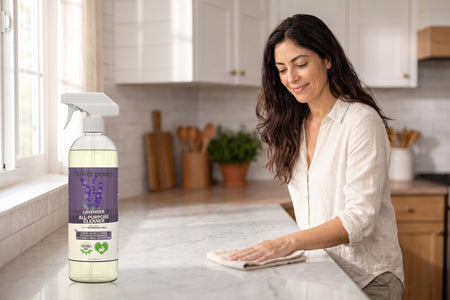
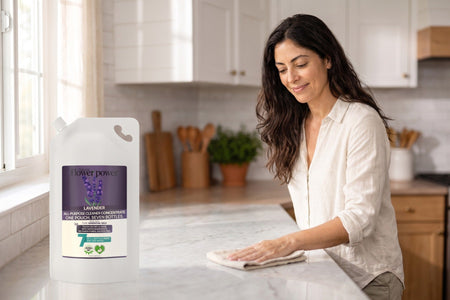
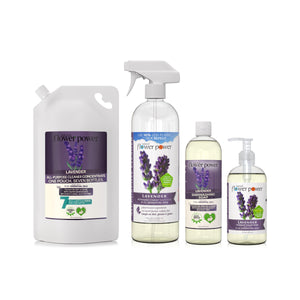
What we make for this

Week One: What to Expect and What's Actually Normal
Your first experience with a new product will likely include at least one moment where you wonder if you've made a mistake. Let's walk through what you might notice and what you can safely ignore.
The lather question. You will use more product initially, or you'll use the same amount and think it's not working because the lather pattern is different. This is normal and temporary. By the end of week one, your brain adjusts. You learn what "enough" looks like with this product, and you use the right amount without thinking about it. If you're genuinely concerned it's not cleaning—dishes still feel greasy, or you're seeing residue—add a bit more water to your sink. Plant-derived soaps often work better with slightly more dilution than conventional ones.
Hand feel. Many people report that their hands feel different—sometimes softer, sometimes initially "tighter" if they're used to residual film from conventional soap. This is your skin adjusting to a product that actually rinses clean. If your hands feel uncomfortably tight or dry, two things help: first, make sure you're rinsing thoroughly with water; second, if you're doing a lot of dishes, use less hot water or alternate with cool water. Plant-derived soaps don't have the same numbing effect that sulfates do, so you might notice your hands' temperature sensitivity more clearly. That's actually a sign the product is working.
Scent fading. If you chose a scented option, you might notice the smell doesn't linger on your hands or your kitchen the way a conventional product did. This is intentional. Our essential oils are there to make the experience of using the product pleasant, not to perfume your entire kitchen. Many customers find this a feature, not a bug—especially those with sensory sensitivities or olfactory fatigue from heavily fragranced products. If you love having a noticeable scent throughout the cleaning process, our scents are concentrated enough that you'll still perceive them; they're just not designed to announce themselves.
Adjustment timeline. Most of the sensory adjustment happens in the first five to seven days. By the end of the second week, you're using the product the way you would naturally, and any concerns about performance have usually resolved. If something still feels off after three weeks, it's worth evaluating whether it's genuinely a product mismatch (in which case our other soap options might work better) or whether it's just unfamiliar. We've had customers go back to conventional soap for a day and realize how much their hands actually prefer the plant-derived version, even though it felt strange at first.
Disposal: What to Do With the Products You're Replacing
Don't pour them down the drain, even though that's the easiest thing to do. Most conventional cleaning products—especially those with heavy fragrances or bleach components—shouldn't go into wastewater systems. They can disrupt treatment facilities, and they end up in rivers and groundwater.
If you have products you're not going to use, the best options are: donate them (many shelters, schools, or community organizations gratefully accept unopened or lightly used cleaning supplies), give them to friends or family members, or check your local hazardous waste facility for safe disposal programs. Some municipalities have collection days for household chemical products. If the product is mostly empty, it's fine to finish it and then recycle the bottle. You don't need to waste what's left—just use it until it's gone, then transition to the new product.
This is actually one of the biggest advantages of the gradual approach: you're not creating a disposal problem or feeling guilty about waste. You're using what you have, then replacing it with something better when it runs out. The whole transition feels practical rather than radical.
Product Two: Hand Soap (If You Use It Frequently)
Once you've settled into a rhythm with dish soap—usually by week three or four—consider adding a plant-derived hand soap if you use hand soap regularly. The same principles apply: you'll use it multiple times a day, you'll notice the difference in how it affects your skin, and you'll cycle through it regularly.
The adjustment to hand soap is often smoother than to dish soap because hand soaps don't have the lather-expectation issue. People understand that hand soaps create less dramatic bubbles. What you might notice instead is how the soap rinses. Conventional hand soaps often leave a slight residue or film on your hands—that's often the fragrance, preservatives, or emollients lingering. Plant-derived hand soaps rinse completely clean. Your hands feel softer but not slippery. Some people find this almost shocking the first few times, as if the soap actually left something on their skin, when really it's just that your hands are genuinely clean.
Because hand soap touches your skin directly and frequently, this is also a good product to swap early if anyone in your household has sensitive skin, eczema, or contact dermatitis. Hand washing is non-negotiable during illness or allergy seasons, so switching to a product that doesn't irritate your skin has immediate practical benefits. Our hand soap line includes a Free & Clear unscented option specifically for people whose skin reacts to fragrance, as well as several plant-based essential oil blends.
Product Three: All-Purpose Cleaner (The Workhorse)
By the time you're ready for an all-purpose cleaner—usually after you've successfully transitioned dish soap and hand soap—you already have a sense of how plant-derived products perform. You've adjusted to the lather patterns, the scent profiles, the rinsing behavior. An all-purpose cleaner feels like a natural next step rather than a learning curve.
The adjustment here is less about the product and more about expectations. Plant-derived all-purpose cleaners don't create the same chemical smell that conventional ones do. That sharp, piercing "clean" smell comes from strong solvents like ammonia or phenolic compounds. When you switch to a plant-derived formula, your kitchen or bathroom smells less aggressive—more like essential oils, less like a cleaning supply aisle. For many people, this is immediately preferable. For others, it takes a day or two of noticing that your space doesn't smell as "cleaned" before you adjust.
Performance-wise, our all-purpose cleaner handles most household surfaces: countertops, stovetops, tile, glass, cabinet fronts. It doesn't leave streaks if you rinse or wipe properly, and it doesn't leave a film. For heavily soiled surfaces or specialty tasks (like degreasing a gummy stovetop or cutting through soap scum), you might need a second product—which brings us to the next phase.
Specialty Products: The Final Phase
After you've replaced your everyday products, you might still have specialty cleaners: a glass cleaner, a bathroom scrub, a degreaser, or something designed for a specific surface. These you can replace as you run out of them, and honestly, many households find they don't need all of them once they have a good all-purpose cleaner.
We're honest about the tradeoffs here. A plant-derived cleaner will handle most surfaces, but it won't perform identically to a conventional product in every single application. A conventional bathroom scrub with bleach might cut through soap scum faster than a plant-derived formula. A conventional degreaser might make a heavily soiled oven easier. If those specific applications are important to your routine, you might keep a conventional product for that one job while using plant-derived for everything else. That's a perfectly reasonable middle ground, and it's not a failure of the transition. You're still eliminating most of the chemical load from your regular cleaning routine.
The gradual approach means you discover which specialty products you actually need as you go. Many people find they were buying products they didn't really use. They had a glass cleaner that sat in the cabinet because they just used the all-purpose on glass. They had a specialty bathroom cleaner but realized they could handle it with a brush and a bit more effort. By the time you've transitioned your core products, you often find you need fewer products overall.
Common Adjustment Issues and How to Solve Them
Beyond lather and scent, a few other patterns come up regularly as people transition. Here's what we know helps.
Streaking or film on glass and mirrors. This usually means one of two things: either you're using too much product, or you're not rinsing thoroughly enough. Plant-derived cleaners need a clean cloth and a little more water than some conventional products require. Try diluting the cleaner slightly more, or make sure your cloth is rinsed between wipes. If you're wiping with a dry cloth immediately, that can trap residue. A slightly damp cloth often works better.
Feeling like surfaces aren't as clean. This sometimes happens because you've been used to heavy fragrance masking odors, so your brain associated "strong smell" with "clean." When you switch to a product with subtle scent, your nose doesn't get that confirmation. To check actual cleanliness, wipe your surface with a white cloth—if dirt comes up on the cloth, the surface is being cleaned. If the cloth stays white, you're good. Trust what you see, not what you smell.
Sensitivity reactions to essential oils. Some people who don't react to synthetic fragrance find they do react to high concentrations of essential oils. If this is you, our Free & Clear unscented line is specifically designed for that situation. It cleans just as effectively with zero fragrance, synthetic or plant-derived. This is one of the advantages of making the switch gradually—you can experiment with scented options, and if they don't work for your body, you have a clear alternative.
Thinking the product isn't "strong enough." This is often psychological rather than actual. You expect cleaning to feel or smell a certain way based on 20 years of conventional products. A gentler product works just as well; it's just quieter about it. Most of this resolves in the second or third week, when your brain recalibrates. If it genuinely isn't working—surfaces are visibly dirty after you clean them, or you're seeing mold or residue that won't come off—then it might be a real performance issue, and we'd recommend checking your water hardness or trying a different formulation.
What Our Customers Tell Us About the Transition
Over the years, a clear pattern has emerged in customer feedback about switching. People who do the gradual product-by-product approach almost universally stick with the switch. They report that they quickly forget what the old products were like, and when they occasionally encounter a conventional cleaner (at a friend's house, at a gym), they're often surprised by how harsh it smells or how it affects their hands.
What we hear less often is "I switched all at once and it was great." What we hear instead is "I bought six plant-derived products at once and two didn't work for me, so I felt like I wasted money." Or "I was overwhelmed trying to figure out which ones to keep." The people who are happiest with their transition are those who took it slow, figured out what worked in their specific household (water hardness, surface types, personal sensitivities all matter), and built from there.
One thing that surprises many customers is how much they notice the lack of fragrance after a few weeks. They come back and tell us they hadn't realized how much they were smelling conventional cleaners passively throughout their day until those smells were gone. Their kitchens smell fresher, quieter. Their hands don't smell like cleaning products hours after washing dishes. For households with children or people with sensory sensitivities, this is often the biggest win.
The other pattern: once people switch their everyday products, they rarely go back. Not because plant-derived products are "better" in some absolute sense, but because they work, they feel better on skin, and the transition anxiety disappears once you're actually in it. The fear of change is usually bigger than the change itself.
The Cost Question: Is It More Expensive?
Short answer: yes, plant-derived products typically cost more per bottle than mass-market conventional cleaners. Our dish soap is roughly $5.99 per bottle, compared to $3–4 for a conventional brand. Over the course of a year, for a family using dish soap, hand soap, and all-purpose cleaner regularly, the difference might be $40–60 more per year per product category.
That said, here are the things that often offset that difference: plant-derived soaps are often slightly more concentrated, so you use a bit less per wash. You're not buying specialty products you don't need. You're not cycling through conventional products because of skin reactions or needing different formulations for sensitive people in your household versus others. And many customers find they're simply not buying as much product overall once they start being intentional about it.
If cost is the limiting factor for your household, start with one product and expand as your budget allows. There's no shame in transitioning slowly due to cost. You're still reducing your chemical load, and that matters.
For customers interested in refill options, we offer refill bottles that cost significantly less than full bottles, which substantially changes the per-use math over a year. After the first bottle, refills bring the cost much closer to conventional products while maintaining the same quality.
A Realistic Timeline
If you're considering the switch and want to know what "reasonable" actually looks like: replacing one product every three to four weeks gives you a full transition over three to four months. By month three, you're probably using plant-derived dish soap, hand soap, and all-purpose cleaner for 90% of your cleaning. You might still have a conventional bathroom scrub or specialty cleaner for occasional use, and that's fine. You've reduced your household's chemical exposure substantially without spending a fortune all at once or creating waste.
Some households move faster. Some slower. The right pace is the one you actually sustain. If you buy six products at once and feel overwhelmed, you're more likely to quit. If you methodically swap one product and let yourself adjust, you build confidence for the next one.
The decision to switch is already made. The only real choice now is the pace. The approach that works—the one that actual customers stick with—is gradual, one product at a time, as you run out. No waste, no overwhelm, and you get to see exactly how plant-derived products perform in your specific home before you've committed to the whole line. That's not just practical. It's smart.
