

You're standing in the cleaning products aisle, and a bottle catches your eye. "Plant-derived surfactants." The word feels honest, at least compared to the other options. You flip the label, expecting to see something green and natural-sounding. Instead, you find words like sodium coco-sulfate and sodium lauryl glucoside. You're not sure if you're looking at ingredients you can trust or if "plant-derived" is just another way companies hide what they're actually selling.
The confusion is understandable. "Plant-derived" appears in marketing, on labels, in ingredient lists, and in customer conversations about cleaning products—but the term itself doesn't have a legal definition. A company can use it. A regulator won't stop them. What it actually means chemically is another story entirely, and understanding that difference is the only way to know whether an ingredient deserves your trust or whether it's just a marketing gesture masking a product that's functionally identical to what you're trying to replace.
The Chemistry: From Plant to Surfactant
Every cleaning product, regardless of its source, relies on the same fundamental principle. Water and oil don't mix—that's the problem that makes cleaning necessary. When dirt, grease, and grime stick to your dishes, your sink, or your hands, they're clinging because of this separation between oil and water. A surfactant is a molecule that bridges that gap. It has one end that loves water and another end that loves oil, so it can wrap around grease particles and suspend them in water long enough to rinse them away.
The question isn't whether your cleaner needs a surfactant. It does. The question is where that surfactant comes from. Conventional cleaners typically use surfactants derived from petroleum—crude oil that's been refined, broken down, and reconstituted into molecules like sodium lauryl sulfate (SLS). Plant-derived surfactants start with something grown in a field: coconut oil, palm oil, sugar cane, or other plant material. That starting material then goes through chemical processing—extracting oils, hydrolyzing fats, adding sulfate groups or other functional units—until the final molecule is chemically very similar to its petroleum-derived cousin.
This is the key point that gets lost in marketing. A plant-derived surfactant is not the whole plant. It's not coconut or sugar in its natural state. It's a specific molecule that was extracted and modified in a lab or chemical plant. The molecule itself might be identical to a petroleum-derived version—chemically indistinguishable. What's different is the feedstock: the starting material. The oil came from a coconut tree instead of a fossil deposit. The sugar came from a refinery that processes plant material instead of a refinery that processes crude.
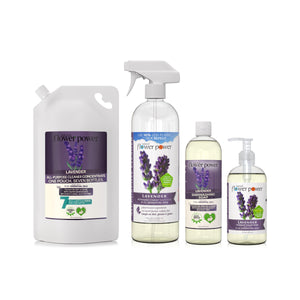
What we make for this



Why It Matters: Feedstock, Performance, and Scale
So if the final molecule is often the same, why do we care where it came from? There are three practical reasons, and only one of them is what marketing talks about.
Renewable vs. finite. This is the one companies emphasize. Plant-derived surfactants come from crops that can be replanted and harvested again. Petroleum is extracted from geological deposits that take millions of years to form. From a resource continuity perspective, plant-derived is more sustainable—though sustainability of sourcing is complicated when we're talking about crops like palm oil that have their own environmental costs. The story is more textured than "plant-derived is better."
Biodegradability and environmental fate. This is where plant-derived surfactants genuinely perform differently. A surfactant derived from coconut oil biodegrades more readily than a petroleum-based equivalent because the base chemistry is closer to other compounds that natural microbes have learned to break down. Petroleum-derived surfactants persist longer in aquatic environments. If your cleaner ends up in a stream or a septic system, a plant-derived surfactant is more likely to be metabolized by bacteria. This matters, especially in aggregate. It's one reason municipal water treatment systems and septic tank operators prefer plant-derived ingredients—they don't accumulate the same way.
Cost structure and manufacturing constraints. This is what almost nobody talks about, but it's the one that affects your daily life as a customer. Plant-derived surfactants cost more to produce because they require a consistent agricultural supply, more processing steps, and less industrial scale than petroleum refining. A company that chooses plant-derived ingredients is accepting tighter margins. That means either higher prices, or accepting lower profit per unit. Most companies pass the cost to consumers. Some choose margins over scale and remain small. Understanding where a company lands tells you something about their priorities.
What We've Learned Formulating Since 2012
We started Natural Flower Power in Cameron Park, California, in 2012. We weren't following a trend—the plant-derived cleaning market barely existed then. We were building products for people who got sick from conventional cleaners, and we were learning through production. You can't understand why a choice matters until you're making that choice across 10,000 bottles at a time.
When we switched to plant-derived surfactants, the differences appeared immediately on the production floor. Conventional surfactants are more stable across temperature ranges, more resistant to pH variations, and more consistent batch-to-batch. Plant-derived surfactants are more sensitive. They vary slightly depending on the season when the coconut or palm crop was harvested. They're more prone to separating in storage if temperature fluctuates. Our hand soap and dish soap formulas had to account for that sensitivity, which meant more testing and more rigorous quality control. A conventional manufacturer can run the same formula for years without deviation. We have to adjust for the reality of our ingredient supply.
That's not a flaw in plant-derived ingredients. It's a feature. It means we're actually responding to real variation in a agricultural supply, not processing fossil fuel into a perfectly consistent chemical. The tradeoff is that we have more constraints. It's also why we keep our product line tighter than some competitors. Adding more SKUs and formulas means more combinations to test and more variables to control. We've stayed focused on core products—hand soaps, dish soaps, all-purpose cleaners—because depth in a few formulas is how we maintain quality.
We also learned that ingredient sourcing matters to the final product in ways that go beyond chemistry. We work with suppliers who track the origin of their plant material. Knowing whether our coconut-derived surfactant came from a specific region, from suppliers who maintain standards we care about, means we can make decisions about our supply chain that matter. A large manufacturer buying surfactants in bulk might never know or care. We care because our customers care, and because we can actually know.
The Biodegradation Claim (And Why It's Real, Not Marketing)
Here's where plant-derived surfactants actually deliver on a promise that matters. In aquatic environments—streams, rivers, wastewater treatment systems, septic tanks—plant-derived surfactants break down faster and more completely than petroleum-derived ones. This isn't aspirational. It's tested and documented.
The reason is biochemistry. Microorganisms in soil and water have evolved to break down plant-derived compounds. They recognize the molecular patterns. Petroleum-derived surfactants are synthetic, and while some microbes have begun to adapt to breaking them down (after decades of exposure), they remain more persistent. If you care about water systems or you rely on a septic tank instead of municipal treatment, plant-derived is a meaningful choice, not a marketing distinction.
This doesn't make plant-derived surfactants "safer" or "non-toxic" in the way some marketing implies. The surfactant molecule itself—whether plant-derived or petroleum-derived—still has the same functional properties and the same potential to irritate skin or eyes at high concentrations. Once the surfactant is broken down by microbes, the risk is gone. But undiluted, it's still just a surfactant. The difference is in the environmental fate, not in inherent toxicity.
Formulation Tradeoffs: What You Actually Get When You Choose Plant-Derived
A company that commits to plant-derived surfactants makes specific choices with real consequences. These aren't good or bad—they're tradeoffs you should understand.
Higher price point. Plant-derived surfactants and their processing cost 20-40% more per unit than conventional equivalents. A company can absorb some of that cost, but not all. Our hand soaps cost more than conventional grocery store brands. We're transparent about why: better starting materials, smaller production batches, and lower margins.
Slower scaling. Companies that rely on plant feedstock hit constraints that petroleum-based operations don't face. There's only so much coconut oil available in a harvest season. We could grow much larger, but to do so we'd need to compromise on sourcing or ingredient traceability. We've chosen to stay smaller and more accountable.
Subtle shelf-life effects. Plant-derived surfactants degrade over time, especially if exposed to light and heat. Our products have a reliable shelf life of 2-3 years, which is fine for household use but shorter than some mass-market competitors can claim. Once opened, product degrades faster than it would in a conventional formula. This is a real constraint, and we build it into our recommendations to customers.
Less "cloud nine" performance. Petroleum-based surfactants can be pushed to higher concentrations and pushed for more aggressive stripping and degreasing. Plant-derived formulas perform well, but at a slightly different speed. Grease doesn't lift as instantaneously. Stains require a moment of soaking. For most households, this difference is imperceptible. For someone who expects their dish soap to cut through a catastrophically greasy pan in three seconds, conventional cleaners still have an edge.
These aren't reasons to avoid plant-derived products. They're reasons to understand that "plant-derived" is a choice, not a neutral descriptor. A company that makes this choice is accepting those constraints in exchange for something they believe matters: sustainability of feedstock, biodegradability, and alignment with how things actually grow and break down in the real world.
Reading Labels: Plant-Derived Vs. What You Think It Means
The word "plant-derived" appears on labels without legal definition, which means companies use it differently.
Plant-derived surfactants. This is specific. The main cleaning molecule came from a plant feedstock. It's been chemically processed, but the origin was botanical.
"Natural" or "naturally-derived." This word is unregulated. It can mean plant-derived. It can also mean "not synthetic in origin but heavily processed," or just "sounds nice." Don't rely on it.
"Plant-based" cleaning. This is marketing language that usually means at least some ingredients are plant-derived, but not necessarily the surfactants. Some companies use plant-based oils for scent while still using conventional surfactants.
Specific ingredient names. When a label says "sodium coco-sulfate" or "sodium lauryl glucoside," you're looking at actual plant-derived surfactants. These are the names that tell you something real. Sodium coco-sulfate is derived from coconut oil. Sodium lauryl glucoside comes from natural fats and sugars. When a company names them specifically, that signals they've chosen to be specific about their formulation.
Compare this with a label that says "surfactant blend" or lists "cleaning agents" without specification. That lack of detail is a choice too. It usually means the company is protecting proprietary formulations or hasn't invested in transparency.
The Standards and Governance Question
Plant-derived surfactants are tracked through supply chain certifications, but there's no single regulatory body that defines "plant-derived" in cleaning products the way there is for organic food or cosmetics. Some third-party organizations—like the Environmental Working Group or Cradle to Cradle certifications—have their own standards, but a company can use plant-derived surfactants without any certification.
This is where trust has to matter more than labels. A company that's transparent about where their surfactants come from, which suppliers they use, and how they verify the claim—that's a company you can follow. A company that just says "plant-derived" without detail is asking you to trust a word with no legal backing.
At NFP, every ingredient we use has a traceable supplier and a specification sheet. We know the origin of our coconut-derived surfactants. We maintain documentation on our sourcing decisions. That's not required by law. It's required by our own standards, and we make it visible at Our Story & Standards so customers can see exactly how we make these decisions.
Plant-Derived Doesn't Automatically Mean Safer for Your Home
This is important enough to say clearly: plant-derived surfactants are not automatically safer than conventional ones. A surfactant is a surfactant. Its function is to reduce surface tension and suspend particles. That function is the same whether it came from a coconut or from crude oil. The molecule itself can irritate skin or eyes at high concentration regardless of source.
What changes is the environmental profile and the renewability of the source. What doesn't change is that you should still rinse your hands thoroughly after handling concentrated cleaner, that you shouldn't drink it, and that individual sensitivity to surfactants varies person to person regardless of origin.
The safety question in a cleaning product is broader than just the surfactant. It includes fragrance choices, preservatives, pH level, and how the product is used. A plant-derived cleanser with synthetic fragrance might be worse for a sensitive household than a conventional cleaner without fragrance. A petroleum-derived surfactant in an unscented formula might be perfect for someone with chemical sensitivity. The source of the surfactant is one variable in a larger equation.
Understanding "plant-derived" is about seeing past the label claim to the actual choice the company made. Plant-derived surfactants come from renewable sources and biodegrade more readily. They cost more. They require different handling and quality control. They perform slightly differently depending on the season and the harvest. For companies willing to accept those constraints, they're worth it. For customers who care about those outcomes, they're what you're actually paying for when you choose them. Everything else is just marketing.
