

You're standing at the store shelf, or scrolling through product listings online, and you flip the label around because you want to know what you're actually buying. The bottle promises to clean effectively. It might claim to be "natural" or "safe" or "gentle." But the ingredient list reads like a chemistry textbook, and you're back where you started: unsure whether this product is something you should put in your home.
Most people give up at this point. They rely on brand recognition, price, or what they used growing up. And that would be fine, except cleaning products are something your family touches, breathes, and leaves on surfaces where your kids play. Understanding the label takes maybe three minutes of actual instruction, and it puts the decision entirely in your hands instead of in a marketing department's.
Here's what you need to know.
The Four Zones of a Cleaning Product Label
Every cleaning product label legally has to include the same basic structure. Not every brand emphasizes all of it equally—and that's itself important information.
The signal words (Caution, Warning, Danger). These aren't suggestions. They're regulated hazard classifications. "Danger" means highly toxic—lethal in small amounts. "Warning" means moderately toxic. "Caution" means low toxicity. If you see "Danger" or "Warning" prominently on a bottle of all-purpose cleaner, that product contains aggressive chemicals. It might be necessary for heavy-duty jobs, but you should know what you're dealing with before you use it around food prep surfaces or where children play.
Directions for use. This tells you dilution ratios, ventilation requirements, and surface compatibility. If the directions say "use in well-ventilated area" or "do not use on marble," the company is telling you something important: this product has limitations. That's transparency. More importantly, if directions require ventilation, that means vapors are expected. That's a signal about what's in the bottle.
Precautionary statements. These cover storage, disposal, and what to do if someone is exposed. "Keep out of reach of children" is standard. But "Do not mix with bleach" or "Avoid contact with skin" tells you something specific about the formula. If a cleaner warns against skin contact, it contains active irritants.
Ingredients. This is the one most people look at, and the one most companies obscure. Understanding it changes everything.
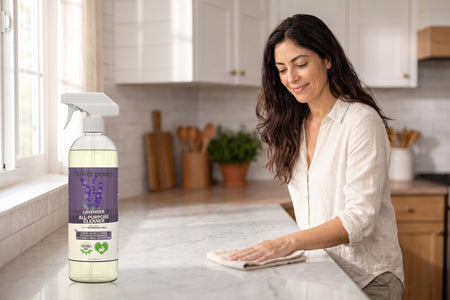
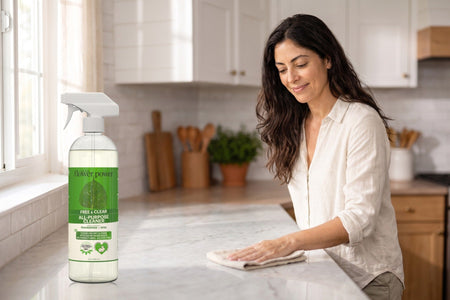
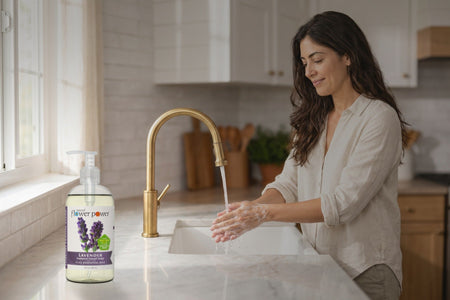
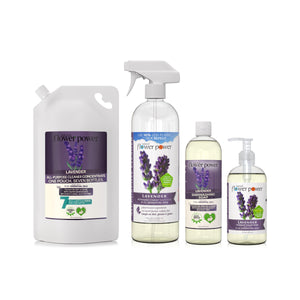
What we make for this
The Ingredient List: Order Tells You More Than Names
Ingredients are listed by concentration, from most to least. This is an EPA requirement for cleaning products, and it's your first real window into what you're buying.
If water is the first ingredient (usually it is), that's baseline. If surfactants appear second or third, the product is formulated to actually clean. If fragrance appears in the first three to five ingredients, the company prioritized smell over function—or over transparency. A fragrance-heavy formula often means other ingredients are being minimized or hidden, because "fragrance" is the legal catch-all that lets manufacturers list 50 individual chemicals as one word.
Short ingredient lists (under ten items) are inherently easier to evaluate. Fewer ingredients mean fewer potential allergens, fewer respiratory irritants, and honestly, more straightforward formulation. It's not that simple formulas are always better—sometimes complexity is necessary for stability or performance—but a short list tells you the company isn't adding filler or unnecessary chemicals just because they're cheap.
Long ingredient lists matter. Pay attention to how many you don't recognize. That's not a failure on your part—it's a design choice by the manufacturer. Some companies add preservatives, stabilizers, dyes, and thickeners because they make the product shelf-stable longer, look more attractive, or feel nicer to use. None of those additions make the product cleaner. They're there for margin or consumer psychology.
The real skill is recognizing what you're not seeing. If a label says "plant-derived" but doesn't list which plants, you're looking at marketing language, not transparency. If the bottle says "natural" but the ingredient list is forty items long with names you can't pronounce, someone is using regulation-compliant language to imply something the formula doesn't actually deliver.
What Actual Surfactants Look Like (And What to Watch For)
Surfactants are the working chemicals that loosen dirt and grease. They're necessary—cleaning doesn't happen without them. But not all surfactants are created equal, and knowing what to look for is the difference between an effective product and one that's harsh on your hands and bad for aquatic life.
Plant-derived surfactants typically appear on labels as sodium coco-sulfate, sodium lauryl sulfate (SLS), or cocamidopropyl betaine. These are derived from coconut oil or other plant sources. They're gentler than their synthetic counterparts, though "gentler" still means they can irritate sensitive skin if concentration is high. Bio-based surfactants also break down more readily in water systems, which matters if you care about aquatic impact.
Synthetic surfactants like sodium dodecylbenzenesulfonate (SDBS) or nonylphenol ethoxylates are petroleum-derived. They're cheaper and more powerful. The catch: ethoxylated surfactants—watch for names ending in "-eth" like sodium laureth sulfate (SLES)—create a carcinogenic byproduct during manufacturing called 1,4-dioxane. It's not always listed because it's a manufacturing artifact, not an intentional ingredient. But it's there.
If you see "Surfactants (anionic, nonionic, cationic)" listed without names, you're looking at a label that's legally compliant but opaque. Better companies will name their surfactants. The best will tell you whether they're plant-derived or synthetic, and in what concentration.
Reading for Transparency: What It Actually Signals
When you find a product that lists every ingredient clearly, names essential oils instead of hiding them under "fragrance," and discloses that it uses plant-derived surfactants, you've found a company making a specific choice. That choice has business costs.
Full transparency means the company can't use the fragrance exemption. It can't call surfactants "fragrance blend" to hide their composition. It can't list "natural fragrance" as a catch-all for synthetic chemicals. It also can't source the cheapest possible ingredients, because transparent sourcing—knowing where each plant-derived ingredient comes from and how it's processed—costs more than buying commodity chemicals.
When we formulate at Natural Flower Power, every product that goes out lists exactly what's in it. Not because we're morally superior—it's because our customer base has eczema, chemical sensitivities, kids with asthma, and households with pets that lick cleaned surfaces. These customers don't benefit from marketing language. They need to know what they're using. So we tell them.
This isn't true of every company claiming transparency. Some brands list ingredients but use confusing scientific names to discourage reading. Some separate their ingredients into sections so the formula looks more benign than it is. Some claim to be plant-derived on the front label but bury synthetic ingredients further down on the back. Transparency isn't just about listing ingredients. It's about making it possible for an ordinary person to understand what they're buying.
When you encounter real transparency—a short, named ingredient list, clear directions, honest precautions—you can also trust the rest of what the company is telling you. They chose to be transparent about the product; they're probably honest about other things too. That's how you build reliable supplier relationships.
The Specific Things to Look For When You're Evaluating a Product
Does the ingredient list exist at all? Some products, especially older or budget brands, don't disclose a full ingredient list. That's a red flag. If a company won't tell you what's in the bottle, there's usually a reason.
Is "fragrance" listed? If yes, the product contains 1 to 50+ undisclosed chemicals lumped into that single word. If you or anyone in your house is sensitive to fragrance, that's your answer: move on. If fragrance doesn't trigger you but transparency matters, look for a product with named essential oils instead.
How many ingredients are there? Count them. If the list is under ten, you can realistically understand the formula. If it's over twenty, you're looking at a complex product with stabilizers, thickeners, preservatives, and additives beyond the core cleaning function. Neither is bad, but it tells you something about the company's priorities.
Do you recognize the ingredient names? If half the list is unpronounceable, that's not necessarily a problem—some chemistry terms are just complex. But if the entire list is accessible (water, plant-derived surfactants, essential oils, preservatives like potassium sorbate), you're looking at a company that chose simplicity intentionally. That often correlates with other good choices.
What signal word is used? "Caution" for a general-purpose product is normal. "Warning" or "Danger" is a signal that the formula contains aggressive chemicals. Neither is inherently bad—sometimes you need something strong—but you should know what you're dealing with before it's under your sink.
Does the company address what's NOT in the product? Some labels say "Free & Clear" or "No synthetic fragrances." That negative space is information. If a company specifically tells you what they avoid, they're betting that knowledge matters to you. For sensitivity-prone households, that's often more valuable than generic positive claims.
What "Plant-Derived," "Natural," and Other Claims Actually Mean
These words have marketing power and almost no legal meaning. Understanding the difference between a claim and a specification is the final level of label literacy.
"Plant-derived" (also called "bio-based") means the starting material came from a plant. Sodium coco-sulfate is plant-derived because it comes from coconut oil. But plant-derived doesn't mean non-toxic—it's just an origin. Some plant-derived ingredients are gentler than their synthetic versions; some aren't. The advantage of plant-derived surfactants is typically that they're biodegradable and carry less environmental debt. For household safety, plant origin doesn't guarantee anything.
"Natural" has no legal definition. Any company can claim it. It doesn't tell you whether synthetic chemicals were used, what percentage of the formula is plant-based, or anything verifiable. If a label says "natural" without specifying what's actually natural, treat it as marketing, not information.
"Non-toxic" and "100% safe" are claims no product can defensibly make. Everything is toxic at sufficient concentration. Any company making these claims is either ignorant or misleading you. That's your signal to look elsewhere.
"Hypoallergenic" has no regulated meaning either. It doesn't mean allergy-safe. It means the company is claiming the product is less likely to cause allergies. They don't have to prove it. If someone in your household has multiple sensitivities, you need full ingredient transparency, not a claim.
The claims that matter are the specific, verifiable ones: "No synthetic fragrances" (checkable by reading the ingredient list). "Free & Clear" (meaning the fragrance category is empty). "Essential oils only" (also checkable). "Plant-derived surfactants" (you can verify the surfactant names). When a company makes a claim you can actually verify against the ingredient list, they're building a foundation for trust.
Building Your Own Evaluation System
After you've evaluated a few products, create a shortlist of questions to ask before you buy. This takes thirty seconds and saves you from brand switching and wasted money.
For any cleaning product, ask: Is fragrance listed? (If yes and you're sensitive, stop.) Are the surfactants named? (If they're named and plant-derived, that's a solid foundation.) Is the ingredient list short enough to actually understand? (Under fifteen items is ideal.) Does the signal word match the cleaning job I need done? (You don't need "Warning" on your hand soap.) Are there any ingredients that previously triggered a reaction? (Scan for common culprits like methylisothiazolinone if you have sensitivity history.)
Use that checklist at the store or online. You can evaluate most products in under a minute. Once you find something that passes your criteria and actually cleans well, buy it again. Switching to a new product every few months defeats the purpose of understanding labels—you need to know whether the product works for your household, and that takes weeks of actual use.
Our full approach to transparency is available at Our Story & Standards, where you can see how these principles apply across our entire product line. If you want to see what full ingredient transparency looks like in action, the ingredient lists for our hand soaps, dish soaps, all-purpose cleaners, and air fresheners are all listed completely—no hidden categories, no proprietary language.
Reading a cleaning product label isn't complicated. It's three decisions: Can you see what's in it? Is the formula simple or loaded? Are the ingredients named clearly? If the answer is yes to all three, the company has chosen transparency. And companies that choose transparency in one place usually choose it everywhere. That's where your confidence comes from—not from a single perfect product, but from a supplier you can actually trust.
