


TL;DR: Streaks on stainless steel are almost never a stainless problem; they're a residue problem. Skin oils, hard-water minerals, and leftover cleaning product get smeared across the brushed surface instead of lifted off it. The fix is technique, not force: a properly diluted cleaner, a microfiber cloth, wiping in the direction of the grain, and a dry-buff pass at the end. Using more product makes streaking worse, not better. And keep chlorine bleach and abrasive scrubbers away from stainless entirely — appliance manufacturers and the stainless steel industry both warn that chlorides can pit the finish and abrasives scratch it permanently.
You see the fingerprints on the refrigerator door, you grab a cloth and a spray bottle, you wipe, and somehow the door looks worse than before you started. Now instead of a few fingerprints there's a hazy smear the size of a dinner plate, with drag marks where the cloth traveled. If this is your regular experience with stainless steel, nothing is wrong with your appliance and probably nothing is wrong with your cleaner. What's usually wrong is one or more small technique details that nobody explains when you buy the fridge.
Stainless steel is unforgiving in one specific way: it shows everything. The brushed finish that makes it look expensive also catches light at a shallow angle, so any film left on the surface — oil, minerals, soap — becomes visible the moment the light hits it. Cleaning stainless well is less about scrubbing harder and more about leaving nothing behind. This guide walks through why stainless streaks, the wiping technique that prevents it, why dilution matters more than most people think, and the short list of things that should never touch a stainless surface.
Why stainless steel streaks in the first place
Four culprits cause nearly all the streaking on kitchen stainless, and it helps to know which one you're fighting because the fixes are different.
Skin oils. Fingerprints are mostly sebum — the oil your skin produces — and oil doesn't evaporate. When you wipe a fingerprint with a dry cloth or a barely damp paper towel, you're not removing the oil; you're spreading it into a thin film. That film is the classic stainless "haze." Oil needs a surfactant to lift it off the surface, which is why a plain water wipe so often disappoints. If you want the fuller picture of how surfactants surround oil and carry it away in water, we've written up what surfactants are and how they actually clean.
Hard-water minerals. If your tap water is hard, every drop that dries on the surface leaves a small deposit of dissolved minerals behind. Spray a cleaner diluted with hard tap water, let it air-dry, and you get a fine mineral film with visible droplet edges. This is why the drying step matters as much as the washing step: minerals only deposit when water is left to evaporate in place.
Wiping against the grain. Brushed stainless isn't smooth. The finish is made of thousands of fine parallel scratches — the grain — and those microscopic grooves hold onto oil and residue. Wipe across the grain and your cloth skips over the grooves, depositing residue into them instead of pulling it out. Wipe along the grain and the cloth tracks the grooves and sweeps them clean. Same cloth, same cleaner, visibly different result.
Product residue. This one is the least intuitive: the cleaner itself can be the streak. Surfactants are designed to grab onto oils, but whatever surfactant doesn't rinse or wipe away stays on the surface as a film — and on stainless, film is exactly what you're trying to avoid. This is where the instinct to spray more product actively works against you, and it deserves its own section below.

What we make for this
Find the grain, then follow it
Look closely at your appliance and you'll see the fine brush lines running in one consistent direction — usually horizontally on refrigerator doors and dishwasher panels, though it varies by manufacturer, and handles or trim pieces often have a grain running a different way than the panel they're attached to. Check each surface before you wipe it. GE's care guidance for stainless appliances comes down to the same point: clean in the direction of the grain lines, with a soft cloth, and nothing harsher than mild soap for everyday cleaning.
Here's the full sequence that reliably produces a streak-free panel:
1. Clear the loose stuff first. Wipe the panel with a dry microfiber cloth to pick up dust and crumbs. Dragging dry grit around under a wet cloth is how brushed finishes pick up new scratches.
2. Spray your cleaner sparingly — on the cloth, not the panel. Misting the cloth gives you an evenly damp wiping surface and keeps cleaner from running down the panel and pooling along door seams and handle bases, where it dries into drip marks.
3. Wipe with the grain in long, overlapping passes. Work top to bottom, one full stroke at a time, the way you'd paint a wall. Short scrubby circles redistribute oil; long directional passes remove it.
4. Dry-buff immediately with a second, clean microfiber cloth. Again with the grain. This is the step most people skip and the step that matters most: it picks up the water before minerals can dry in place and picks up whatever trace of cleaner the first cloth left behind. The two-cloth habit — one damp, one dry — is the single biggest upgrade you can make to your stainless routine.
That's the whole technique. It takes maybe ninety seconds per panel, and none of it involves pressing harder or spraying more.
Why microfiber, specifically
Paper towels feel like the natural tool here and they're genuinely the wrong one. Paper doesn't absorb oil well, so it pushes fingerprint oils around rather than picking them up, it sheds lint into the grain, and some appliance makers warn that abrasive paper can even fine-scratch a brushed finish over time. Cotton rags are gentler but their fibers are comparatively thick and smooth, so oil slides past them.
Microfiber is different because each strand is split into far finer filaments, which gives the cloth an enormous amount of edge and surface area at the scale where oil films live. Those fine fibers wick oils and water up into the cloth instead of pushing them along the panel. It's why a barely damp microfiber cloth, all by itself, will erase light fingerprints that defeat a soaked paper towel — and why appliance manufacturers name microfiber specifically in their care guides. Keep two or three dedicated to the kitchen, wash them without fabric softener (softener coats the fibers and kills their grab), and replace them when they stop feeling slightly grippy.
Dilution matters: more product is not better
Here's the honest point that most cleaning-product marketing won't make for you: past a certain concentration, extra cleaner doesn't clean more — it just leaves more of itself behind. Surfactants work by lifting oils into the water so they can be wiped away. That takes a surprisingly small amount of surfactant. Everything beyond that amount has no grease left to grab, so it stays on the panel as a film, and on stainless steel that film reads as streaks and haze the moment light rakes across it. If you've ever cleaned a panel twice and watched it get worse, surplus product is very likely why.
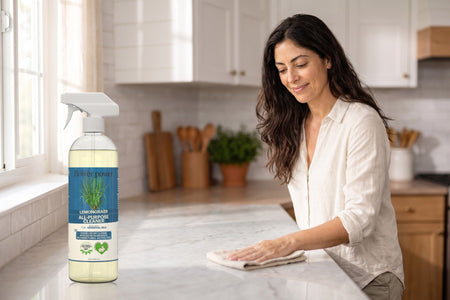
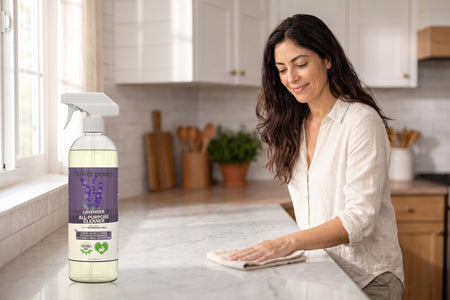
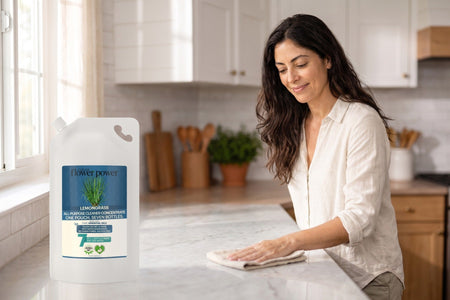
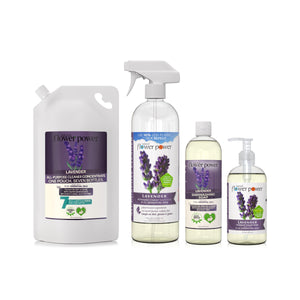
We'd rather sell you less product used correctly than more product used badly. For stainless exteriors, a light mist of properly diluted all-purpose cleaner on a cloth is the right dose; if the panel feels slippery or looks hazy after wiping, you used too much, and the fix is a pass with a clean damp cloth followed by a dry buff — not another spray. If you use our all-purpose concentrate refills, respect the dilution ratio on the label: the concentrate is ready to use only after adding water, and "stronger" mixes just shift the balance from cleaning toward residue.
One more dilution-adjacent tip: if your tap water is very hard, the water itself contributes to the film. Mixing your spray bottle with distilled water costs almost nothing and removes the mineral variable entirely. And regardless of water, the dry-buff step is what makes hard water a non-issue — minerals can't deposit from water that never gets to evaporate on the panel.
Fingerprints vs. baked-on grime: two different jobs
A common mistake is treating every stainless mess as the same task. It isn't, and matching the effort to the mess saves both time and finish.
Daily fingerprints and smudges need almost nothing: a dry or barely damp microfiber cloth, with the grain, ten seconds per door. No product required for oils this light. If you do this every day or two, the weekly job stays trivial.
Weekly film and light kitchen grease — the airborne cooking oil that settles on everything near the stove — is where a diluted all-purpose cleaner earns its place. Plant-derived surfactants handle this layer well; we've covered the evidence in whether plant-derived cleaners work on grease, and the short version is that light-to-moderate kitchen grease is squarely inside their competence.
Baked-on or long-neglected grime — the sticky amber film on a range hood that hasn't been touched in a year — is a patience job, not a force job. Lay a cloth soaked in warm water and cleaner over the area and let it sit for several minutes so the surfactants have time to soften and penetrate the layer, then wipe with the grain. Repeat if needed. What you must not do is reach for a scouring pad or a blade: the grime will eventually come off, but scratches in a brushed finish never do. The same dwell-time principle does most of the heavy lifting in deep-cleaning a kitchen without harsh chemicals — time and coverage substitute for harshness almost everywhere.
What to keep away from stainless steel
"Stainless" is a well-chosen piece of optimism, not a literal description. The metal resists corrosion because of a thin protective chromium-oxide layer, and a short list of common cleaning chemicals can compromise that layer. This part is worth taking seriously because the damage is permanent.
Chlorine bleach and other chlorides. The stainless steel industry's own technical literature is blunt about this: pitting corrosion in stainless steel generally occurs in the presence of chloride compounds, and that includes sodium hypochlorite — household bleach. Bleach left on a stainless surface can attack the protective layer and leave small permanent pits that no amount of polishing removes. Appliance manufacturers agree; GE's care guide, for example, lists bleach alongside steel wool, abrasives, and ammonia as things never to use on stainless panels. If bleach ever splashes onto stainless, rinse it off promptly with plenty of water and dry the surface — don't let it sit.
Abrasives. Scouring powder, steel wool, and green scrub pads all scratch brushed finishes. The scratches trap oil and moisture, which makes the panel both harder to clean and more vulnerable going forward. If a mess seems to demand scrubbing, it actually demands dwell time.
Oven cleaners and strong acids. Both appear on manufacturers' do-not-use lists. Strong alkaline oven cleaners and harsh acids can discolor or etch the finish. (Mild acids are a different story — a dilute citric acid solution is a reasonable tool for mineral spots, rinsed and dried promptly.)
One clarification while we're here: nothing in this article is about sanitizing. Our products are cleaners, not disinfectants — they remove soils; they don't make germ-kill claims. If a situation genuinely calls for disinfection, use a product registered for that purpose, follow its label, and keep it off your stainless panels unless the label says otherwise.
Where a plant-derived degreaser fits — and where it doesn't
Everything stainless needs from a cleaner is oil-lifting, and that's exactly what plant-derived surfactants do well. Our all-purpose cleaners are built on gentle sugar-and-coconut-derived surfactants like decyl glucoside — effective on the skin oils and cooking films that cause stainless haze, without the harsh solvents, ammonia, or chlorides on the do-not-use lists above. They're 99% plant-derived and bio-based, and because they rinse clean at proper dilution, they're well suited to a surface where residue is the enemy. The same sulfate-free logic we apply at the sink — covered in getting grease off dishes without sulfates — applies here: you don't need aggressive chemistry to move kitchen grease.
And here is what a plant-derived cleaner — ours or anyone's — will not do, because honesty about limits is part of how we formulate. It won't remove rust spots or heat tint; those are chemical changes to the metal surface, not soils sitting on top of it, and they call for a dedicated stainless-safe polish or an oxalic-acid cleanser used per its label. It won't polish out scratches. It won't dissolve heavy mineral scale on its own; a mild acid like citric acid does that job. And it won't disinfect. What it will do is handle the actual daily reality of stainless — fingerprints, smudges, cooking film — using mild chemistry, which is roughly 95% of what your appliances will ever ask of you.
Where to start
You likely have most of what you need already: two clean microfiber cloths and patience for the dry-buff step. For the cleaner, our all-purpose cleaners are the fit for stainless exteriors — plant-derived surfactants that lift fingerprint oil and cooking film and wipe away clean at proper dilution, made in-house in Cameron Park, California, as they have been since 2012. If anyone in the house is scent-sensitive, the Free & Clear all-purpose cleaner does the same work with no added fragrance.
Start with one appliance. Dust it dry, mist the cloth (not the door), wipe with the grain, buff dry, and look at it in raking light. If the streaks are gone — and with this method, they nearly always are — you've fixed the technique problem that no amount of extra product was ever going to solve.
Every NFP product is backed by our 90-Day Love-It Guarantee: if it doesn't work for your household — on your appliances, in your water, with your routine — we make it right. Try the two-cloth method on your worst panel first. The refrigerator door will tell you everything you need to know.
