
What It Is
EDTA (ethylenediaminetetraacetic acid) is a synthetic aminopolycarboxylic acid chelating agent (CAS 60-00-4). In cleaning and personal care products, it most commonly appears as disodium EDTA (CAS 139-33-3) or tetrasodium EDTA (CAS 64-02-8). These are white crystalline powders that dissolve in water. EDTA functions as a chelating agent -- it binds metal ions (calcium, magnesium, iron, copper) in solution, preventing them from interfering with product performance.
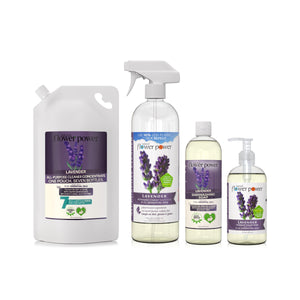
What we make for this



Common Uses
Disodium EDTA and tetrasodium EDTA are used in shampoos, body washes, liquid soaps, all-purpose cleaners, laundry detergents, and industrial cleaning products. EDTA improves the performance of surfactants in hard water, prevents discoloration from metal contamination, and stabilizes product formulations by sequestering trace metals that could catalyze degradation reactions. EDTA is also used in food preservation (to prevent oxidation), pharmaceutical formulations, and medical chelation therapy for heavy metal poisoning.
How It Works
EDTA's molecular structure contains six coordination sites -- four carboxylate groups and two amine groups -- that wrap around a metal ion like a claw, forming an extremely stable complex (called a chelate). This effectively removes the metal ion from solution. In cleaning products, this means calcium and magnesium ions from hard water can no longer bind to anionic surfactants, which prevents soap scum formation and maintains cleaning performance. EDTA is one of the strongest synthetic chelators available for consumer product use.
EDTA's chelation strength is also what drives its environmental concern. The same stability that makes it effective in products also makes it resistant to biodegradation in the environment.
Safety and Regulation
The CIR Expert Panel concluded that disodium EDTA and tetrasodium EDTA are safe as cosmetic ingredients in current practices of use and concentration (CIR, 2002). The FDA classifies EDTA salts as GRAS for food use at specified concentrations (21 CFR 172.120). EDTA is not toxic, carcinogenic, or mutagenic at concentrations used in consumer products.
The primary concern with EDTA is environmental persistence. EDTA is poorly biodegradable under standard wastewater treatment conditions -- studies report 0%-25% biodegradation in conventional activated sludge systems (Nortemann, 1999). EDTA passes through wastewater treatment and enters surface water, where it can remobilize heavy metals from sediments by chelating them back into solution. This remobilization can increase the bioavailability of toxic metals in aquatic environments. EDTA has been detected in rivers and lakes across Europe and North America at concentrations in the microgram-per-liter range.
Why Natural Flower Power Does Not Use It
Natural Flower Power does not use EDTA in any product.
We use sodium gluconate as our chelating agent instead. Sodium gluconate is naturally derived (produced by fermentation), readily biodegradable, and effective enough for the water hardness ranges our customers encounter in residential use. The tradeoff is that sodium gluconate is a weaker chelator than EDTA -- it does not bind metal ions as tightly, which means it is less effective in extremely hard water or in formulations that need to sequester transition metals like iron. For our product types and use contexts, that limitation is acceptable. EDTA would provide stronger chelation, but at the cost of introducing a persistent synthetic chemical that accumulates in waterways.
Related Ingredients
Sodium gluconate is the biodegradable chelating agent Natural Flower Power uses instead of EDTA. Citric acid provides supplementary chelating activity in NFP formulations. Phosphates are another class of water-softening builders that have been restricted due to environmental concerns (eutrophication rather than persistence).
Sources
- Cosmetic Ingredient Review (CIR). "Final Report on the Safety Assessment of EDTA and Related Ingredients." International Journal of Toxicology, vol. 21, Suppl. 2, 2002, pp. 95-142.
- Nortemann, B. "Biodegradation of EDTA." Applied Microbiology and Biotechnology, vol. 51, no. 6, 1999, pp. 751-759.
- U.S. Food and Drug Administration. 21 CFR 172.120 -- EDTA Salts.
