
What It Is
PFAS — per- and polyfluoroalkyl substances — are a class of more than 12,000 synthetic chemicals characterized by carbon-fluorine bonds. The two most studied are PFOA (perfluorooctanoic acid, CAS 335-67-1) and PFOS (perfluorooctane sulfonate, CAS 1763-23-1). The carbon-fluorine bond is one of the strongest in organic chemistry, which is why these compounds are called "forever chemicals" — they resist heat, water, oil, and biological breakdown for decades to centuries.
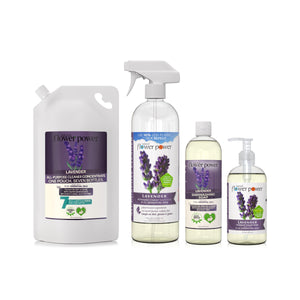
What we make for this



Common Uses
PFAS appear in non-stick cookware (Teflon), water-repellent textiles and outdoor gear, grease-resistant food packaging (pizza boxes, microwave popcorn bags), firefighting foams, and some cleaning and personal care products marketed for stain or water resistance. In household cleaning, PFAS may appear as surfactants, water-repellent coatings, or contaminants in other ingredients. Because they often appear under proprietary trade names rather than as "PFAS" on labels, consumer identification is difficult.
How It Works
PFAS function as surfactants — molecules with one end that loves water and another that repels both water and oil. This unusual dual repellency makes them effective at creating surfaces that resist staining, wetting, and grease. The same carbon-fluorine bond that gives PFAS their performance characteristics also makes them resistant to the enzymatic breakdown that other organic compounds undergo in soil, water, and living organisms. Once released into the environment, individual PFAS molecules can persist for decades and accumulate in groundwater, wildlife, and human blood serum.
Safety and Regulation
The EPA finalized National Primary Drinking Water Regulations for six PFAS in April 2024, setting Maximum Contaminant Levels of 4.0 parts per trillion for PFOA and PFOS — among the lowest regulatory limits ever set for any drinking water contaminant. The ATSDR Toxicological Profile for Perfluoroalkyls (2021) summarizes documented associations between PFAS exposure and kidney cancer, testicular cancer, thyroid disease, reduced vaccine response in children, increased cholesterol, and pregnancy-induced hypertension. Several states (Maine, Minnesota, California, Washington, Colorado, New York) have passed laws restricting PFAS in consumer products and cookware. The Stockholm Convention on Persistent Organic Pollutants lists PFOS, PFOA, and PFHxS for global elimination.
Why Natural Flower Power Does Not Use It
Natural Flower Power does not use any intentionally-added PFAS in any product.
We have no functional reason to use fluorinated compounds in plant-derived soaps, dish soaps, all-purpose cleaners, or air fresheners. Plant-derived surfactants from coconut and corn-sugar sources clean effectively without the persistence and bioaccumulation profile PFAS carry. We also vet our raw material suppliers for PFAS contamination in upstream feedstocks, because PFAS can appear as unintended residues in petroleum-derived intermediates. Full ingredient transparency means we list every component on every label — if we used a PFAS, you would see it.
Related Ingredients
Decyl glucoside, coco-glucoside, and sodium alpha olefin sulfonate are plant-derived surfactants Natural Flower Power uses instead of fluorinated surfactant systems. Synthetic fragrances is another class of synthetic ingredients we exclude for transparency reasons. Triclosan is another persistent synthetic compound subject to FDA restriction.
Sources
- U.S. Environmental Protection Agency. "Final PFAS National Primary Drinking Water Regulation." April 10, 2024.
- Agency for Toxic Substances and Disease Registry (ATSDR). "Toxicological Profile for Perfluoroalkyls." U.S. Department of Health and Human Services, May 2021.
- Sunderland, E.M., et al. "A Review of the Pathways of Human Exposure to PFAS and Present Understanding of Health Effects." Journal of Exposure Science & Environmental Epidemiology, vol. 29, 2019, pp. 131–147.
- Stockholm Convention on Persistent Organic Pollutants. PFOS, PFOA, PFHxS listings (Annex A/B).
