
What It Is
Phosphates in the context of cleaning products refer to inorganic phosphate compounds -- primarily sodium tripolyphosphate (STPP, CAS 7758-29-4) and trisodium phosphate (TSP, CAS 7601-54-9). These are white crystalline powders that dissolve readily in water. Phosphates function as builders -- they soften water by sequestering calcium and magnesium ions, which allows surfactants to work more effectively. Phosphates were once the dominant builder in laundry detergents and automatic dishwasher detergents.
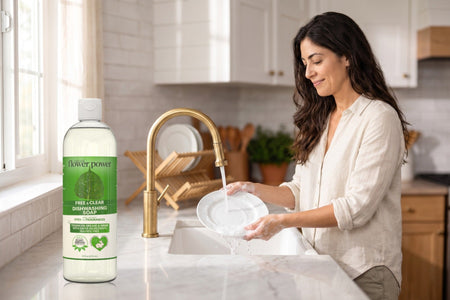
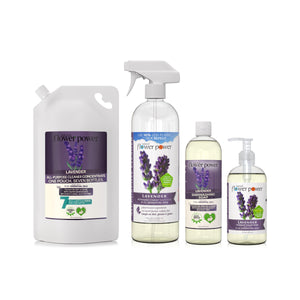
What we make for this


Common Uses
Phosphates were historically used in laundry detergents, automatic dishwasher detergents, all-purpose cleaners, and industrial cleaning products. Following widespread state-level bans and voluntary industry reformulation, phosphate use in consumer cleaning products has declined dramatically since the 1970s. Most US states ban or restrict phosphates in household laundry detergents, and many restrict them in automatic dishwasher detergents as well. Phosphates remain in use in some industrial, institutional, and agricultural applications.
How It Works
Phosphates improve cleaning performance through two primary mechanisms. First, they sequester hardness minerals (calcium and magnesium) in water by forming soluble complexes, preventing these ions from interfering with surfactant function. Hard water reduces surfactant effectiveness because calcium and magnesium ions bind to anionic surfactants and precipitate out as soap scum. By removing these ions, phosphates allow surfactants to work at full efficiency.
Second, phosphates provide alkalinity that helps break down and suspend oily and particulate soils. STPP in particular maintains solution pH in the range where most surfactants perform optimally. The combination of water softening and alkalinity made phosphates extremely effective builders -- their removal from detergent formulations required significant reformulation effort to maintain comparable cleaning performance.
Safety and Regulation
Phosphates are not toxic to humans at concentrations found in cleaning products. The safety concern is entirely environmental. When phosphate-containing wastewater enters lakes, rivers, and estuaries, the phosphorus serves as a nutrient for algae and cyanobacteria. Excess phosphorus causes eutrophication -- massive algal blooms that deplete dissolved oxygen when the algae die and decompose, killing fish and other aquatic organisms. Lake Erie's severe algal blooms in the 1960s and 1970s were a primary driver of the first phosphate bans in laundry detergents.
As of 2010, most US states restrict phosphorus in household automatic dishwasher detergents to 0.5% or less. Laundry detergent phosphate restrictions have been in place since the 1970s-1990s in most states. The EU restricts phosphates in consumer laundry detergents to 0.5 g phosphorus per wash dose (Regulation (EU) No 259/2012).
Why Natural Flower Power Does Not Use Them
Natural Flower Power does not use phosphates in any product.
Our product categories -- hand soaps, dish soaps, all-purpose cleaners, and air fresheners -- do not require the heavy-duty water-softening that phosphate builders provide. For hard water performance in our all-purpose cleaners, we use sodium gluconate as a chelating agent, which sequesters hardness minerals without the aquatic pollution concerns. Our surfactant system is formulated to perform well across typical residential water hardness ranges without a phosphate builder.
Related Ingredients
Sodium gluconate is the chelating agent Natural Flower Power uses to address hard water interference. EDTA is another chelating agent used by some manufacturers as a phosphate replacement, though it has its own environmental persistence concerns. Citric acid provides some chelating function in NFP formulations alongside sodium gluconate.
Sources
- European Union. Regulation (EU) No 259/2012 on phosphates in consumer laundry detergents.
- U.S. Geological Survey. "Phosphorus and Eutrophication." USGS Fact Sheet, 2001.
