
What It Is
Imidazolidinyl urea is a synthetic preservative in the formaldehyde-releasing preservative class (CAS 39236-46-9). It is a white, odorless powder that is highly water-soluble. Imidazolidinyl urea is one of the most commonly used preservatives in the global cosmetics industry, marketed under the trade name Germall 115. It functions by slowly releasing formaldehyde to provide antimicrobial preservation.
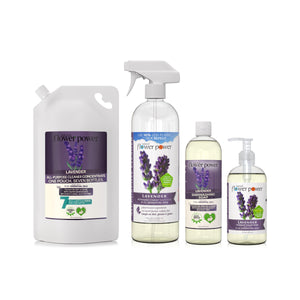
What we make for this



Common Uses
Imidazolidinyl urea is used in a wide range of personal care products: lotions, creams, shampoos, conditioners, makeup, eye products, and baby care products. The CIR reports it as one of the most frequently used preservatives in cosmetics, with thousands of product formulations containing it. It is typically used at concentrations of 0.1%-0.6%. Imidazolidinyl urea is less commonly found in household cleaning products than in personal care formulations.
How It Works
Imidazolidinyl urea releases formaldehyde through slow hydrolysis in aqueous solution. The released formaldehyde cross-links microbial proteins and nucleic acids, providing broad-spectrum antimicrobial activity. Imidazolidinyl urea releases less formaldehyde per unit weight than quaternium-15 or diazolidinyl urea, but it releases enough to maintain effective preservation over the product's shelf life.
Imidazolidinyl urea is primarily effective against bacteria. Its antifungal activity is limited, which is why it is often combined with a paraben (typically methylparaben or propylparaben) to provide broad-spectrum coverage against both bacteria and fungi. This combination is one of the most common preservative systems in the personal care industry.
Safety and Regulation
The CIR Expert Panel concluded that imidazolidinyl urea is safe at concentrations up to 0.6% when formulated to limit formaldehyde release (CIR, 2001). The EU Cosmetics Regulation permits it as a preservative with the standard FRP labeling requirement: products must state "contains formaldehyde" if free formaldehyde exceeds 0.05%.
Contact allergy to imidazolidinyl urea has been documented in patch-testing studies, with positive rates typically between 1% and 3% in consecutively tested dermatology patients. Some of this sensitization is attributable to released formaldehyde, but imidazolidinyl urea itself may also be an independent sensitizer.
Why Natural Flower Power Does Not Use It
Natural Flower Power does not use imidazolidinyl urea in any product.
Imidazolidinyl urea is excluded as part of our blanket prohibition on formaldehyde-releasing preservatives. Additionally, its common pairing with parabens for antifungal coverage would conflict with our paraben-free standard. Our BIT-based preservation system provides both antibacterial and antifungal activity in a single ingredient at 0.005%, eliminating the need for either an FRP or a paraben co-preservative.
Related Ingredients
Diazolidinyl urea is a closely related FRP that releases more formaldehyde than imidazolidinyl urea. DMDM hydantoin and quaternium-15 are other FRPs. Formaldehyde is the active antimicrobial released. Benzisothiazolinone (BIT) is the preservative Natural Flower Power uses instead.
Sources
- Cosmetic Ingredient Review (CIR). "Final Report on the Safety Assessment of Imidazolidinyl Urea." International Journal of Toxicology, vol. 20, Suppl. 1, 2001, pp. 39-46.
- European Commission. Regulation (EC) No 1223/2009 on Cosmetic Products. Annex V.
