
What It Is
2-Butoxyethanol (also called ethylene glycol monobutyl ether or EGBE) is a glycol ether solvent with the chemical formula C6H14O2 (CAS 111-76-2). It is a colorless liquid with a mild, sweet, ether-like odor. 2-Butoxyethanol is one of the most widely used solvents in the household cleaning industry. It functions as a coupling agent and solvent that helps water-based cleaners dissolve grease and oils.
What we make for this


Common Uses
2-Butoxyethanol is used in glass cleaners, all-purpose cleaners, kitchen degreasers, oven cleaners, carpet cleaners, and some industrial cleaning formulations. It is a key ingredient in many conventional spray cleaners because of its effectiveness at dissolving both oil-based and water-based soils. 2-Butoxyethanol is also used in paints, coatings, inks, and as an industrial solvent. California's Air Resources Board restricts 2-butoxyethanol in consumer products due to its VOC (volatile organic compound) classification.
How It Works
2-Butoxyethanol works because its molecular structure has both hydrophilic and hydrophobic regions -- the ethylene glycol portion is water-soluble, while the butyl ether portion dissolves oils and greases. This amphiphilic character makes it an effective coupling agent: it helps surfactants and water interact with oily soils that would otherwise resist water-based cleaning. In glass cleaners, 2-butoxyethanol dissolves the thin films of oils (from fingerprints, cooking fumes, etc.) that cause streaks, allowing the cleaner to leave a clear surface.
Safety and Regulation
2-Butoxyethanol is a volatile organic compound that contributes to ground-level ozone formation. California restricts its concentration in consumer cleaning products to 1%-6% depending on product category (CARB Consumer Products Regulation). The EPA has set a reference concentration (RfC) of 13 mg/m3 for chronic inhalation exposure.
Inhalation of 2-butoxyethanol vapor can cause headaches, dizziness, and irritation of the nose and eyes. At high exposure levels, 2-butoxyethanol causes hemolysis (red blood cell destruction) in laboratory animals, though the relevance of this finding to humans is debated -- human red blood cells are less susceptible to this effect than those of rats and mice (ATSDR, 1998).
IARC classifies 2-butoxyethanol as Group 3 (not classifiable as to carcinogenicity to humans). The NTP has not listed it as a carcinogen.
Why Natural Flower Power Does Not Use It
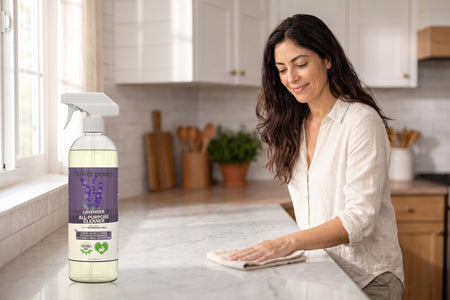
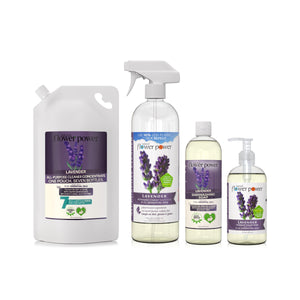
Natural Flower Power does not use 2-butoxyethanol or any petroleum-derived solvents in any product.
Our all-purpose cleaners rely entirely on plant-derived surfactants to dissolve and remove grease and oils. We do not need a petroleum-derived solvent to achieve effective cleaning on everyday household surfaces. The tradeoff is that our cleaners may not cut through extremely heavy industrial grease as aggressively as a 2-butoxyethanol-based formula would, but for kitchen counters, bathroom surfaces, and general household use, our surfactant system handles the job. Avoiding 2-butoxyethanol also means our products do not contribute VOC emissions to indoor air -- a real benefit in poorly ventilated spaces.
Related Ingredients
Toluene is another petroleum-derived solvent with more severe toxicity concerns. Decyl glucoside and other plant-derived surfactants are the cleaning agents Natural Flower Power uses instead of petroleum solvents. SD Alcohol 40B is the only solvent-type ingredient in NFP products, used in air fresheners as a grain-derived co-solvent.
Sources
- Agency for Toxic Substances and Disease Registry (ATSDR). "Toxicological Profile for 2-Butoxyethanol and 2-Butoxyethanol Acetate." 1998.
- California Air Resources Board. Consumer Products Regulation, Section 94509.
- U.S. Environmental Protection Agency. IRIS Assessment: 2-Butoxyethanol. epa.gov.
