
What It Is
FD&C dyes are synthetic colorants certified by the FDA for use in food, drugs, and cosmetics (the "FD&C" designation). The most commonly used FD&C dyes in household and personal care products include FD&C Blue 1 (Brilliant Blue FCF, CAS 3844-45-9), FD&C Yellow 5 (Tartrazine, CAS 1934-21-0), FD&C Red 40 (Allura Red AC, CAS 25956-17-6), and FD&C Green 3 (Fast Green FCF, CAS 2353-45-9). These are synthetic organic compounds derived from petroleum feedstocks. Their sole function in cleaning and personal care products is to add color.
What we make for this



Common Uses
FD&C dyes are used in dish soaps, hand soaps, all-purpose cleaners, laundry detergents, shampoos, mouthwashes, toothpastes, and cosmetics to give products a specific color. The colors serve no functional purpose in cleaning -- they are purely aesthetic, used to differentiate product variants (e.g., blue for "ocean" scent, green for "fresh" scent) or to meet consumer expectations about what a product should look like. FD&C dyes are also used extensively in processed food, candy, and beverages.
How It Works
FD&C dyes are water-soluble organic compounds that absorb specific wavelengths of visible light while transmitting others, producing the perceived color. Blue 1 absorbs red-orange light and transmits blue. Yellow 5 absorbs blue-violet light and transmits yellow. The dyes dissolve uniformly in water-based formulations at very low concentrations (typically less than 0.01%), producing consistent color throughout the product.
From a formulation standpoint, dyes contribute nothing to cleaning performance, preservation, fragrance, or any other functional property. They exist entirely for visual appeal.
Safety and Regulation
FD&C dyes are among the most heavily regulated cosmetic and food ingredients in the United States. Each batch of FD&C dye must be certified by the FDA before use. The major FD&C dyes have been reviewed repeatedly and are considered safe at approved use levels by the FDA and EFSA (European Food Safety Authority).
FD&C Yellow 5 (tartrazine) is the most commonly cited dye allergen, with documented cases of urticaria (hives) and rare cases of asthma exacerbation in sensitized individuals. The FDA requires products containing Yellow 5 to declare it specifically on the label. FD&C Red 40 and Yellow 5 have been the subject of ongoing debate about potential behavioral effects in children (the so-called "Southampton study" linked synthetic dyes to hyperactivity), though regulatory reviews have not established a causal relationship at typical exposure levels (EFSA, 2009).
FD&C dyes are petroleum-derived and not biodegradable in the same way as plant-based ingredients. They persist in wastewater and can be detected in aquatic environments downstream of wastewater treatment facilities.
Why Natural Flower Power Does Not Use Them
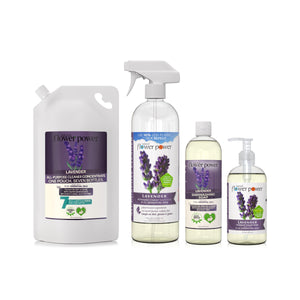
Natural Flower Power does not use FD&C dyes or any synthetic colorants in any product.
Our reasoning is simple: dyes add no value to a cleaning product. They do not clean, they do not preserve, they do not improve performance. They make a product look a certain color, and for that purely cosmetic benefit, they introduce petroleum-derived synthetic chemicals into the formula and into the wastewater stream. Our products are clear or very lightly tinted by their natural ingredients (essential oils can contribute slight color). If a dish soap or hand soap works well and smells good, its color is irrelevant. Removing dyes was one of the easiest formulation decisions we made -- there was nothing to trade off.
Related Ingredients
D&C dyes are a related category of synthetic colorants approved for drugs and cosmetics but not food. Both FD&C and D&C dyes are petroleum-derived synthetic colorants with no functional cleaning role.
Sources
- U.S. Food and Drug Administration. "Color Additives Permitted for Use in Cosmetics." 21 CFR Part 74.
- European Food Safety Authority (EFSA). "Scientific Opinion on the Re-evaluation of FD&C Dyes." Various opinions, 2009-2015.
