
What It Is
D&C dyes are synthetic colorants certified by the FDA for use in drugs and cosmetics (but not food -- hence "D&C" rather than "FD&C"). Common D&C dyes include D&C Red 6, D&C Red 27, D&C Red 33, D&C Yellow 10, and D&C Violet 2. Like FD&C dyes, they are petroleum-derived organic compounds. Their sole function is to add color to products.
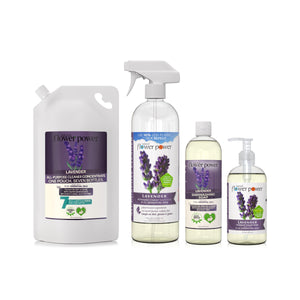
What we make for this



Common Uses
D&C dyes are used in lipsticks, nail polishes, blushes, eye shadows, shampoos, soaps, and some household products. They are particularly common in products where specific colors are desired but the dye has not been approved for food use (often because it is not ingestible at food-level concentrations). Some D&C dyes are approved for "external use only," meaning they cannot be used in lip products or in products that might be ingested. D&C dyes are less commonly found in cleaning products than FD&C dyes.
How It Works
D&C dyes work through the same mechanism as FD&C dyes -- they are water-soluble or oil-soluble organic chromophores that absorb specific wavelengths of light to produce color. Some D&C dyes are "lake" forms, meaning the soluble dye has been precipitated onto an insoluble substrate (typically aluminum hydroxide) to create a pigment that can be used in oil-based or anhydrous formulations like lipsticks and pressed powders.
Like FD&C dyes, D&C colorants contribute no cleaning, preservative, or performance function to any product.
Safety and Regulation
D&C dyes are batch-certified by the FDA, with different dyes approved for different use areas (general cosmetics, external use only, or area-specific restrictions). Some D&C dyes that were previously approved have been delisted over the decades as new safety data emerged. D&C Red 9, for example, was permanently delisted by the FDA due to carcinogenicity concerns.
The safety considerations for D&C dyes are similar to FD&C dyes: they are petroleum-derived, not biodegradable, and some individuals may have sensitivity reactions. Because D&C dyes are not approved for food use, they have generally received less public scrutiny than FD&C dyes, though the same fundamental questions about the necessity of synthetic colorants in personal care and cleaning products apply.
Why Natural Flower Power Does Not Use Them
Natural Flower Power does not use D&C dyes or any synthetic colorants in any product.
The rationale is the same as for FD&C dyes: synthetic colorants add no functional value to cleaning products. They exist for visual appeal, and that is not a sufficient reason to introduce petroleum-derived synthetic chemicals into our formulations. Our products derive any slight color from their natural ingredients, and we see no reason to alter that with dyes.
Related Ingredients
FD&C dyes are the closely related category of synthetic colorants approved for food, drugs, and cosmetics. Both categories are petroleum-derived synthetic colorants excluded from all Natural Flower Power products.
Sources
- U.S. Food and Drug Administration. "Color Additives Permitted for Use in Cosmetics." 21 CFR Part 74.
- U.S. Food and Drug Administration. "Summary of Color Additives Listed for Use in the United States." fda.gov.
