
What It Is
Di(2-ethylhexyl) phthalate (DEHP) is a phthalate ester with the chemical formula C24H38O4 (CAS 117-81-7). It is a colorless, nearly odorless, oily liquid that is the most widely used phthalate plasticizer globally. DEHP is primarily used to make polyvinyl chloride (PVC) flexible. It is not commonly used as an intentional ingredient in cleaning products or personal care, but it can be present as a contaminant from plastic packaging or processing equipment.
What we make for this



Common Uses
DEHP is used primarily in PVC products: vinyl flooring, shower curtains, garden hoses, food packaging, medical tubing, blood storage bags, and vinyl gloves. It accounts for an estimated 50% of global phthalate plasticizer production. DEHP is not a typical ingredient in cleaning or personal care formulations, but human exposure occurs through contact with PVC products, food contamination (from packaging), dust ingestion, and medical device use. It is included here because of its prominence in the broader phthalate discussion and its relevance to ingredient-conscious consumers.
How It Works
As a plasticizer, DEHP positions itself between PVC polymer chains, reducing the intermolecular forces that would otherwise make PVC rigid and brittle. DEHP is not chemically bonded to the PVC matrix -- it is physically embedded between polymer chains, which means it can migrate out of the plastic over time. This migration is the primary route of human exposure: DEHP leaches from PVC products into food, water, air, and anything that contacts the plastic surface.
Safety and Regulation
DEHP is classified as reasonably anticipated to be a human carcinogen by the NTP (14th Report on Carcinogens) and as a Group 2B carcinogen (possibly carcinogenic to humans) by IARC. It is classified as a substance of very high concern under EU REACH due to reproductive toxicity (Category 1B). The CPSIA permanently bans DEHP in children's toys and child care articles above 0.1%.
DEHP causes anti-androgenic effects in animal studies, including reduced testosterone production, impaired spermatogenesis, and reproductive tract malformations in male offspring exposed in utero. The NTP-CERHR concluded that DEHP poses serious concern for adverse effects on human reproduction (NTP-CERHR, 2006). The EU Cosmetics Regulation bans DEHP in cosmetic products.
Why Natural Flower Power Does Not Use It
Natural Flower Power does not use DEHP or any phthalate in any product.
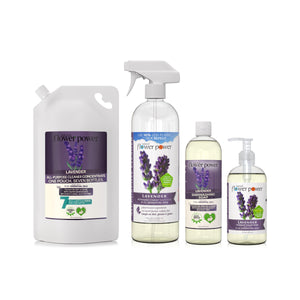
DEHP is primarily a PVC plasticizer and has no intentional role in cleaning product formulations. Our exclusion of all phthalates as a class ensures that neither DEHP nor any other phthalate is intentionally present in our products. We also do not package our products in PVC, which eliminates the most common pathway for unintentional DEHP contamination from packaging materials. Our hand soaps, dish soaps, all-purpose cleaners, and air fresheners are packaged in PET and HDPE plastics, which do not require phthalate plasticizers.
Related Ingredients
Dibutyl phthalate (DBP) is a shorter-chain phthalate with similar reproductive toxicity concerns. Benzyl butyl phthalate (BBP) is another phthalate banned in children's products. Diethyl phthalate (DEP) is the phthalate most commonly found in personal care products as a fragrance fixative.
Sources
- National Toxicology Program. "14th Report on Carcinogens: DEHP." 2016.
- NTP-CERHR. "Monograph on DEHP." NIH Publication No. 06-4476, 2006.
- European Chemicals Agency (ECHA). SVHC: DEHP. echa.europa.eu.
- Consumer Product Safety Improvement Act (CPSIA), Section 108, 2008.
