


TL;DR: "Bio-based" is a regulated USDA certification — not marketing language. It measures the percentage of a product's ingredients derived from renewable biological resources versus petroleum. This explains what the certification actually requires, how it differs from vague "natural" claims, and why bio-based content is one of the few cleaning-product labels backed by third-party verification.
You're standing in the cleaning aisle at your local grocery store, scanning labels. One bottle says "natural." Another says "plant-derived." A third claims "bio-based." They sound like the same thing. They're definitely not.
The eco-conscious consumer has heard this word "natural" so many times—on food packaging, personal care products, cleaning supplies—that it's become almost meaningless. "Natural" doesn't mean anything specific. There's no legal definition. A company can print it on a bottle and nobody stops them.
"Bio-based" is different. It's a technical term tied to actual testing. It comes with a certification process, measurable standards, and a specific definition that's enforced by the USDA. Understanding the difference matters because greenwashing thrives in the gap between vague marketing language and actual substance. The companies that are serious about their products—that have invested in real transparency—tend to use precise terminology. The ones that hide behind softly-worded marketing language tend not to.
The Problem With "Natural" in Cleaning Products
There is no federal definition of "natural" for cleaning products. The FDA doesn't regulate it. The FTC has guidelines, but they're vague enough that almost any ingredient can claim a connection to nature. A synthetic compound manufactured in a lab from petroleum-derived precursors can be claimed as "naturally-derived" if one of its components started as a plant or animal material. The word tells you almost nothing about what's actually in the bottle.
We've made a deliberate choice at Natural Flower Power to avoid using "natural" as a primary descriptor for that exact reason. It's too loose. Customers hear "natural" and they picture plants, simplicity, safety. In reality, it often just means marketing.
The word shows up everywhere because it works. It reassures. It connects emotionally. For companies with genuinely transparent formulations, it's still not precise enough to be useful. For companies with a lot to hide—products full of ingredients they'd prefer not to discuss—it's perfect. It sounds good and legally, it means nothing.
This is why the Eco-Conscious segment in our audience is the most skeptical. They've been burned before by "natural" claims. They've bought products labeled as natural, only to discover they contain synthetic fragrances, petrochemical preservatives, or other ingredients that are technically "natural" in some loose sense but completely contrary to what the customer assumed they were buying. Once you've been greenwashed once, you learn to distrust the word entirely.

What we make for this



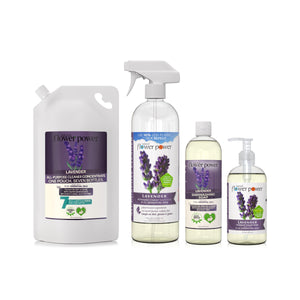
What "Bio-Based" Actually Means—And How It's Measured
"Bio-based" is a technical descriptor with teeth. It doesn't mean the product is better, safer, or more effective than its synthetic counterpart. It means something specific about the source of the carbon atoms in the formula: they came from a renewable biological source—plants, animals, forestry materials, agricultural waste—rather than from fossil fuels like petroleum.
The measurement tool is standardized. If a manufacturer wants to make a legitimate bio-based claim, they send a sample of their product to an independent lab for testing under ASTM D6866, an analytical standard developed specifically to measure biobased carbon content. The test uses radiocarbon analysis—carbon-14 is naturally present in recently living matter but absent in fossil resources. The lab measures what percentage of the product's total organic carbon came from renewable biological sources and expresses it as a percentage.
The USDA's BioPreferred Program administers a voluntary certification label. If a product meets the biobased percentage threshold for its category (different thresholds apply to different product types), the manufacturer can certify and label it as "USDA Certified Biobased." That label means testing happened. It means the claim was verified. It means there's a document on file proving the product contains what it claims.
"Natural" has no test. No verification. No percentage. A company can claim 100% natural and face zero regulatory consequences, even if 90% of the product is synthetic. "Bio-based" cannot be claimed without testing. That difference is everything.
Why We Use "Plant-Derived" Instead of Both
When we formulate at Natural Flower Power, we do use plant-derived ingredients as our primary building blocks. We could claim "bio-based" on our products and have every right to do so—our formulations would very likely pass ASTM D6866 testing, because plant-derived surfactants, oils, and extracts make up the majority of what we use.
But we've chosen "plant-derived" as our primary descriptor, and that choice is deliberate.
"Plant-derived" tells the customer something specific: we've started with plants and plant materials, not with petroleum or chemicals, and we've derived our cleaning ingredients from that starting point. It's specific enough to mean something, technical enough to avoid the emptiness of "natural," but it doesn't carry the weight of a regulated claim like "bio-based." It's honest about what we do without overstating it.
We could be more aggressive with our marketing language. We could get certified as USDA Certified Biobased. We could plaster bottles with every legitimate claim we qualify for. But we've observed over 14 years of formulating that our customers—the ones who care about transparency—respond better to clarity than to certification badges. They want to know what we actually use and why. They want to understand the tradeoff. They don't want to feel marketed to.
Using "plant-derived" lets us signal commitment to transparency without asking the customer to decode a regulatory program. It's the language that best reflects what we actually do.
The Honest Tradeoff: Bio-Based Doesn't Mean Better
Here's the critical part that separates actual competence from greenwashing: bio-based doesn't automatically mean safer, more effective, better for the environment, or better for your body. It means the carbon came from a biological source instead of a fossil source. That's it.
A compound can be bio-based and still be irritating to sensitive skin. A bio-based ingredient can still degrade in the environment slowly. A product full of bio-based chemicals can still underperform in the cleaning task it's supposed to do. The term is descriptive of origin, not quality, safety, or outcome.
This matters because greenwashing often works by taking a technical distinction—bio-based vs. fossil-derived—and letting customers assume it means everything else is better too. Marketing can't explicitly say "bio-based means safer," because that's false. But the implication bleeds through. Customers finish the sentence themselves.
At Natural Flower Power, we chose our plant-derived ingredients because they work well, because they align with our standards, and because they're compatible with our commitment to full ingredient transparency. Not because plant-derived automatically means superior. The plant-derived surfactant in our dish soap works effectively because we've tested it, formulated it properly, and validated it in production. The fact that it comes from plants is a feature that matters to our customer base, but it's not the reason it cleans your dishes.
This distinction—understanding that "plant-derived" or "bio-based" is about origin, not about outcome—is where sophisticated customers separate themselves from casual greenwashing. If a company is claiming bio-based credentials and implying it means safer or more effective without saying it directly, that's the tell.
How to Read a Label: What Actually Signals Real Transparency
If you're trying to identify products with genuine bio-based or plant-derived credentials versus empty marketing, look for these signals.
Specific ingredient names beat category claims. A label that says "coconut-derived surfactant" or "plant-derived solvent derived from corn" is more informative than "plant-derived formula." The more specific the ingredient origin is, the more confident you can be that the company knows what they're talking about. If everything is grouped under vague descriptions, precision isn't the priority.
USDA Certified Biobased labeling means testing happened. If a product carries the USDA BioPreferred label, you can look up that product on the BioPreferred database and see the exact biobased percentage and the test method used. This is the one verifiable claim in the space. It doesn't mean the product is better or safer, but it does mean the company was confident enough in their formula to put it through third-party testing and pay for certification.
Absence of "natural" doesn't indicate a problem. Some of the most transparent companies in the space don't use "natural" at all, or use it minimally, because they know it means nothing. A company that avoids that word entirely and opts for technical precision instead is often more trustworthy, not less. They're declining an easy marketing win in favor of clarity.
Watch for the admission of tradeoffs. A company describing plant-derived or bio-based products that also mentions the cost difference, the shelf-life difference, or the sensory differences from conventional alternatives is showing their work. They're not pretending that moving to plant-derived ingredients solves every problem. They're explaining the actual situation. That transparency is the opposite of greenwashing. You can find more about how we think through these decisions at our Our Story & Standards page.
The parallel with ingredient transparency. In our blog post on fragrance labelling, we explained how companies hide behind the word "fragrance" to avoid naming the dozens of chemicals it can represent. The same pattern applies to marketing language. "Bio-based," when used correctly, is specific and testable. "Natural" is the opposite. One requires proof. The other requires nothing but a printing press.
Why Bio-Based Matters (Without Overstating It)
There are legitimate reasons to care about bio-based ingredients. They don't come from finite fossil fuel reserves. They're part of a renewable carbon cycle rather than adding sequestered carbon from underground sources back into the atmosphere. In aggregate, a world that shifts toward bio-based chemicals is a world with different environmental consequences than a world that continues to rely entirely on petrochemicals.
But here's the part that gets lost in marketing: that aggregate environmental difference is real, but it's measured in industrial scale and decades of time. For a single customer at home using one bottle of dish soap, the environmental impact of buying bio-based versus synthetic is honestly not the primary driver of actual change. The bigger picture—whether the company uses responsible manufacturing practices, whether they minimize packaging waste, whether they have supply chain transparency—matters more.
This is why we've built our business around what we can actually control: formulating products in our own facility so we can trace every ingredient, working with raw material suppliers we know directly, and being transparent about what's in every product and why—from our dish soaps to our hand soaps and all-purpose cleaners. The bio-based status of our ingredients is a feature of that transparency, not the reason for it. Every NFP product is backed by our 90-Day Love-It Guarantee — if it doesn't work for your household, we make it right.
For customers in the Eco-Conscious segment, what often converts trust is not the environmental claim itself, but the willingness to be specific about everything. The customer learns that when this company says something, the company means it, and has evidence to back it up. That builds more actual confidence than any certification badge.
The gap between "natural" and "bio-based" is the gap between marketing language and verifiable reality. One is designed to reassure without committing to anything. The other is designed to measure and prove. Understanding that distinction—and knowing how to spot which kind of company you're dealing with—is what separates informed purchasing from vulnerability to greenwashing. In a category as cluttered with claims as cleaning products, precision in language is itself a form of transparency. When a company chooses a specific term and uses it consistently because it's accurate, not because it sells, that choice itself is worth paying attention to.
