


TL;DR: Cleaning product allergens trigger contact dermatitis and respiratory reactions for millions of households a year. The repeat offenders are a short list: synthetic fragrance blends, sulfates like SLS and SLES, and certain preservatives — methylisothiazolinone in particular. This guide names them, explains why they cause reactions, and shows what to look for on labels.
You reach for the dish soap, scrub for three minutes, and within an hour your hands are red, itchy, and burning. You switch brands—same thing happens. You assume you're just someone with "sensitive skin," accept it as a permanent condition, and move on to wearing gloves for everything.
What you probably don't realize is that your skin isn't inherently too sensitive—specific ingredients in that soap are triggering a contact allergic response or irritant reaction. The mechanism is different than you might think, and understanding it changes your options entirely.
We get this question constantly at Natural Flower Power. Customers tell us they've struggled with cleaning product reactions for years, tried dozens of brands, and landed on us because we don't use the ingredients that have been causing the problem. After 14 years of formulating and listening to feedback, we've learned which allergens show up most often, how they work physiologically, and how to formulate around them. That knowledge is worth sharing, especially because most brands never address this directly.
How Allergens Actually Work: Contact Dermatitis vs. Irritant Reaction
Before we talk about specific ingredients, it's important to understand that there are two distinct mechanisms at play when a cleaning product triggers a skin reaction, and they're not the same thing.
Irritant contact dermatitis is the more common pathway. It happens when a chemical damages the outer layer of skin—the stratum corneum—either through direct caustic damage or by disrupting the skin's natural lipid barrier. Once that barrier is compromised, water escapes from deeper skin layers, cells become inflamed, and you see redness, dryness, and itching. Almost anyone will develop irritant dermatitis if exposed to a strong enough irritant. This is why ultra-strong degreasers can cause reactions in people who've never had sensitive skin before.
Allergic contact dermatitis is different. It requires sensitization. The first time you're exposed to an allergen, your immune system may recognize it as a threat and build antibodies specifically against it. The second time you encounter that same allergen, your immune system reacts immediately—sometimes within hours—with inflammation, itching, and a characteristic rash. Once sensitized, you stay sensitized. Small doses that wouldn't bother a non-sensitized person trigger a full reaction in you. This is why someone can suddenly develop an allergy to a product they've used for years: they finally hit the threshold of exposure needed to cross over into sensitization.
Most cleaning product allergens work through the allergic contact dermatitis pathway, which means they're particularly problematic for people who've already had reactions to other products. Your immune system, having learned to recognize one suspect ingredient, becomes hypervigilant. Additional exposures, even to different products, accumulate. This is why sensitive people often find that their reactions seem to get worse over time—they're not imagining it. They're dealing with accumulated sensitization across multiple products and ingredients.

What we make for this

The Major Allergen Categories in Cleaning Products
Preservatives: MI, MCI, and Formaldehyde Releasers
Preservatives are added to cleaning products to prevent bacterial and fungal growth, especially in water-based formulas. They're invisible to most users and rarely mentioned in marketing. But among dermatologists and allergists, they're recognized as a leading cause of contact allergic dermatitis from household products.
Methylisothiazolinone (MI) and its relative methylchloroisothiazolinone (MCI) are isothiazolinone-based preservatives found in roughly 35% of household cleaning products on the market. These are powerful antimicrobials—they work by disrupting microbial cell membranes. The problem is that in some people, particularly those with eczema or other inflammatory skin conditions, these same preservatives trigger an allergic response. The reaction can manifest as contact dermatitis, but also as respiratory irritation if the product is aerosolized during use.
We avoid MI and MCI entirely in our formulations. When we tested extensively with customers early on, we noticed that people with histories of reactions would often mention these preservatives specifically. The feedback was clear enough that we chose alternative preservation systems—ones that are slower-acting but don't carry the same allergenic profile in our customer base.
Formaldehyde-releasing preservatives like quaternium-15, dmdm hydantoin, and imidazolidinyl urea work by slowly releasing formaldehyde in the product to prevent spoilage. Formaldehyde itself is a known allergen—it's recognized on allergen patch tests in dermatology clinics. Products preserved with formaldehyde-releasers essentially carry a ticking clock: over time, they release a chemical that sensitizes skin. People can use a product for weeks before reactions appear, at which point they often blame the product itself rather than understanding that the formaldehyde is the problem. Some companies have shifted toward other preservatives specifically because of this issue, but many conventional brands still use them because they're cheap and effective.
We use plant-derived preservation strategies instead—combinations of naturally antimicrobial ingredients like citric acid and certain essential oil components that protect the product without the allergen risk.
Synthetic Fragrances and Aroma Chemicals
Fragrances are the most commonly reported allergen in consumer products globally. They're also the most legally hidden—a single "fragrance" ingredient can contain 50+ separate chemicals, none of which have to be named on the label. We've covered this extensively in our post on what fragrance actually means on cleaning labels, but the allergic mechanism deserves specific attention here.
Synthetic aroma chemicals like limonene, linalool, and geraniol are terpene derivatives. These molecules are volatile—they evaporate easily, which is why you smell them. But volatility also means they're being inhaled, and they're penetrating mucous membranes in your nose, throat, and lungs. For sensitive individuals, these compounds can trigger histamine release from mast cells in respiratory and skin tissue, leading to itching, swelling, and inflammation.
Some synthetic fragrances are also photosensitizers—they interact with UV light and make skin more reactive under sun exposure. Others accumulate in body tissues over time. The profile varies by individual compound, but the common thread is that fragrance is optional. It doesn't improve cleaning performance. Its only function is marketing appeal and perceived scent quality. From an allergen perspective, removing it eliminates an entire category of exposure with no downside to efficacy.
Even plant-derived essential oils, which we use exclusively in our scented products, can trigger reactions in sensitive individuals. Lavender, for instance, contains linalool, the same terpene found in synthetic fragrances. The difference is that we list essential oils by name and control concentration precisely. A customer who knows lavender oil triggers their reactions can avoid our lavender-scented products while still using other scents. With synthetic fragrances hidden behind the word "fragrance," there's no way to make that distinction.
Surfactants: Sulfates and Beyond
Surfactants are the working ingredient in soap—they're what makes bubbles and allows water to lift oils and dirt off surfaces. But surfactants are also among the most irritating ingredients in cleaning products because they strip away the skin's natural lipid barrier, the very mechanism we discussed in the contact dermatitis section.
Sodium lauryl sulfate (SLS) and sodium laureth sulfate (SLES) are the most common surfactants in conventional dish soaps, all-purpose cleaners, and hand soaps. They're cheap, effective, and well-understood. But they're also among the most irritating surfactants available. In patch testing—where dermatologists apply a small amount of a substance to skin for 48 hours to see if a reaction develops—SLS consistently triggers irritant dermatitis, especially in people with compromised skin barriers or histories of eczema.
The mechanism is straightforward: SLS disrupts the lipid barrier, pulling moisture out of the skin and creating the dry, cracked, itchy feeling that people describe when they say a product "dried out their hands." With repeated exposure, this irritation becomes contact dermatitis. For people already sensitized to other allergens, SLS can exacerbate those reactions or trigger new ones.
In our formulations, we use gentler surfactants like sodium coco-sulfate and decyl glucoside. These achieve similar cleaning power with less barrier disruption. They cost more, which is why most commercial brands don't use them, but the tradeoff in terms of reduced irritation is significant, especially for people who use hand soap multiple times daily.
Dyes and Color Additives
Color additives in cleaning products seem decorative—they make the product look more appealing on the shelf or in your kitchen. But synthetic dyes are frequent allergens, particularly certain acid dyes and azo dyes used in cosmetics and household products. They're designed to be stable and vivid, which also makes them persistent in skin and capable of triggering immune responses.
The allergen profile varies by specific dye, but commonly problematic ones include FD&C Blue No. 1, FD&C Yellow No. 5 (tartrazine), and various acid dyes used in personal care products. Someone sensitized to dyes in a shampoo might react to dye in a hand soap or cleaning product. The reactions tend to show up around the eyes and face first because the skin there is more permeable, but can extend across the body with repeated exposure.
Our products are uncolored. This is a deliberate choice, not a limitation. Color serves no functional purpose in a cleaning product—it's purely for consumer perception. Removing it eliminates an entire potential allergen category while simplifying the formulation.
Other Problematic Ingredients: Chelating Agents and Phthalates
Beyond the major categories above, a few other ingredients deserve mention because they're common enough to cause problems, yet most people have never heard of them.
Chelating agents like EDTA (ethylenediaminetetraacetic acid) are used in cleaning products to bind with hard water minerals and prevent spotting and buildup. They're effective, but they can also interfere with skin's natural mineral balance and are suspected irritants. For people with sensitive skin, they can exacerbate dryness and itching. We use citric acid as a gentler chelating alternative.
Phthalates (often hidden within the term "fragrance") are plasticizers added to fragrances to make scent last longer. They're endocrine disruptors linked to reproductive and developmental effects, and they're frequent contact allergens. The term "fragrance" can legally hide phthalates, so even a product marketed as "natural fragrance" might contain them. This is another reason why the fragrance exemption is problematic from an allergen perspective—you can't avoid something you can't see on the label.
We don't use phthalates in any form, and we don't use fragrance blends that contain them. Our essential oil-based scents achieve longevity through the naturally persistent compounds in the oils themselves, not through chemical plasticizers.
What Our Customers Report After Switching
The most important data we have comes from real use. Over 14 years, we've listened to thousands of people tell us what happened when they switched from conventional cleaning products to our formulations. The patterns are consistent enough that they tell us something about which ingredients are driving reactions in households.
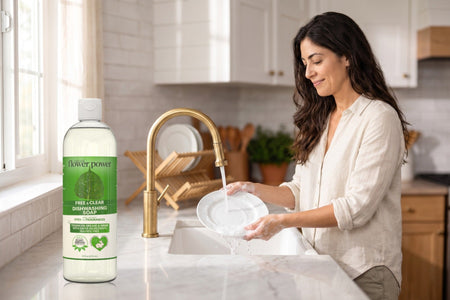
The most common report is about hand dermatitis. People say they've been wearing gloves to wash dishes for years because their conventional dish soap triggered reactions. They try our formula, stop wearing gloves, and within two weeks the redness and dryness on their hands clears up. Many of them tell us they didn't realize how much pain they were living with until it was gone. That suggests that either the specific surfactant profile, or the preservative system, or the absence of fragrance—or most likely the combination—was driving a chronic irritant reaction in their skin.
The second-most common pattern is respiratory. People who noticed themselves feeling headachy or short of breath while or immediately after cleaning report that those symptoms disappear when they switch to our products. This points specifically to fragrance and preservatives, which aerosolize during product use and trigger both irritant and allergic responses in airways. When those ingredients are removed, breathing improves.
We also hear from people with diagnosed chemical sensitivities or multiple chemical sensitivity (MCS), an immunological condition where even minute exposures to certain compounds trigger whole-body reactions. For these customers, the ability to see exactly which essential oils we use, the absence of preservatives like MI/MCI, and the elimination of synthetic aroma chemicals means they can actually use cleaning products again. We're not claiming to be "safe for MCS"—individual reactions vary—but we've structured our ingredients so that people with these sensitivities can patch-test and identify their specific triggers rather than having to avoid an entire product category.
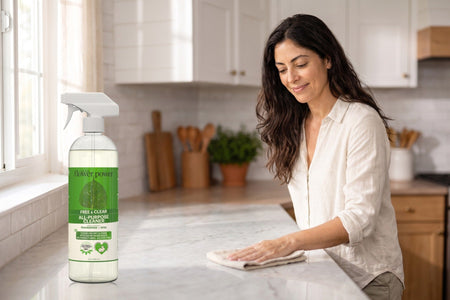
Importantly, we also acknowledge that even plant-derived ingredients can trigger reactions. Someone with a documented lavender sensitivity will react to our lavender-scented products. That's why we offer a complete hand soap line and dish soap line in our Free & Clear formulation—entirely unscented, no essential oils. This option exists because we understand that the best allergen strategy is elimination, not just substitution. Every NFP product is backed by our 90-Day Love-It Guarantee — if it doesn't work for your household, we make it right.
How to Identify Allergen Risk in Your Current Products
If you suspect a cleaning product is triggering a reaction, you can investigate the ingredient list yourself. Here's what to look for.
Check for specific preservative names: Look for methylisothiazolinone, methylchloroisothiazolinone, quaternium-15, dmdm hydantoin, imidazolidinyl urea, or any of the formaldehyde-releasing compounds. These are your highest-risk allergens. If any of these appear, that product is not suitable for people with sensitive skin or histories of reactions.
Look at surfactant listings: Sodium lauryl sulfate or sodium laureth sulfate early in the ingredient list means a harsh surfactant is a major component. This doesn't necessarily mean you're allergic, but it does mean the product is designed to be highly stripping—appropriate for heavy-duty degrease, not for frequent hand use.
Check for "fragrance" or "parfum": If this appears, you don't know what's actually in the product. It could be any combination of synthetic chemicals, phthalates, preservatives masquerading as fragrance, or synthetic musks. If fragrance appears in the first five ingredients, the product is heavily fragranced, which increases exposure and allergen risk.
Watch for color: If the product is visibly colored, look at the ingredient list for "FD&C" colors or "CI" (Colour Index) numbers. These are synthetic dyes and increase allergen risk, particularly for people with dye sensitivities.
Search for chelating agents: EDTA or sodium citrate appear in some products. EDTA is a known irritant and potential allergen; sodium citrate is gentler. If you're sensitive, this distinction matters.
If you identify multiple allergen-category ingredients in your current product, switching is a reasonable next step. Start with a specific task—usually dish soap or hand soap—because that's where most contact dermatitis reactions originate. Use the new product for at least two weeks before evaluating whether symptoms improve. Skin barrier repair takes time, and you won't see full improvement overnight.
Why This Matters Beyond Individual Skin: Cumulative Exposure
One of the misconceptions about allergens is that they only matter for "sensitive" people. In reality, allergic sensitization is cumulative. You're not born allergic to a specific ingredient. Exposure plus genetic predisposition plus immune system readiness equals sensitization. This means that someone could theoretically use a highly fragranced, preservative-heavy product without problems for years, then suddenly develop an allergy. The cumulative exposure finally crossed the sensitization threshold.
Households also use multiple products. You're exposed to fragrances in dish soap, hand soap, all-purpose cleaner, and air freshener. You're exposed to preservatives in all of them. You're exposed to surfactants in soaps and degreasers. These exposures compound. Someone using five conventional products daily is getting far higher allergen loads than someone using fewer products with fewer problematic ingredients.
From a household perspective, reducing allergen load across all your cleaning products—not just one—reduces cumulative exposure and lowers the risk that any household member crosses into sensitization. This is why people often report that switching to plant-derived, carefully formulated products seems to improve not just the person who had obvious reactions, but everyone in the household. Less cumulative irritant and allergen exposure benefits skin health across the board.
A Note on "Hypoallergenic" Claims and Label Literacy
Cleaning product labels are full of claims that sound reassuring but are legally meaningless. "Hypoallergenic" has no legal definition in the US. "Dermatologist tested" could mean a dermatologist tested whether it removes dirt, not whether it's safe for sensitive skin. "Natural fragrance" can include synthetic chemicals and phthalates. These terms exist because they're reassuring to consumers, not because they indicate anything substantive about safety or allergen risk.
The only meaningful claim is transparency. A product that lists every ingredient by name, shows you exactly what's going into the formula, and acknowledges which ingredients can trigger reactions is a product from a company that's taking this seriously. That's what we've built our approach on. Our story and standards page walks through how we think about formulation, and our ingredient lists are complete and specific because you should be able to make an informed choice about what's in your home.
If a brand won't give you a full ingredient list, or hides behind terms like "fragrance" when they could specify, or makes vague claims like "safe for sensitive skin" without naming which ingredients they avoid, that's a red flag worth paying attention to.
Cleaning product allergens aren't a mystery. They're specific ingredients with well-understood mechanisms of action. Understanding which ones are in your products, why they cause reactions, and which alternatives exist puts you in control of your household's exposure. That's the foundation of actually solving the problem, rather than just managing symptoms by wearing gloves or accepting reactions as inevitable.
